
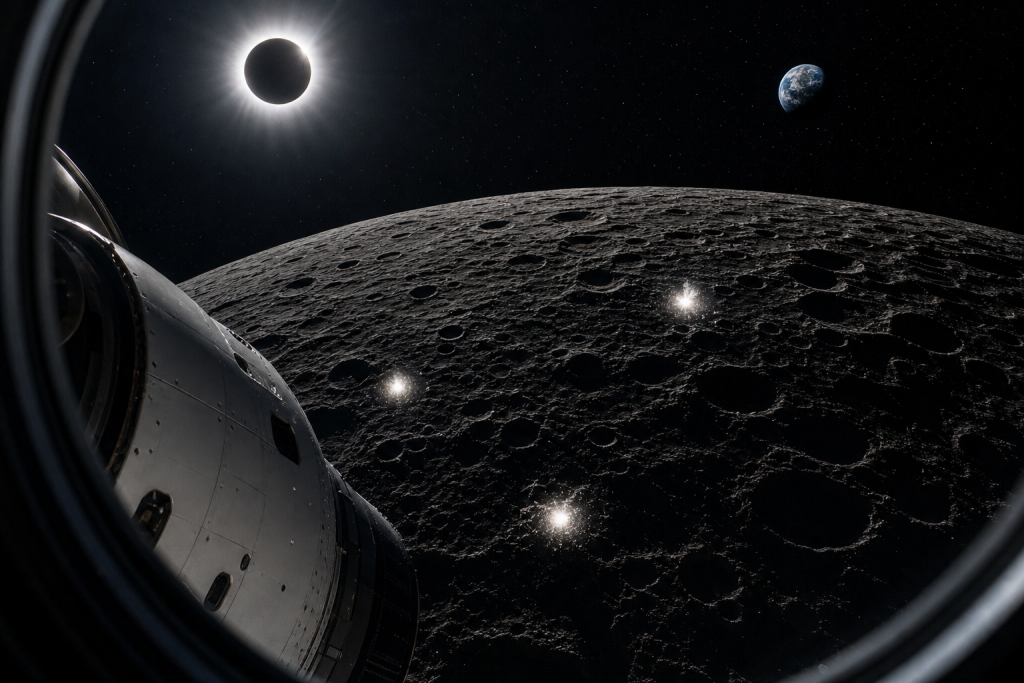
During the historic flyby last month, Artemis II astronauts witnessed something incredible on the Moon’s far side – flashes that cameras can’t catch. Here’s why scientists are buzzing.
NASA’s Artemis II crew spotted multiple bright, millisecond-long flashes lighting up the lunar surface, caused by micrometeoroids slamming into it. These impact flashes happened against the dark backdrop of a total solar eclipse from the Moon’s perspective, making them visible to the naked eye but nearly impossible for cameras to capture reliably.
The Artemis II mission, the first crewed lunar flight since Apollo 17, looped around the Moon’s far side on April 6. Crew commander Reid Wiseman and others reported 4-6 flashes during the near-hour-long eclipse period, with some near the south pole.
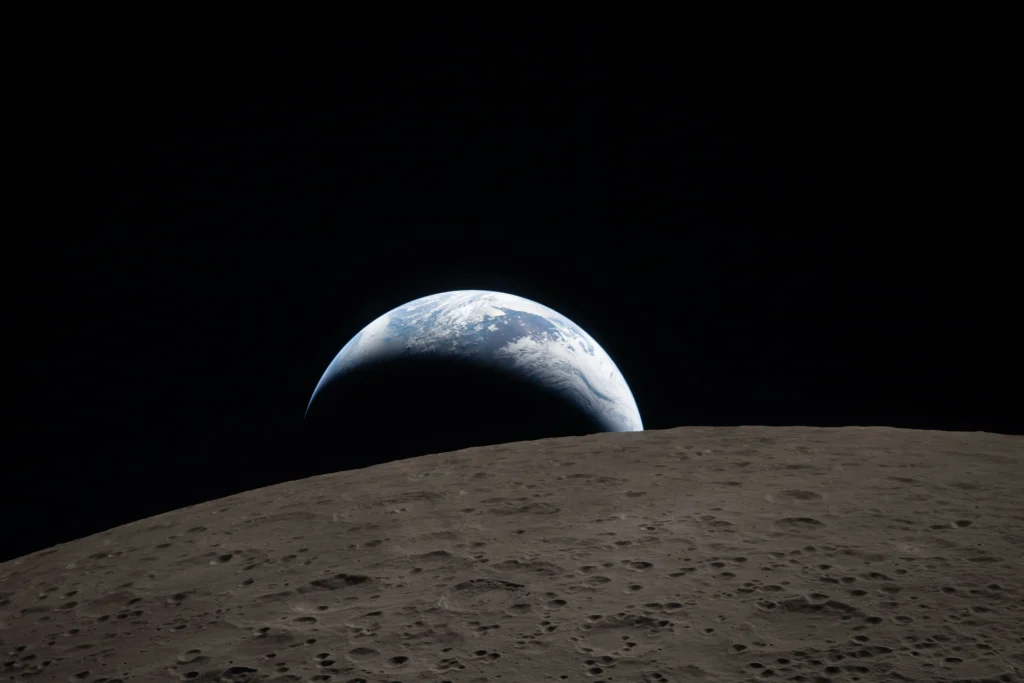
Mission control erupted in “audible screams of delight,” as science officer Kelsey Young described the real-time reports. This Earthrise view, captured during the flyby, highlights the stark contrast where such flashes stand out against shadowed terrain.
 Credit: NASAWhy Flashes Are Hard to Photograph
Impact flashes are brief bursts of light from meteoroids vaporizing on impact – less than 1% of the energy creates the glow, the rest forms craters. Cameras struggle because the events last milliseconds in extreme low light, but trained human eyes excel here.
This echoes Apollo 17 astronaut Harrison Schmitt’s mysterious flashes in lunar night, now confirmed as impacts.
Why Scientists Are Excited
These observations validate human eyes for lunar science, aiding Artemis base planning by mapping impact frequency, sizes, and risks. Data helps model shock waves through the Moon and predict hazards for habitats near the south pole. Coordinated with Earth-based telescopes and NASA’s Reconnaissance Orbiter, it builds a fuller picture of meteoroid flux.
Bigger Picture: Lunar Impact Monitoring
NASA tracks ~20 detectable flashes yearly via orbiters; citizen science like the Impact Flash project boosts coverage. Recent upticks in Earth fireballs and solar activity may correlate, per some reports.
For future missions, this underscores planning for rare, high-energy events.