
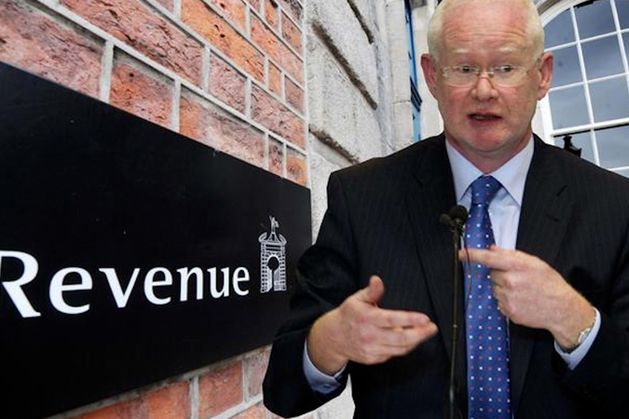
Figures show 286 employers availed of amnesty after court decision on contractors
New figures from the tax authority show that of 286 employers that availed of an amnesty to regularise the status of their workforces following a Supreme Court decision, 51 were organisations that receive public funding.
They paid back over €6.2m in taxes as a result, in settlements that related to 4,043 workers.
The need for so many publicly funded bodies to make disclosures about so-called “bogus self-employment” is a surprise, because it was expected the reclassification of workers in the gig economy would mainly affect media, arts and hospitality companies.
According to Revenue figures, only 34 employers in the arts, entertainment and recreation sector made settlements, which came to €1.4m, and related to 1,626 workers.
The Supreme Court ruling in a 2023 case involving Karshan, a Domino’s Pizza franchisee, set down new rules on employment status.
The court ruled in favour of Revenue in deciding that delivery drivers were not independent contractors, but should be treated as employees and taxed as such. Some workers in the gig economy were being paid on a gross basis and told to address their own tax affairs, on the basis that they were contractors.
After the ruling Revenue gave companies two years’ grace to regularise their payrolls. It announced a “disclosure opportunity” last September, recognising that some businesses were experiencing genuine difficulties in making the necessary changes to their payroll system.
Firms which, in good faith, had misclassified employees as contractors in 2024 and 2025 had a chance to disclose this by a deadline of last January 30, and make a settlement for income tax, PRSI and USC.
The landscape has changed for businesses operating in a wide range of sectors
Revenue received submissions from 286 employers by the deadline, with total tax adjustments of about €26.7m that involved over 6,600 employees.
All the 51 publicly funded bodies were dealing with the tax years of both 2024 and 2025. It is thought that several local authorities are among their number, as South Dublin County Council revealed in its accounts for 2025 that it had made a €217,778 settlement with Revenue due to the Karshan judgment.
The sector with the second-highest value of settlements was construction, with 46 employers making total tax adjustments of €5.2m, according to Revenue. This related to just 365 employees across the years 2024 and 2025, which would equate to a settlement of €14,247 per worker.
Some 58 employers in the accommodation and food sector made tax adjustments of €5.08m. This related to 4,256 workers.
Almost all of these companies were in the subdivision of restaurants and mobile food service. “This is the code with the highest number of employer submissions – 54,” Revenue said.
Revenue chairman Niall Cody told an Oireachtas committee earlier this year: “The tax risks associated with misclassification are not new.
“However, the reality of the Karshan judgment is that the landscape has changed for businesses operating in a wide range of sectors.
“The disclosure opportunity has shown that businesses have now recognised that the Karshan judgment has changed the environment in which they operate.”