
When I was heading from New York to Germany as a college student in 1994 for a six-month study-abroad programme, my mother left the following (somewhat melodramatic) warning ringing in my ears: “Don’t tell anyone you’re Jewish — you never know.”
I am cautious about it to this day but when I travel around Europe on my Irish passport, whether to Rome, Paris, Amsterdam or Cologne — every one of which was a site, within living memory, of Jewish persecution — I don’t worry at all.
Yet at home in Dublin, I do worry. As one of the 2,000 Jews in Ireland, I worry every time I attend a Jewish community event that this will be the time someone gets through the many layers of security to attack us. I worry that my partner, who is publicly visible as a Holocaust education activist and a Jewish business owner, will be targeted. I worry that when I bring my six-year-old son to places where other Jews are present, I’m putting him in danger.
Violence against diaspora Jews is a rising problem around the world. The attacks are happening within a context of relentless protest against Israel and a boycott movement that is trying to isolate the country from the community of nations. The attackers seem to believe that hurting Jews in Sydney, London or Manchester is striking a blow against Israel.
The atmosphere in Ireland is almost febrile at times. The current pressure campaign, involving Sinn Fein, to get the Football Association of Ireland to pull out of its upcoming Nations League matches with Israel is just the most recent example. It follows RTE’s decision to boycott the Eurovision Song Contest next weekend in protest against Israel’s participation.
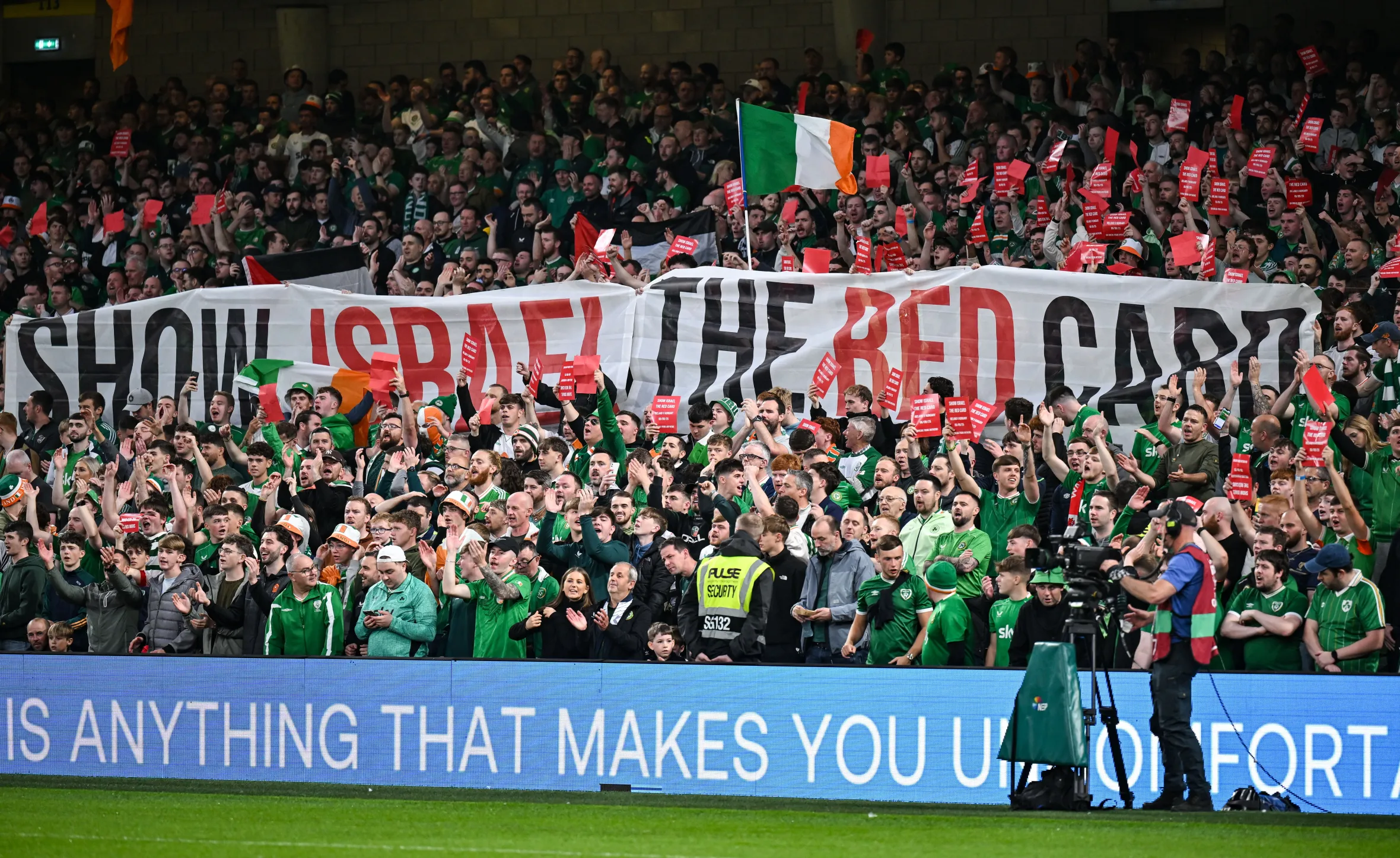 Ireland fans protest against Israel in Dublin last autumnDAVID FITZGERALD/SPORTSFILE/GETTY IMAGES
Those actions in themselves are perfectly legitimate ways of registering Irish outrage at how Israel has waged war in the past two years. I may not like them, but I accept them. However, sometimes Irish Jews end up as collateral damage, as happened with Sinn Fein’s appalling campaign on Dublin city council to rename Herzog Park in Rathgar, one the city’s most Jewish areas, on the pretext that it honoured a Zionist.
Before he was president of Israel, Chaim Herzog was an Irish Jew, raised in Portobello as son of Isaac Herzog, who was Ireland’s first chief rabbi and later chief rabbi of Mandatory Palestine and the state of Israel. The Herzogs are essentially the Kennedys of Israel; Isaac’s grandson and namesake is president of Israel today. I struggle to imagine Sinn Fein ever leading a campaign to erase the Kennedy name in Ireland, no matter how objectionably the US government might behave.
If “horror in Gaza” is the first thing that springs to mind when you hear “Jew in London”, you should ask yourself some hard questions about why. Because the implication of that association is that Jews everywhere share responsibility for the conduct of Jews anywhere. It reduces all Jews to avatars of Israeli policy and, in doing so, reproduces the antisemitism of the attacker in rhetorical form, creating a permission structure for violence against Jews in general.
Also, weirdly, it treats antisemitic violence in Europe as novel, aberrant and specific to current events rather than the historical norm for many, many centuries. The overall message is that the recognition of Jewish humanity is somehow conditional, qualified, contingent on what the Israeli government does or doesn’t do.
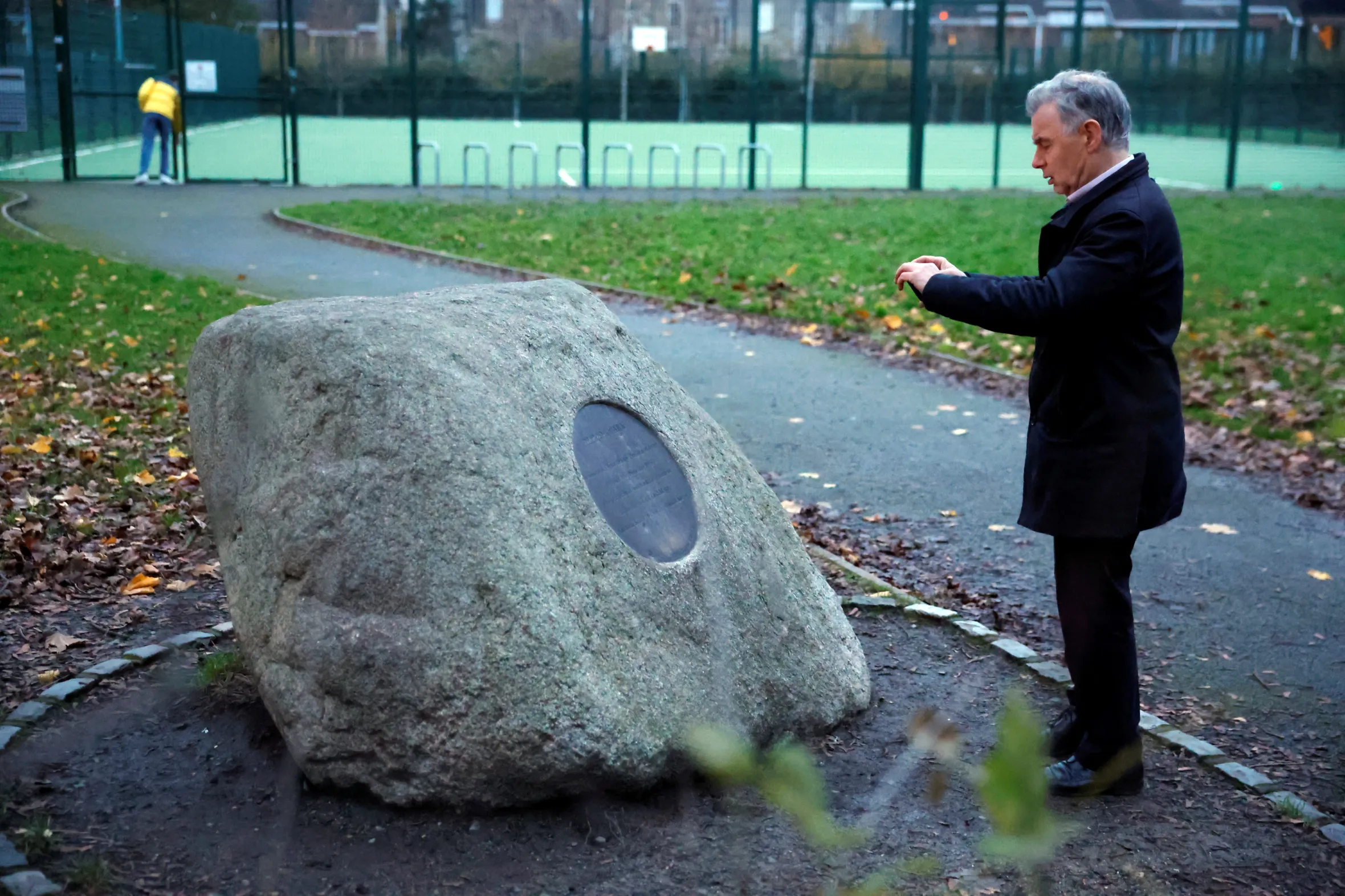 Herzog Park in DublinCLODAGH KILCOYNE/REUTERS
In my experience, this logic is very common in Ireland. I’ve encountered it personally. It’s all over social media. It pops up in mainstream media too. It’s even promoted by several political parties. It’s not the worst kind of antisemitism — it’s latent rather than overt — but it does qualify. Why is this so? Ireland, in common with the rest of Europe, has always had an ambivalent relationship to the Jewish people. We are among the country’s oldest immigrant groups, having established small communities in Dublin, Belfast, Cork and Limerick in the 1880s. By the early part of the 20th century, the number of Jews, mainly fleeing persecution in Russia and Lithuania, grew to 5,000. Today there are about 2,000, about evenly split between descendants of the original community and Jewish immigrants like me.
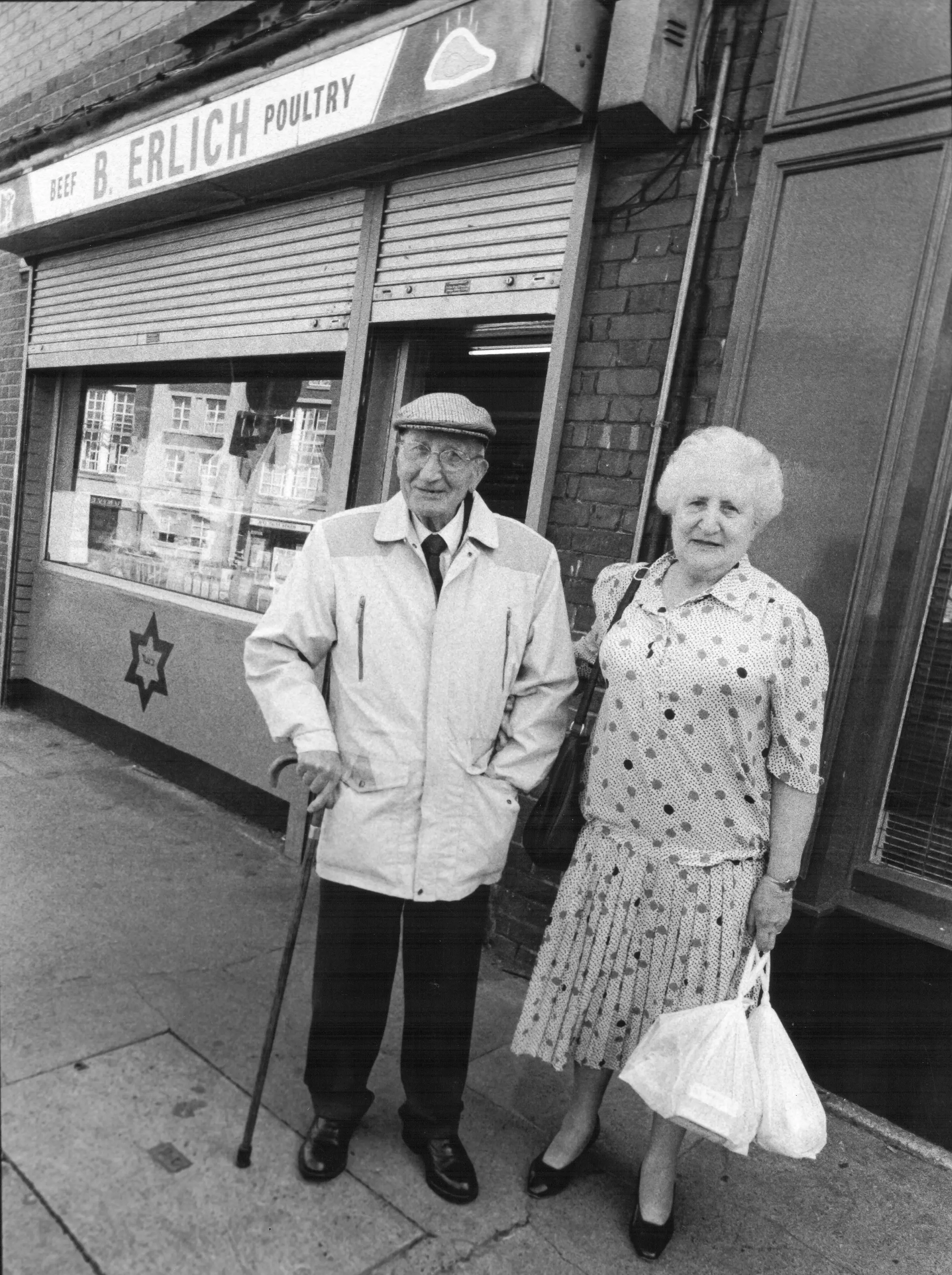 One of a photographic series chronicling Jewish life in Dublin, 1993Alamy
The status of this group within Irish society has often been contested in some way. In 1904, the Jews were run out of Limerick by a pogrom and boycott sparked by Father John Creagh. Yet even within the predominantly Catholic Irish Free State, the government funded a Jewish school in Dublin and Eamon de Valera, the prime minister between 1932 and 1959, was not entirely unsympathetic to Jewish migration to Palestine. De Valera also had a close relationship with Isaac Herzog. And, unusually, the Irish constitution explicitly recognised the place of the Jewish people in Ireland.
Nonetheless, Ireland was found wanting during the Holocaust, when the country resisted accepting Jewish refugees from Nazism, both during and after the war, and de Valera ignominiously sent formal condolences to the German legation on the death of Hitler, following strict diplomatic protocol for a neutral country.
The establishment of Israel as a Jewish state and the displacement and statelessness of Palestinians changed things for the worse, as the Irish ethic of supporting the perceived underdog in that conflict began to affect relations with Jews in Ireland. The polemical characterisation of Israel as a “colonial occupier” makes it nearly impossible, in an Irish context, to have a dispassionate discussion about Middle East politics and how the reaction to them in Ireland affects the Jews living here.
Jews are frequently spoken about in Ireland — or worse spoken over — but rarely spoken to. For a country with such a small Jewish population, we seem to take up a huge portion of the national imagination and are rarely out of the national conversation. It’s strange to experience, to say the least.
Another recent example was the exchange between Patrick Kielty and Boy George on The Late Late Show this month. The singer spoke about being in Golders Green on the day last month when two Jews were stabbed in an antisemitic attack. He also mentioned receiving online abuse for publicly supporting his Jewish friends and the wider community in the aftermath. Kielty said: “It’s that idea that you’ve got attacks on the Jewish community, and the backdrop of that is obviously the horrors in Gaza and this is a complex thing.”
Live interviewing is not easy and I don’t for one second believe Kielty spoke out of malice. On the contrary, it was almost a reflexive statement, spoken without any consciousness of its implications. And that’s what makes it problematic, because what he said is illustrative of an alarmingly common mindset in Ireland.
I want to close on a positive note by recognising something Boy George did that has gone unnoticed and, under the circumstances, seemed almost radical. He invoked his own Irishness — having been cheered earlier in the evening for getting his Irish passport — and called for a shared empathy with the victims of the Golders Green attack and with the Jews who were suffering because of it. “As a country that’s had a lot of pain,” he said, “we should know what it feels like.”