
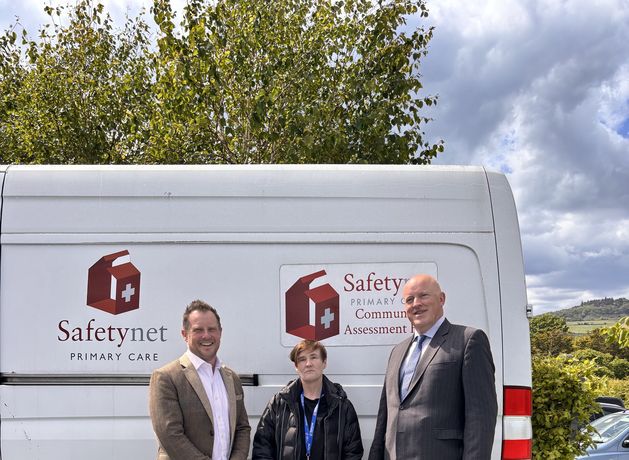
The clinic, organised by addiction recovery charity Tiglin in partnership with Safetynet Primary Care, took place in the town on Thursday, May 7, to mark International Harm Reduction Day. A mobile health and screening unit provided free, confidential check-ups to people using Tiglin’s services.
More than 10 people experiencing homelessness die every month in Ireland, according to the latest Health Research Board data, with many deaths linked not to overdoses but to untreated conditions such as cardiovascular disease, liver failure and respiratory illness.
Organisers said the one-day clinic highlights the gap in access to healthcare and the role mobile services can play in reaching vulnerable groups.
“Our focus has always been on the whole person,” said Tiglin CEO Phil Thompson. “Nearly 20 years ago, we built Tiglin because we believed every person deserves a chance to rebuild their life – the whole of it.
“Recovery is not just about the substance. It is about health, dignity, and being treated as a full human being. Today, Safetynet brought healthcare to the people we serve, on their terms, in a place where they feel safe. This is what recovery support looks like when it is done right.”
Founded in 2008, Tiglin supports people recovering from addiction and homelessness across Wicklow, with a programme completion rate of 72pc, and provides services spanning housing, education, employment and health.
The operator of the mobile unit, Safetynet Primary Care, specialises in delivering healthcare to marginalised groups in outreach settings such as hostels and community services.
At the one-day clinic in Greystones, a total of 35 people availed of the screening, with CEO Nicola Perry remarking: “When you bring healthcare to people in the places where they feel safe, they take it up. That is not a complicated idea. It is what should be happening everywhere.”
Tiglin founder Senator Aubrey McCarthy, who was there on the day, said the model should be expanded across the country.
“What Safetynet is doing – bringing healthcare here, to these people, in this place – is exactly what harm reduction means when it goes beyond crisis response. Every person who walked through that door today deserved this care. The Government needs to fund this model so it can happen everywhere,” he said.
The event comes as the Government’s draft National Drugs Strategy (2026–2029) remains under public consultation, with both organisations calling for investment in outreach healthcare services.