
Report Overview
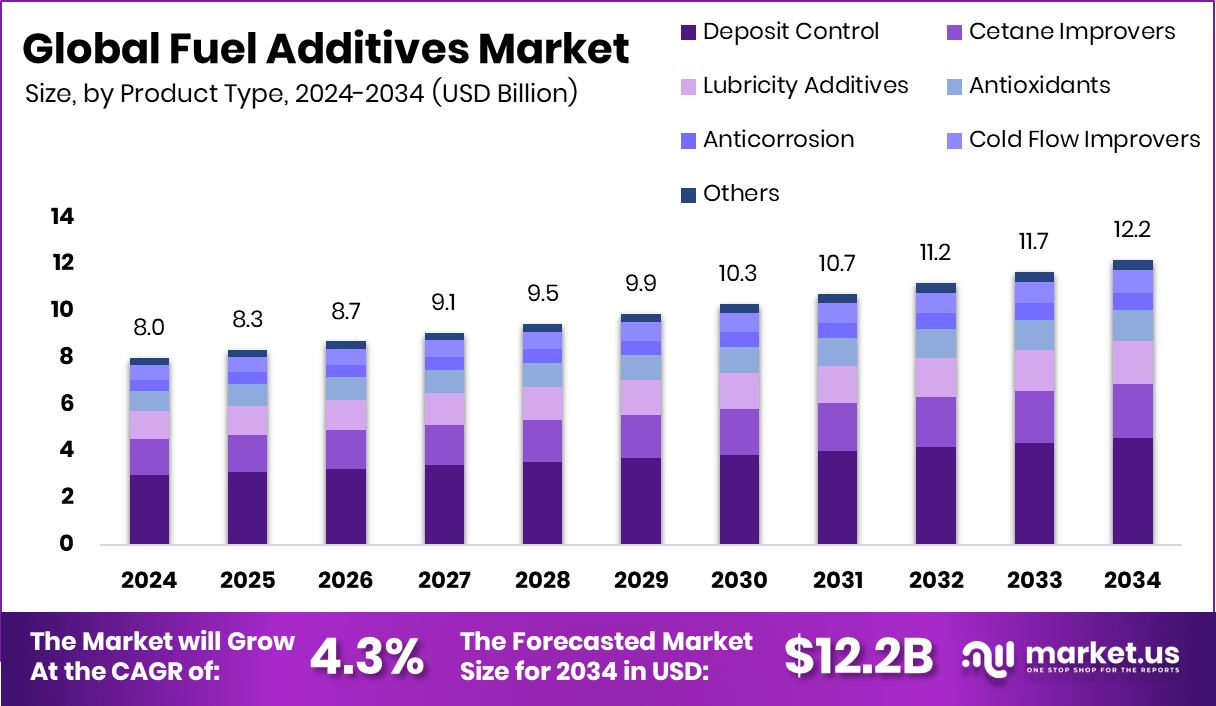
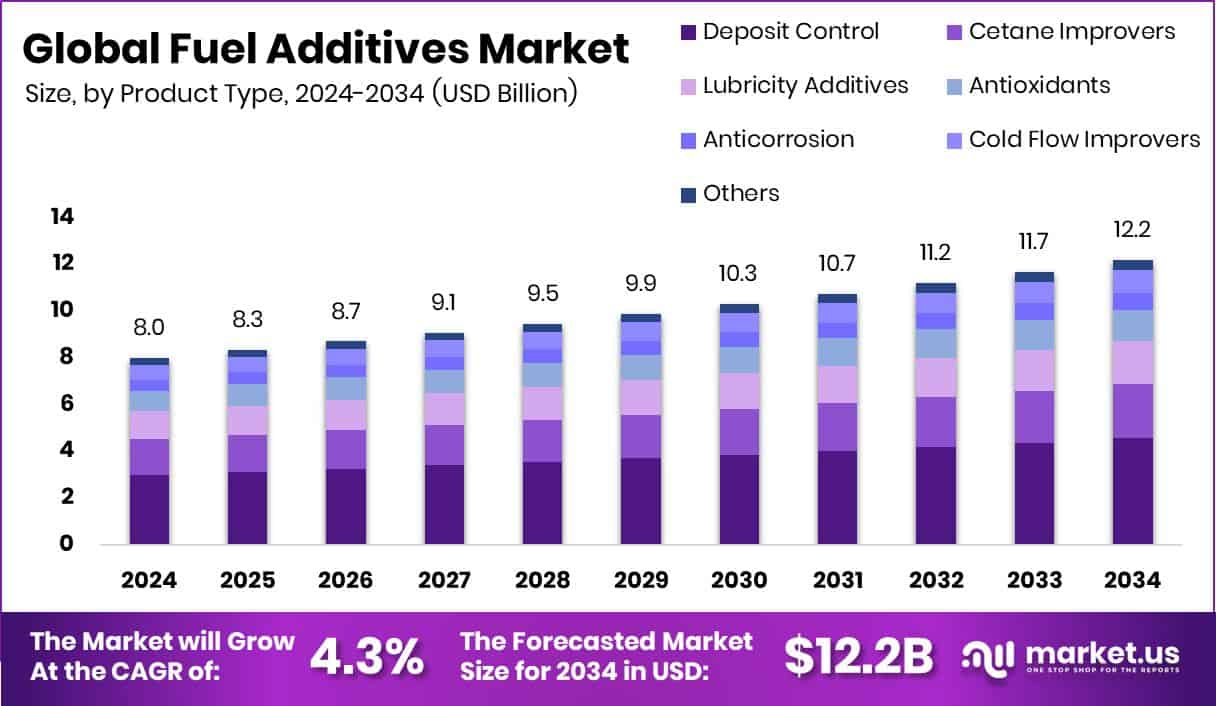
The Global Fuel Additives Market is expected to be worth around USD 12.2 billion by 2034, up from USD 8.0 billion in 2024, and is projected to grow at a CAGR of 4.3% from 2025 to 2034. With a 38.90% share, North America’s market size was USD 3.1 Bn.
Fuel additives are specialized chemical compounds blended with fuels like gasoline, diesel, or aviation fuel to enhance performance, efficiency, and longevity. They work by cleaning the fuel system, reducing emissions, preventing corrosion, improving combustion, and ensuring smooth engine operation. These additives are widely used in both commercial and defense sectors, supporting not only vehicle performance but also energy efficiency and sustainability goals.
The fuel additives market refers to the global industry focused on the development, production, and application of these compounds across transportation, aviation, industrial machinery, and power generation. The market is gaining attention due to the rising demand for cleaner fuels, stricter emission norms, and technological advancements in fuel efficiency.
In recent years, investment activity has increased, such as Beavercreek defense contractor Defense Engineering Corp. securing $9 million in additional Air Force contracts, and Doorstep diesel delivery startup The Fuel Delivery raising $2 million in funding from Drake Trade, reflecting the growing commercial and defense-related interest in fuel innovation.
A key driver for fuel additives is the rising global vehicle fleet and increasing fuel consumption. With urbanization and industrial expansion, the demand for efficient fuel use has multiplied, and additives play a central role in improving mileage and lowering maintenance costs.
Demand is also fueled by government regulations aimed at reducing carbon emissions. Additives that cut down harmful exhaust gases and improve engine life are being adopted widely in both developed and emerging economies. This makes them essential for industries navigating environmental compliance.
A major opportunity lies in the adoption of alternative and bio-based fuels, where additives enhance stability and performance. With funding support and technological innovation, the market is positioned to expand into new areas like renewable fuels and military-grade applications, strengthening its global footprint.
Key Takeaways
The Global Fuel Additives Market is expected to be worth around USD 12.2 billion by 2034, up from USD 8.0 billion in 2024, and is projected to grow at a CAGR of 4.3% from 2025 to 2034.
By Product Type, deposit control additives hold 37.4%, ensuring cleaner engines and improved fuel performance.
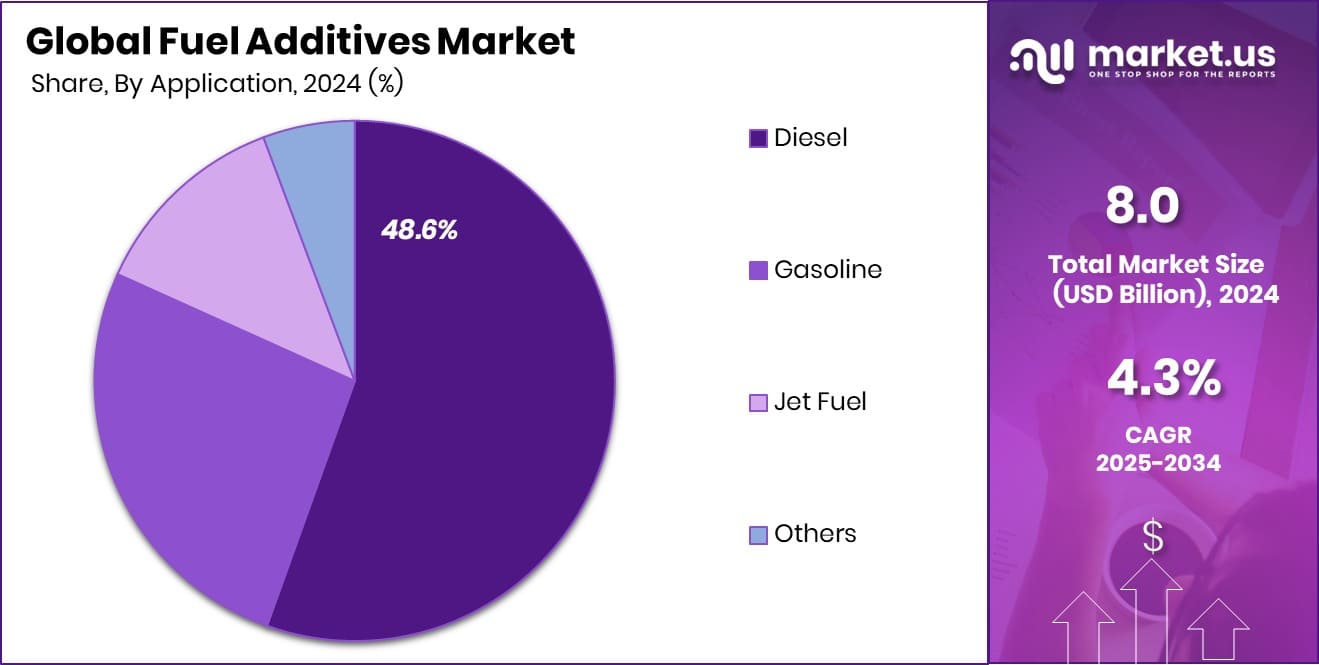
By Application, diesel dominates with 48.6%, highlighting strong demand for efficiency and emission reduction solutions.
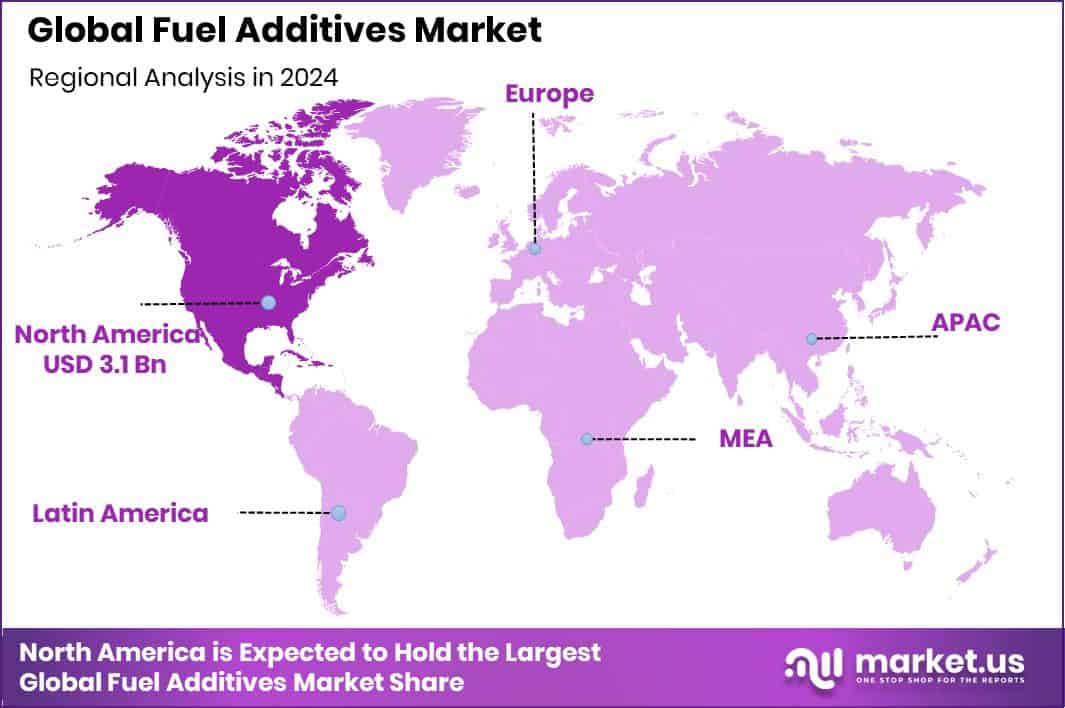
The Fuel Additives Market in North America reached USD 3.1 Bn, about 38.90%.
By Product Type Analysis
Deposit control fuel additives hold 37.4%, ensuring cleaner engines and better performance.
In 2024, Deposit Control held a dominant market position in the By Product Type segment of the Fuel Additives Market, accounting for a 37.4% share. This segment’s leadership reflects the growing importance of additives that prevent and reduce deposits in engines, injectors, and fuel systems.
Deposit control additives ensure smoother engine performance, improved fuel economy, and reduced maintenance needs, which are critical in both commercial and passenger applications. Their widespread use across gasoline and diesel fuels highlights their role in enhancing combustion efficiency and extending engine life. The strong demand for cleaner fuel systems and compliance with stringent emission regulations continues to reinforce the segment’s significant contribution to the overall market.
By Application Analysis
Diesel applications dominate the fuel additives market with 48.6% usage share.
In 2024, Diesel held a dominant market position in the By Application segment of the Fuel Additives Market, with a 48.6% share. This strong position highlights the extensive reliance on diesel fuel across transportation, logistics, and industrial sectors. The use of additives in diesel plays a critical role in improving fuel stability, reducing emissions, and protecting engine components from wear and deposits.
With diesel engines widely used in heavy-duty vehicles, commercial fleets, and industrial machinery, the demand for performance-enhancing and emission-reducing additives remains high. The 48.6% share underscores how essential these solutions are for meeting efficiency standards and maintaining compliance with emission regulations, while also supporting durability and cost-effectiveness in diesel operations.
Key Market Segments
By Product Type
Deposit Control
Cetane Improvers
Lubricity Additives
Antioxidants
Anticorrosion
Cold Flow Improvers
Others
By Application
Driving Factors
Rising Need for Cleaner and Efficient Fuels
One of the main driving factors for the Fuel Additives Market is the rising need for cleaner and more efficient fuels. Around the world, governments are tightening rules on vehicle and industrial emissions, pushing industries to adopt additives that cut down smoke, improve combustion, and make engines last longer. These additives help fuel burn more completely, which means less pollution and better mileage for users.
The growing focus on sustainability is also shaping demand, as companies look for solutions that balance performance with environmental responsibility. Supporting this trend, recent funding like the £63 million lift-off for clean aviation fuels shows how investment is flowing into innovations that make fuels cleaner and more future-ready across industries.
Restraining Factors
High Production Costs Limit Market Expansion
A major restraining factor for the Fuel Additives Market is the high production costs linked with developing and manufacturing advanced additives. Creating these specialized chemicals requires expensive raw materials, complex formulations, and strict quality checks to meet safety and environmental standards.
For many producers, these costs make it difficult to offer additives at competitive prices, especially in price-sensitive markets. This also affects smaller businesses that struggle to compete with larger players who can absorb higher expenses. Additionally, fluctuations in oil and chemical feedstock prices further increase uncertainty in costs. As a result, despite strong demand for cleaner and more efficient fuels, the high expense of production slows wider adoption and hinders faster market growth.
Growth Opportunity
Expanding Role of Additives in Biofuels
A key growth opportunity for the Fuel Additives Market lies in the expanding role of additives in biofuels. As countries push toward renewable and eco-friendly energy, biofuels are becoming a vital part of the fuel mix. However, biofuels often face challenges like lower stability, water absorption, and storage issues.
Additives can solve these problems by improving combustion quality, preventing corrosion, and ensuring consistent performance in engines. This makes them essential for the wider adoption of renewable fuels. Growing investment also supports this shift, such as Fundpath securing £4m in a funding round with Fuel Ventures, which reflects increasing confidence in innovations linked to sustainable energy. This trend creates fresh opportunities for additive solutions in the renewable fuel space.
Latest Trends
Smart Additives for Next-Generation Engine Efficiency
One of the latest trends in the Fuel Additives Market is the use of smart additives designed for next-generation engine efficiency. These advanced formulations are tailored to work with modern engines that demand higher performance while keeping emissions low. They not only clean fuel systems but also adapt to varying fuel qualities, ensuring smooth operation across different conditions. This trend is closely linked to global moves toward greener mobility and stricter emission norms.
Investment activity also mirrors this shift, with companies driving innovation in energy and fuel technologies. For example, Xbattery raised $2.3 million to fuel battery innovation, showing how funding is flowing into technologies that support cleaner, more efficient, and future-ready energy solutions.
Regional Analysis
In 2024, North America held a 38.90% share, valuing USD 3.1 Bn.
The Fuel Additives Market shows varied regional performances across North America, Europe, Asia Pacific, the Middle East & Africa, and Latin America, reflecting differences in energy demand, environmental rules, and industrial growth.
North America dominated the market in 2024 with a 38.90% share, valued at USD 3.1 billion, driven by high fuel consumption, stricter emission standards, and advanced automotive technologies.
Europe follows with its strong focus on cleaner energy and sustainability targets, encouraging the adoption of fuel improvement solutions.
Asia Pacific represents another important region, supported by its large vehicle population and expanding industrial activity, making it a fast-developing hub for fuel demand.
The Middle East & Africa region benefits from its oil-centered economies, where additives are essential to enhance fuel quality and meet export requirements. Latin America contributes steadily, with rising demand for transportation fuels across urbanizing areas.
While all regions present growth potential, North America’s leadership reflects the maturity of its automotive sector, the presence of strict emission laws, and consistent investments in advanced fuel technologies.
Key Regions and Countries
North America
Europe
Germany
France
The UK
Spain
Italy
Rest of Europe
Asia Pacific
China
Japan
South Korea
India
Australia
Rest of APAC
Latin America
Brazil
Mexico
Rest of Latin America
Middle East & Africa
GCC
South Africa
Rest of MEA
Key Players Analysis
In 2024, Innospec Inc. continued to strengthen its presence in the fuel additives industry through its focus on innovative fuel technologies and sustainable performance. The company has consistently emphasized solutions that improve fuel efficiency and reduce harmful emissions, aligning well with tightening global environmental standards. Its expertise in specialty chemicals positions it as a trusted player, especially in the automotive and energy sectors, where reliability and compliance are critical.
Afton Chemical Corporation showcased its capabilities by developing advanced additive formulations tailored to modern engines and varying global fuel qualities. The company’s strong research and development focus supports its ability to adapt quickly to regulatory changes and evolving consumer needs. Its customer-centric approach, offering performance additives that extend engine life and optimize fuel economy, keeps Afton Chemical relevant in markets requiring both innovation and operational dependability.
Evonik Industries AG brought forward its strength in chemical innovation and material sciences to the fuel additives space. Known for its advanced chemical expertise, the company leveraged its broad portfolio to support fuel performance, stability, and environmental compliance. Evonik’s strategic alignment with sustainability goals and cleaner energy solutions reflects its forward-thinking approach, making it an important contributor to the sector’s transformation.
Top Key Players in the Market
Innospec Inc.
Afton Chemical Corporation
Evonik Industries AG
Clariant AG
Infineum International Limited
BASF SE
LANXESS AG
Chevron Oronite Company LLC
The Lubrizol Corporation
Dorf Ketal Chemicals LLC
Recent Developments
In July 2025, Clariant formed a strategic cooperation with Shanghai Electric, combining Clariant’s catalyst and additive expertise with Shanghai Electric’s process and plant design for sustainable fuels such as green methanol, e-methanol, and aviation fuels.
In March 2024, Evonik launched a new catalyst product called Octamax™, aimed at improving sulfur removal performance in refinery fuels while retaining octane. This supports cleaner fuel processing and more efficient hydrodesulfurization.
Report Scope