
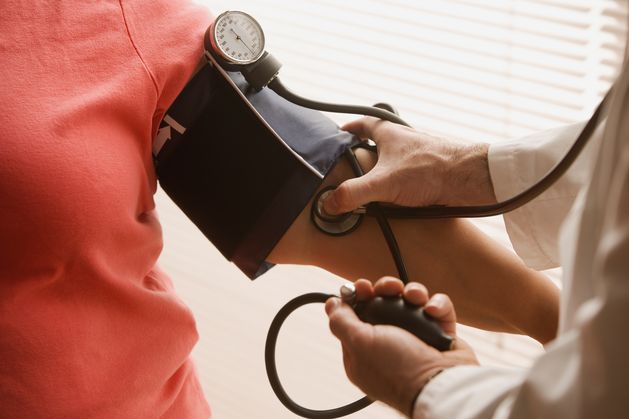
Dr Susan Connolly, Integrated Care Cardiologist, Galway University Hospital, who will speak at an Oireachtas Cardiovascular Health Briefing on Wednesday, will say that if detected early, high blood pressure, know by its medical term hypertension, can be better managed to greatly reduce cardiovascular risk factors.
“Our goal now is to foster a prevention-focused, evidence-based, cost-effective pathway in partnership with patients that allows them to better manage hypertension and significantly reduce cardiovascular risk,” she will tell the meeting.
She will be among a group of leading specialists to make the presentation for improved services in advance of World Hypertension Day next Sunday.
The medics will tell TDs and Senators that stroke remains a leading cause of death and long-term disability, yet up to 80pc of strokes are preventable.
The delegation which will also include patient advocates will call for the establishment of national cardiovascular risk prevention clinics which they say is key to moving away from the inconsistent and delayed-detection care that is currently a feature of the health system.
They will outline the “preventable nature of cardiovascular disease and the urgent need to strengthen prevention-focused care in Ireland to align with international best-practice, and the wider EU’s cardiovascular health ambitions”.
May is also ‘May Measure Month’, a global campaign dedicated to increasing public awareness of blood pressure as a key health indicator.
Hypertension is one of the most significant, and most addressable, risk factors driving cardiovascular disease and stroke.
In Ireland, stroke remains a leading cause of death and long-term disability, yet up to 80pc of strokes are preventable through earlier detection and better management of cardiovascular risk factors, particularly high blood pressure.
Professor Rónán Collins, Consultant Geriatrician and Stroke Medicine, Tallaght University Hospital, will tell the meeting: “Stroke and cardiovascular disease continue to be leading causes of death and disability, with hypertension the silent, modifiable driver of risk.
“Prevention is achievable, but requires a deliberate decision to detect earlier, act earlier and more consistently, moving from pilots and pockets of excellence to national delivery in the form of cardiovascular risk prevention clinics that align with the EU Safe Hearts plan.”
Senator Gerard Craughwell, who will host the event in Leinster House, will add: “World Hypertension Day is the moment to move the conversation beyond awareness and towards coordinated action.
“Today’s discussion adds valuable and diverse perspectives to this vitally important area of cardiovascular health, as we consider how policy and clinical practice can deliver measurable change.”
The discussion in Leinster House will look at current gaps and opportunities in detecting and managing hypertension and cardiovascular risk in the community and the critical role of prevention‑led, integrated care in reducing avoidable disease and health system pressure.
Attendees at the briefing will also hear how stronger national and European cardiovascular health strategies can materially reduce the burden of stroke and heart disease in Ireland.
The Leinster House event will begin with a national ‘call-to-action’ for patient involvement in the development of a clear pathway to support the effectiveness of the new clinics.
The University of Galway will lead the development of a plain‑language, patient‑friendly resistant hypertension pathway, informed by how people actually understand and describe their blood pressure.
Patient engagement will run throughout the summer, with finalisation of the pathway and outputs proposed for September 2026.