
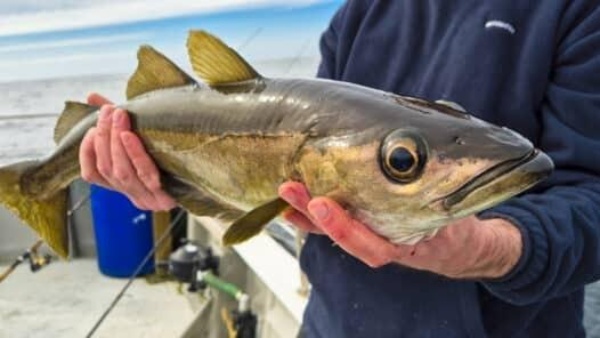
Ireland introduces a three-fish daily pollack limit to support stock recovery and protect coastal angling tourism.
Ireland Brings In New Pollack Conservation Measures
Timmy Dooley, Minister of State at the Department of Climate, Energy and the Environment, has signed a national bye-law introducing new restrictions on recreational pollack fishing in Irish waters.
The Pollack Fishing Conservation Bye-Law (No. 1028 of 2026) gives effect in Irish law to measures set out in EU Regulation 2026/249 on fishing opportunities.
The bye-law will come into force on 1 June 2026.
Three Pollack Daily Bag Limit Introduced
Under the new rules, recreational anglers will be limited to retaining three pollack per day.
Once that limit is reached, anglers may continue fishing only on a catch-and-release basis.
Daily bag limits and catch-and-release rules are commonly used fisheries management measures intended to reduce fishing pressure while allowing recreational angling to continue.
Scientific Advice Warns Pollack Stocks Are Under Pressure
The measures were introduced in response to advice from the International Council for the Exploration of the Sea, which said pollack stocks in the Celtic Seas, including waters around Ireland, remain at low levels.
ICES advised that catches should be restricted to support stock recovery.
Important Species For Angling And Coastal Tourism
Pollack is one of Ireland’s most important recreational sea angling species and is a key target for private anglers and charter boat operators.
The fishery supports tourism businesses in many coastal communities, particularly in areas where sea angling attracts visiting anglers.

Irish Fishing News Patron 2026
Minister Says Action Needed To Rebuild Stocks
Minister Dooley said the scientific evidence showed the stock was under pressure.
“The scientific advice shows that pollack stocks are under pressure and that action is required to support recovery and ensure the long-term sustainability of the stock.
“Pollack is an important species for recreational sea angling in Ireland and supports valuable tourism and charter boat activities in many coastal communities.
“I recognise the concerns that have been raised by the sector and I recently met with representatives to hear directly their views on this matter.
“These measures build on the strong conservation ethic already demonstrated by anglers through voluntary catch and release and participation in scientific data collection.”
Anglers Have Already Adopted Voluntary Conservation Measures
The recreational angling sector has for many years promoted catch-and-release practices for pollack and has contributed data through the Irish Marine Recreational Fishing Survey (IMREC), managed by Inland Fisheries Ireland.
The survey is used to improve understanding of recreational fishing activity and its impact on fish stocks.