
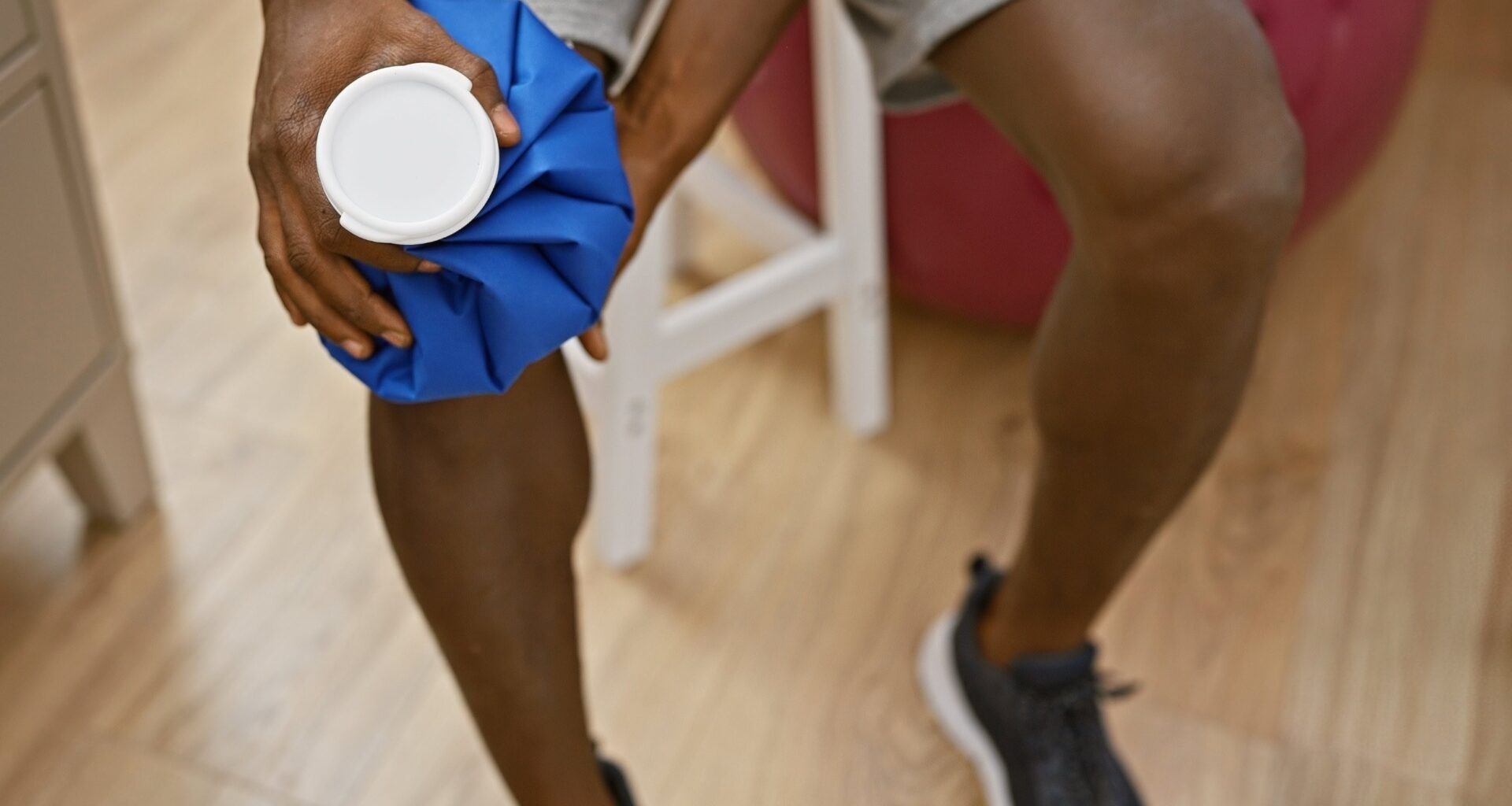
Ask any coach what to do with a sprained ankle and the answer comes back fast – ice it. The logic is that cold reduces swelling, and less swelling should mean faster healing.
Most people add a quiet assumption – if the pain drops, the body must be recovering.

That assumption was put to the test in a recent study. It turns out, the answer is more complicated than anyone expected.
Ice delays healing
The work comes from McGill University. A team at the Alan Edwards Centre for Research on Pain ran experiments with mice to see what icing does to the body’s recovery timeline.
Study lead author Lucas Lima found something that contradicted conventional wisdom.
Cryotherapy – the clinical term for cooling injured tissue – worked exactly as expected in the early aftermath of an injury.
Pain dropped, swelling eased, and tenderness around the affected area faded. Then the picture changed.
Iced animals stayed sore long after the untreated ones had recovered. Instead of resolving in roughly 15 days, pain lasted more than 30 days.
“These results highlight a paradox: treatments that reduce inflammation and relieve pain in the short term may, in some cases, interfere with the biological processes required for full recovery,” said Lima.
Pain lasts longer with ice
The team used two injury models. One triggered tissue inflammation with a chemical irritant.
Another reproduced the muscle damage that follows hard, unfamiliar exercise – the soreness that arrives two days after someone unaccustomed to running tackles a long downhill.
In both setups, the pattern held. Iced animals felt better in the moment, then stayed tender for days past the point where untreated controls had bounced back.
Inflammation and recovery
For most of the past century, inflammation has been treated as the problem to solve. Redness, swelling, heat, and soreness are seen as signs something is going wrong.
The picture has been changing. An earlier paper from Professor Jeffrey Mogil, senior author of the latest study, found that anti-inflammatory drugs such as ibuprofen and aspirin can push acute pain into a longer-lasting form.
In this newer view of healing, swelling is not simply a problem to suppress – it is part of the repair process.
White blood cells called neutrophils swarm the injury site to clear debris and set the next stage of repair in motion. Cool the tissue, and that repair chain appears to get interrupted.
The duration of pain itself
Most prior work on icing has focused on tissue – how quickly a torn muscle knits back together, how completely it regains strength. Pain was a side story.
The McGill team has demonstrated that icing extends the duration of pain itself, not just the timeline for tissue to mend. The cold pack relieves the soreness now and adds days of soreness later.
When the researchers injected neutrophils into the iced limb early in recovery, the extended pain resolved on schedule – as if the icing had not happened.
Earlier animal research had shown icing slows muscle regeneration after an impact injury. This study shows the same interference reaching pain directly.
Ice and drugs may slow recovery
Icing fits a broader debate about anti-inflammatory treatment.
Drugs like aspirin and ibuprofen share a family with the bag of ice, and recent work keeps suggesting the two may have more in common than a shared target.
RICE protocol – rest, ice, compression and elevation – has been the default for sprains, strains and soft-tissue injuries since the late 1970s.
Evidence behind its long-term benefits has always been thin, the McGill researchers noted.
Limitations of the study
Mogil was careful about the scope. All of the experiments were conducted with mice, which does not link directly to human recovery.
The study tested two specific injury types, leaving open questions about other forms of tissue damage.
A clinical trial is already underway in patients recovering from wisdom tooth removal – a procedure that produces predictable, measurable pain in healthy adults.
If the results echo the mouse data, the case for routine icing narrows considerably.
Rethinking the cold pack
Icing does not just slow tissue healing. It extends the pain too – in some cases more than doubling the recovery clock.
That changes the math for anyone reaching for a cold pack after an injury. The relief in the moment is real. The cost arrives later.
Some clinicians have already moved on. A 2025 review of injury-management practice highlighted a newer approach called PEACE and LOVE, which drops ice and anti-inflammatories from the first hours after a sprain.
“Our results suggest we need to better understand when anti-inflammatory strategies are helpful and when they are not,” said Mogil.
The study is published in the journal Anesthesiology.
—–
Like what you read? Subscribe to our newsletter for engaging articles, exclusive content, and the latest updates.
Check us out on EarthSnap, a free app brought to you by Eric Ralls and Earth.com.
—–