
Yet amid the hype, there have been warnings from investors that the deal will hand the mercurial billionaire absolute control of the company, all while exposing funds to a stock with an outsized valuation derived chiefly from its founder’s personal aura.
When SpaceX finally reveals its public prospectus, it is expected to disclose some of Musk’s wildly ambitious goals for the business – and the rewards on offer if he achieves them.
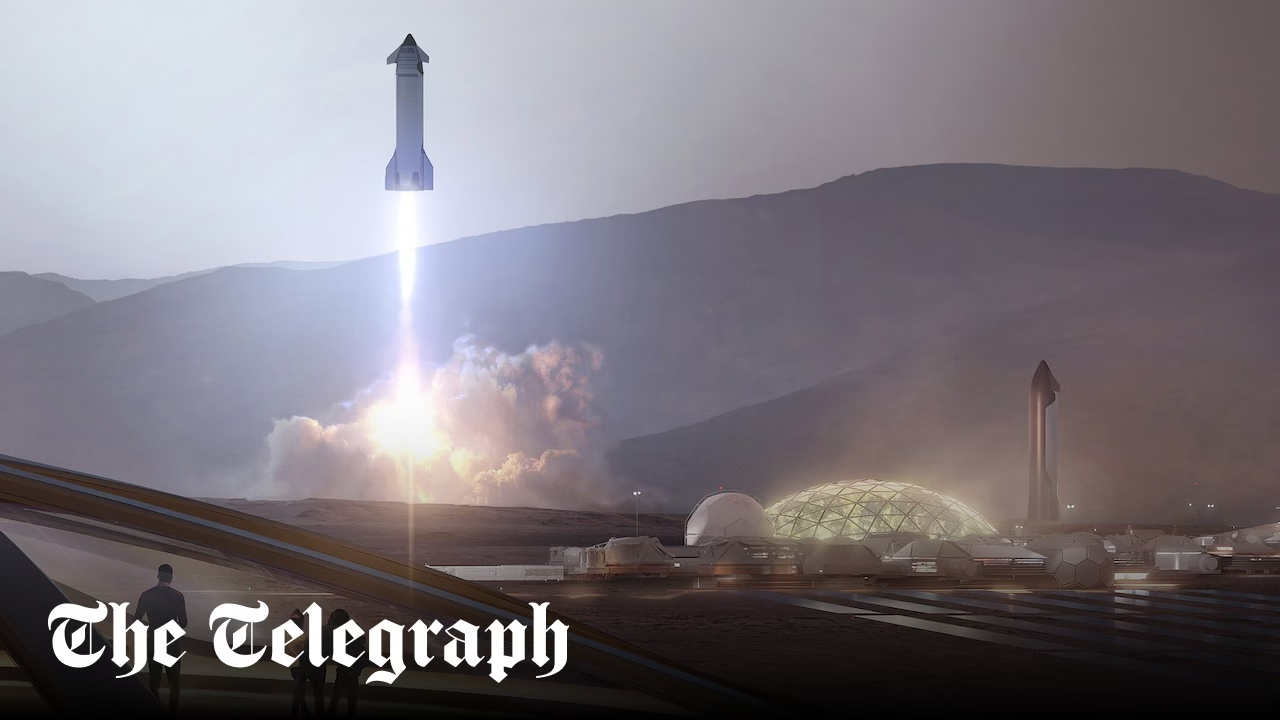
These include an ambition to build a million-person colony on Mars, launching 100 terawatts of data-centre satellites, and reaching an overall valuation of $7.5tn.
If all these goals are achieved, SpaceX will reward Musk with up to 260 million shares in the business. Compensation experts and analysts told The Telegraph this could hand Musk as much as $1tn in stock options.
Eric Hoffman, of executive compensation firm Farient Advisors, says it is “safe to say that it will be worth somewhere between $500bn and $1 trillion”, although the “challenge of these goals is unprecedented”.
He adds: “It was a herculean effort to send four people around the back side of the Moon on an 11-day trip. SpaceX would need to send 1,000 ships each containing 1,000 people to Mars – a one year journey – to meet that one-million-inhabitant goal.”
On its website, SpaceX claims that its self-sustaining city on Mars will require “millions of tonnes of cargo” to be delivered to the red planet, with more than 10 Starship launches per day during a brief window of planetary alignment that opens once every two years. Each ship that eventually makes the passage to Mars will need dozens of refuelling tankers to launch from Earth to load the vessel up for its months-long flight.
SpaceX has claimed that “thousands of Starships will ultimately transfer crew and equipment” to Earth’s neighbour. The company has said it will begin exploratory missions to Mars in 2030.
Musk had once promised an uncrewed mission to Mars by 2022. So far, five of its 11 test missions have ended in total or partial failure.