
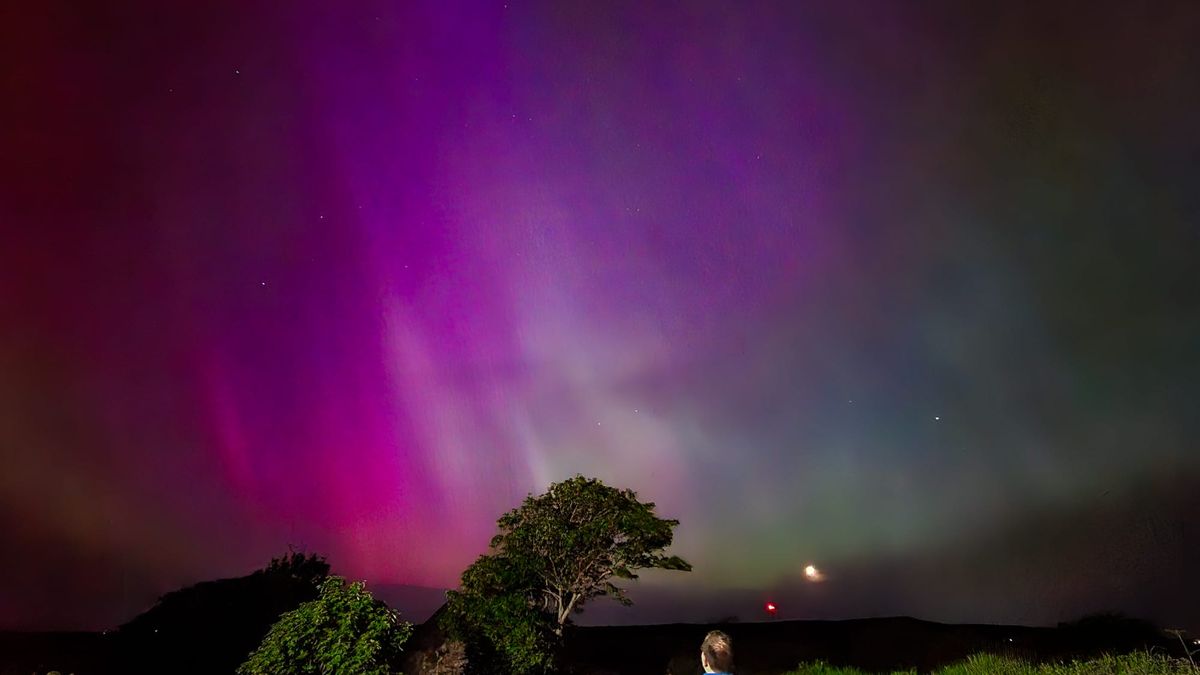
The Sun has released a massive solar flare causing radio blackouts in some areas of the world, with forecasts suggesting the Northern Lights could be visible
10:54, 13 May 2026Updated 12:37, 13 May 2026
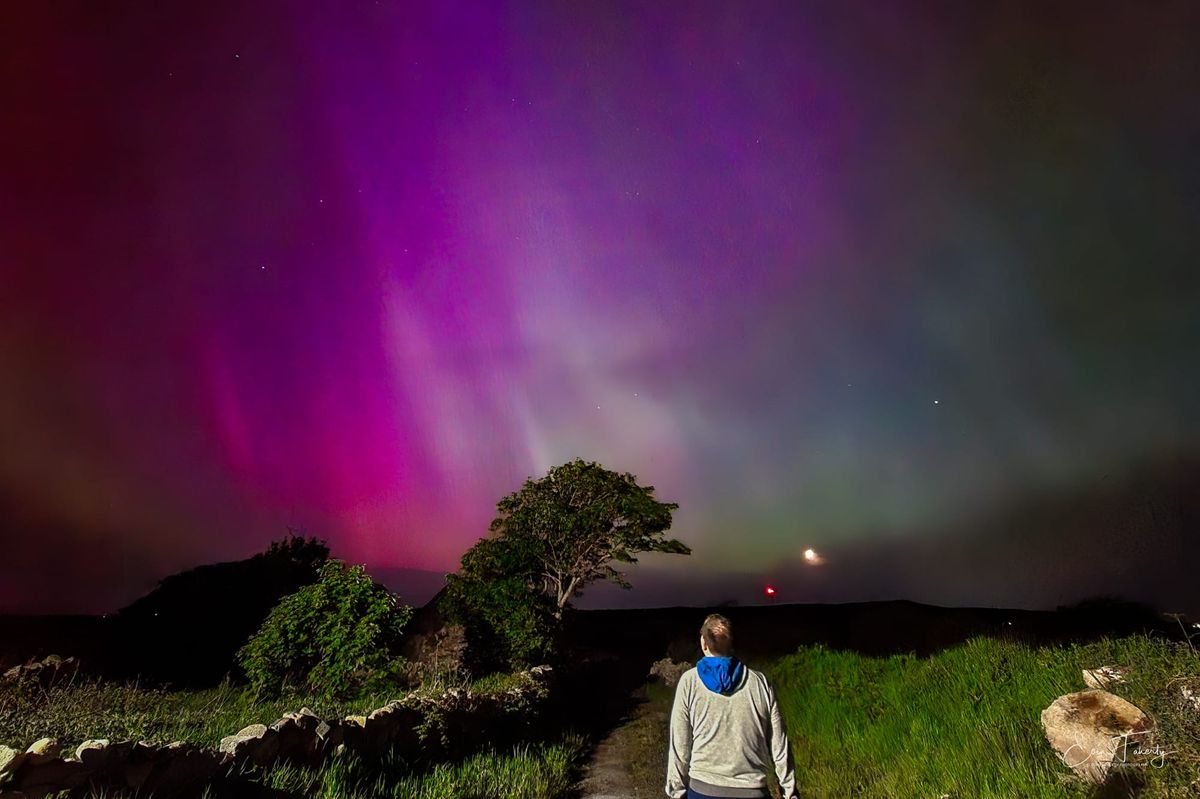
The Northern Lights as seen from Rossaveal, Connemara
Stargazers might be in for a spectacular show this evening as there’s a possibility of witnessing the breathtaking Northern Lights across parts of Ireland.
The Sun has unleashed an enormous solar flare, triggering radio blackouts in certain regions of the world, alongside predictions for Aurora displays tonight.
Aurora Borealis, or the Northern Lights, are a natural celestial phenomenon in Earth’s sky, manifesting as shimmering waves or curtains of colour, mainly green, pink, and red.
The mesmerising colours have captivated people for centuries and we now understand that they result from charged particles from the Sun, or solar winds, colliding with gases in Earth’s upper atmosphere.
The most recent solar flare burst from a sunspot region designated AR4436 on Sunday, which is currently rotating towards Earth. Classified as a coronal mass ejection (CME), it departed the Sun at approximately 1.30pm on 10 May, reports the Mirror.
Parts of the west and north coast would offer the greatest chance of seeing the northern lights.
Weather conditions inevitably play a crucial role in determining whether people get an opportunity to witness the phenomenon, and the outlook appears mixed with a low pressure system delivering spells of rain.
Met Eireann’s forecast notes that “scattered showers will continue tonight. There will be some clear spells at first but cloud will increase overnight. Lowest temperatures of 3 to 7 degrees with light to moderate northwesterly winds.”
Generally speaking, the optimal locations to observe the display are regions situated closer to polar areas, as the Earth’s magnetic field channels particles towards the poles.
For this reason, the Northern Lights tend to be more visible in Northern Ireland, Donegal and parts of the west coast. That said, during severe space weather conditions, the lights can be witnessed right across the UK.
This year marks a once-in-a-decade occurrence with the solar maximum. This exceptional event sees the Sun experience elevated magnetic activity, and scientists anticipate it will reach its peak before diminishing once more until the mid-2030s.
Join Galway Beo’s top stories and breaking news service on WhatsApp. Click this link to receive breaking news and the latest headlines direct to your phone.
We also treat our community members to special offers, promotions, and adverts from us and our partners.
If you don’t like our community, you can check out any time you like. If you’re curious, you can read our Privacy Notice.