
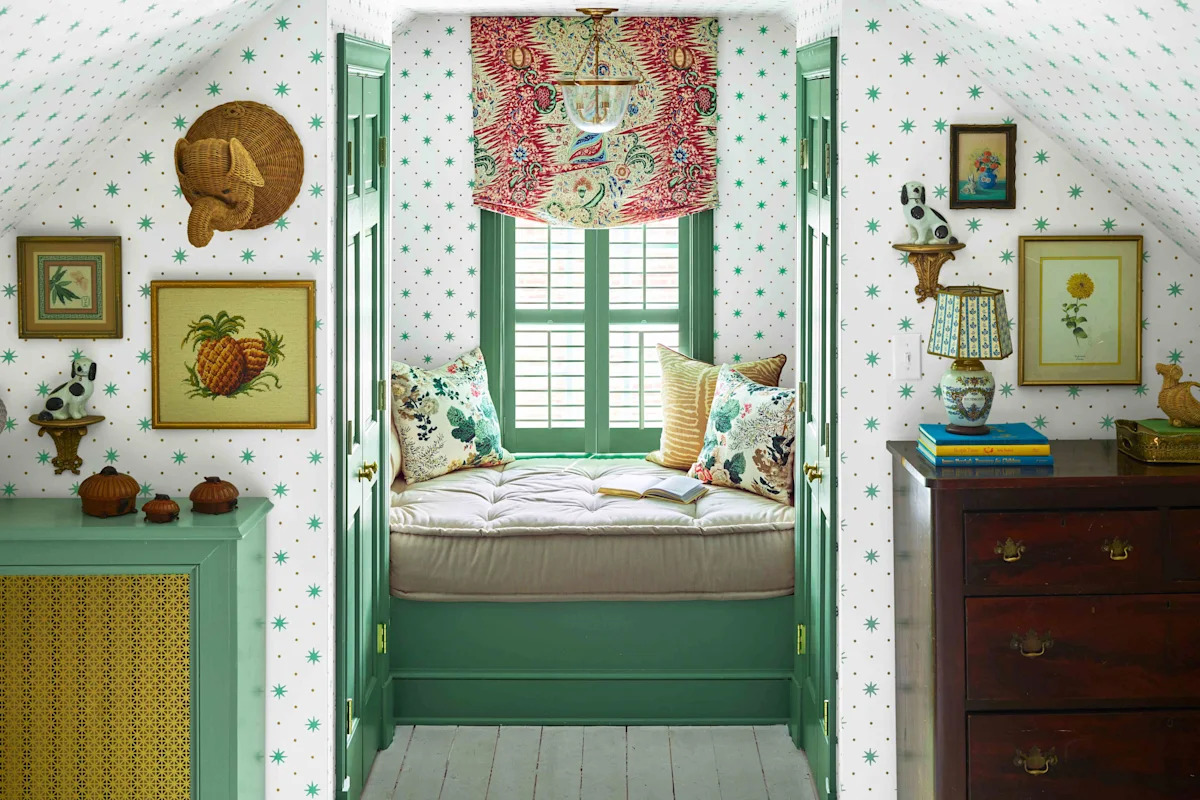
If there’s a certain room in your house you and your family members tend to avoid, it might be how the space is subconsciously making you feel. Rooms that strike a balance between bright and cozy are natural gathering magnets, simply because they’re more cheerful places to dwell.
The good news is that all it takes is a few simple design changes to make a big impact. We sought some advice from three Southern designers who work with clients regularly on this very goal. Here are some of their trade secrets for making a room go from drab and heavy to bright and light.
Meet the Experts
Ashley Gallion founded Ashley Ayer Interiors in 2003. She operates this full-service design firm in Montgomery, Alabama.
David Fruscione is the principal designer at Republic of Decor, based in Greenville, South Carolina, and Naples, Florida.
Nichole Blough is a designer in Raleigh, North Carolina, specializing in colorful, yet timeless interiors.
Reflect Light
According to Alabama designer Ashley Gallion, you don’t necessarily need to add more lighting to a room to make it feel brighter. Making intentional design choices that reflect the current lighting situation can make a huge difference.
“I love incorporating mirrors and reflective materials to help bounce the light off both natural and artificial light throughout the space,” she says.
To really leverage the power of reflective surfaces, be strategic about where you place them in relation to the room’s lighting. Consider putting one across from a window or directly behind a lamp.
South Carolina designer David Fruscione’s signature move for making a room feel lighter is installing framed mirror panels over an entire wall, which he says adds an architectural feel and emulates the look of a window.
Add Wallpaper
Credit: LAUREY W. GLENN
If there’s one change that has the most potential to uplift an entire space, North Carolina designer Nichole Blough says it’s adding wallpaper. “If a room feels flat or lifeless, wallpaper is almost always my first move,” she says. “It immediately adds personality, gives the room intention and purpose, and naturally makes the space feel brighter.”
When working with a darker or more closed-off space, she suggests leaning toward a statement pattern or a bold color combination to create the illusion of a larger, brighter space.
Hang Oversized Artwork
According to Fruscione, one of the best ways to add interest to a room is by drawing inspiration from a museum. “If a room is feeling dark or drab, I would explore adding a series of bright, whimsical artwork to draw your eye into the space and shift the feel from dreary to dynamic,” he says.
He also points out that you shouldn’t be afraid to hang large-scale pieces, which are great for livening up large, empty walls.
Add in Small Pops of Color Throughout
Credit: Laurey W. Glenn, Styling: Buffy Hargett Miller
Adding cheer to a space doesn’t have to look like adding one big pop of a bold color. In fact, Blough says there’s a better and safer approach to take (especially if you’re a little color-adverse).
“Instead of one big pop of color, try adding variety through smaller moments like art, pillows, lampshades, and accessories,” she says. “It feels more natural and unexpected and gives the illusion of a brighter overall space because the colors are spread throughout.”
Hang Sheer Curtains
There’s no denying that thick drapery adds visual weight to a space. In the right room, it can serve as an anchor. But Gallion says this window treatment is not a good choice for rooms that already feel dark and stuffy.
“I typically also use a lighter, sheer curtain in these types of rooms instead of a heavy drapery to let the natural light in,” Gallion says.
If privacy is a concern, you can layer your sheer curtains with lined Roman shades.
Lighten (But Don’t Wash Out)
When trying to make a room feel brighter and airier, your first instinct may be to paint everything white. But according to Blough, that can easily backfire on you and lead to a washed-out look. Instead, play with a bit of contrast and layer in a few dark or medium-toned pieces.
The key is to keep the backdrop light. “I like to start by lightening the base layers of the room, which typically means working with the foundation first: the paint, trim, floor coverings, etc.,” she says. “By lightening up these core layers, you set the tone of the room and create a light and airy base to work from.”
Read the original article on Southern Living