
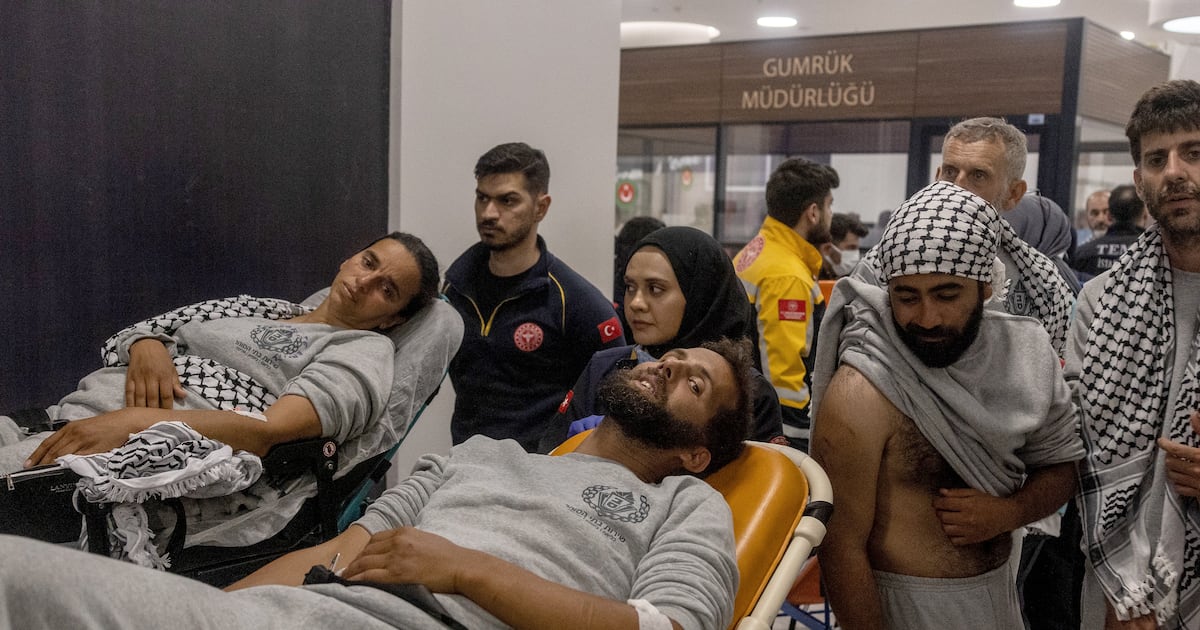
Irish activists detained by Israel after taking part in the Gaza aid flotilla are due to fly home on Saturday.
Human rights campaigner Caoimhe Butterly, who was on a vessel monitoring the flotilla, on Friday said the activists were “pretty shaken”.
“We were up until 5am doing medical screenings and legal depositions with all 429 deported participants.”
Butterly, a psychotherapist, told RTÉ’s Morning Ireland some of the activists were subjected to particularly traumatic experiences, including alleged sexual violence.
“The accounts that we’ve heard range from pretty severe physical violence that resulted in broken bones, concussions, lacerations … psychological violence,” she alleged.
Butterly claimed people reported “pretty sobering accounts of sexual violence”. In some instances, alleged assaults were carried out “in the presence of other participants who were unable to intervene or unable to help because they were handcuffed while being forced to watch the assault of their colleagues in front of them”, she said.
The Irish activists were expected to fly home on Saturday afternoon, she said.
Fourteen Irish citizens, including Margaret Connolly, sister of President Catherine Connolly, were among the more than 400 people deported from Israel on Thursday.
Australian detainees also alleged they and other flotilla members were subjected to abuse after being intercepted. The Israeli ambassador to Australia, Hillel Newman, claimed the detained flotilla members were handled with “great sensitivity”. He rejected claims of violence and sexual abuse.
“Out of the 400-plus people that were on the flotilla, no one was harmed,” he told Australian TV network ABC on Thursday.
Irish activist Caitríona Graham on Thursday night said she and her fellow activists were subjected to violence and psychological torture after being detained by Israel.
“At various points there was a clear reality anyone could be attacked … We had one person shot with a rubber bullet for crossing a line we had no idea we weren’t meant to cross, so it was very clear they were ready to use violence,” she told RTÉ’s Prime Time.
The Israeli foreign ministry confirmed all the activists had been deported. Footage of them arriving in Turkey was shared by the Global Sumud Flotilla on social media.
The activists were arrested at a port in southern Israel after the Israeli navy intercepted their protest flotilla in international waters on Monday. Their treatment by police officers, under the direction of Israel’s minister for national security Itamar Ben-Gvir’s direction, drew international outcry and a rebuke from prime minister Binyamin Netanyahu.
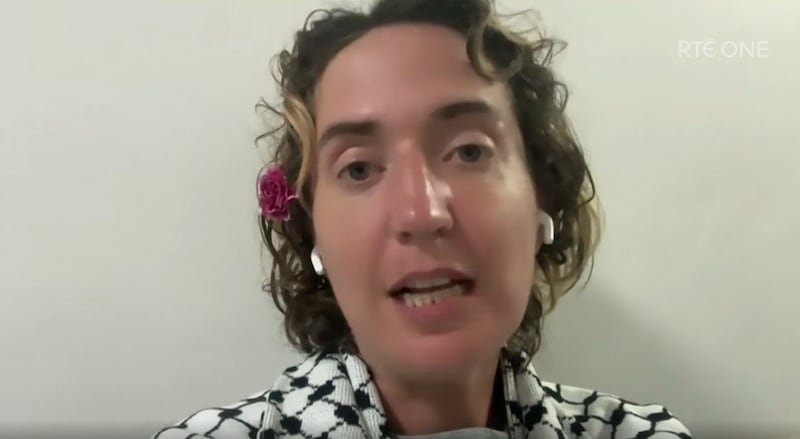 Irish activist Caitriona Graham. Photograph: RTÉ Prime Time
A widely circulated video showed a detained Graham standing up and chanting “Free, free Palestine” at Ben-Gvir, before being restrained by soldiers and pushed back down by the head to a kneeling position.
She said: “When I saw him coming, knowing the horrific crimes he has committed, I could not stay silent. I called ‘free Palestine’ as loudly as I could and I faced the repercussions.
“I was pulled to the ground, dragged away and brought into isolation and then had about eight commandos discussing in Hebrew what they were going to do to me, so I was preparing myself for anything that could happen next.
“It was not too violent, thankfully, especially compared to what many others have experienced, but it was definitely a very real danger”.
[ Israeli far-right minister’s Gaza flotilla abuses likely to be a vote-winnerOpens in new window ]
Graham said flotilla detainees were strip-searched and “a lot of psychological torture and sleep deprivation tactics” were used.
“This time on the prison boat, we were stripped of any warm clothing and left without any mattresses … So many different things to try and disrupt us. We know we need to do everything we can … to hold on to our power to make change happen,” Graham said.
Palestine activist Greta Thunberg on Friday described the video of Ben-Gvir as “beyond appalling”.
Thunberg, who has participated in previous Gaza aid flotillas, dismissed claims by the Israeli government that the manner of detention was not in line with Israeli values.
“They are a society built on genocide, ethnic cleansing and apartheid. What treatment would be in line with their values?,” she asked.
Thunberg said the detained activists seen in the video were “standing up in the face of inaction from their governments” under international law towards Gaza civilians.
“International law is becoming a graveyard, we know that,” she said.
“The fact that they are being treated like this, also in the context of thousands of Palestinian hostages as we have seen, that’s not a world we want to live in.”
Asked about Ireland’s progression of the Occupied Territories Bill (OTB), Thunberg said she viewed this as the “bare minimum”.
“I welcome the efforts, but I think we need to do more,” she said.
Thunberg was in Stuttgart to attend the trial of Dubliner Daniel Tatlow-Devally. He and four others stand accused of trespassing and criminal damage last September at a facility in Ulm owned by Israeli arms company Elbit systems. They also face charges of using symbols linked to the terrorist organisation Hamas.
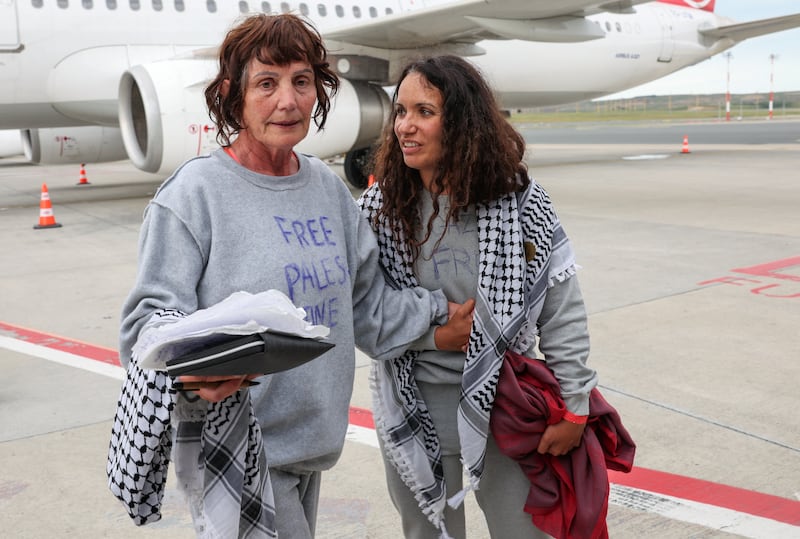 Margaret Connolly (left), sister of President Catherine Connolly, was among those detained and deported by Israel. Photograph: Murad Sezer/Reuters
Minister for Justice Helen McEntee confirmed on Thursday the Government planned to publish the long-delayed OTB, which would seek to restrict trade with illegally occupied settlements in Palestine, in the coming weeks. The Government looks set to ignore calls to include services in the legislation.
Taoiseach Micheál Martin has written to the president of the European Council calling for a European Union-wide ban on products from Israeli settlements and the suspension of the EU’s Association Agreement with Israel following its “shocking treatment” of the activists.
— Additional reporting: The Guardian