
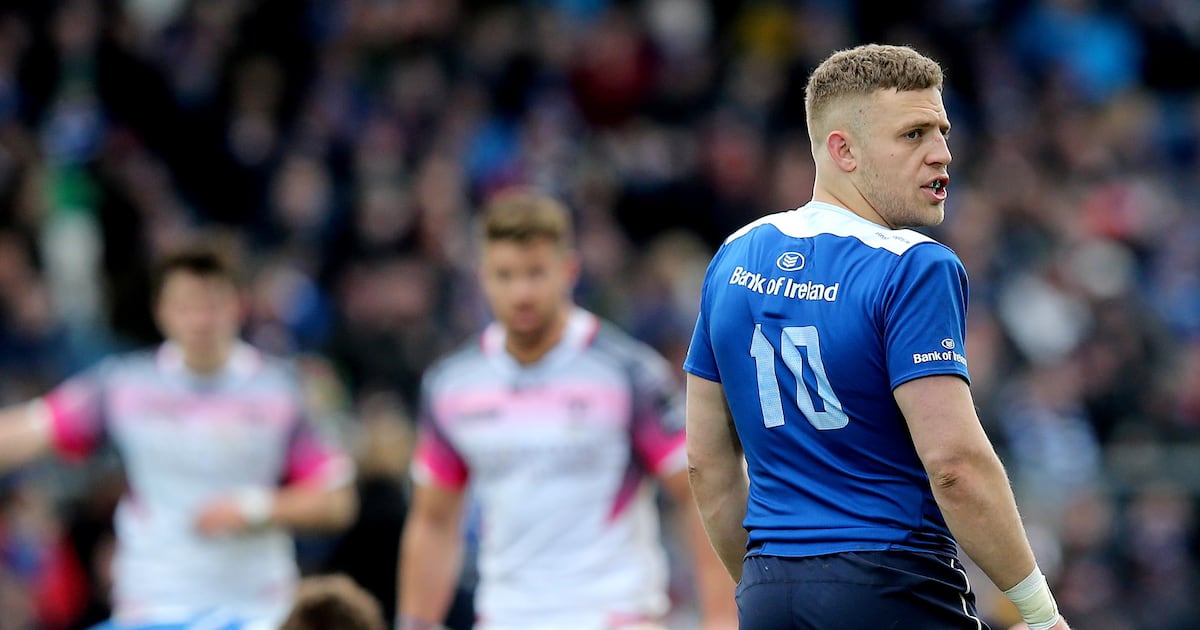
Reflecting on his one season with Bordeaux-Bègles, Ian Madigan says there were some exceptional highs and lows. The excitement of living in a beautiful city and the freshness of a preseason with a new team was followed by a dream debut in the Stade Chaban-Delmas, helping UBB to beat a Racing side who were the reigning French champions and featured a certain Dan Carter.
“That high sustained itself for probably two or three months,” he adds, and in November UBB were second in the Top 14 and going well in their debut Champions Cup campaign. But, reflecting both the improved depth of their squad and their approach to Europe under Yannick Bru, having beaten Exeter away in the first of the December back-to-back matches, head coach Raphaël Ibañez rotated his side a week later.
“I remember watching that game from the stand with Adam Ashley-Cooper and just could not get my head around why I wasn’t playing. We lost the game by eight points and we didn’t qualify by one point, and that left a seriously sour taste in my mouth, because I still had ambitions of playing for Ireland and I knew that my shop window wasn’t necessarily the Top 14. It was the Champions Cup.”
 Can Leinster break their European hoodoo?
He also suffered a bad groin injury and returned to an out-of-form team when at only 60 or 70 per cent of his capacity.
“The club was in kind of turmoil with the coach. The players had lost faith in the coach and the coach [equally] lost faith in some of the players, me being one of them.”
An offer came in from Bristol and UBB were receptive to Madigan leaving midway through a two-year deal. Then they sacked Ibañez, brought in Jacques Brunel and had him wondering about the move, although he has no regrets about his subsequent three seasons apiece with Bristol and Ulster.
“But I think it’s really important to note that the stability of Bordeaux as a club now versus the one that I was playing in is very different.”
This is a busy weekend for Madigan, with plenty of skin in both European finals, with Ulster in the Challenge Cup final while, of course, Leinster and Bordeaux-Bègles clash in Saturday’s Champions Cup final in Bilbao’s San Mamés Stadium (kick-off 2.45pm).
[ Where the Champions Cup final between Leinster and Bordeaux will be won and lostOpens in new window ]
As well as being part of Premier Sports’ team on both finals along with Simon Zebo, Andy Goode, John Barclay, Stephen Ferris and Lawrence Dallaglio, he will be co-commentator alongside Miles Harrison for the Champions Cup final.
Doing “co-comms” is a recent change of role for the articulate Madigan, who finds it both more challenging and more exciting, and credits Ryle Nugent for giving him guidance. But Madigan is not remotely inclined to hide his allegiance.
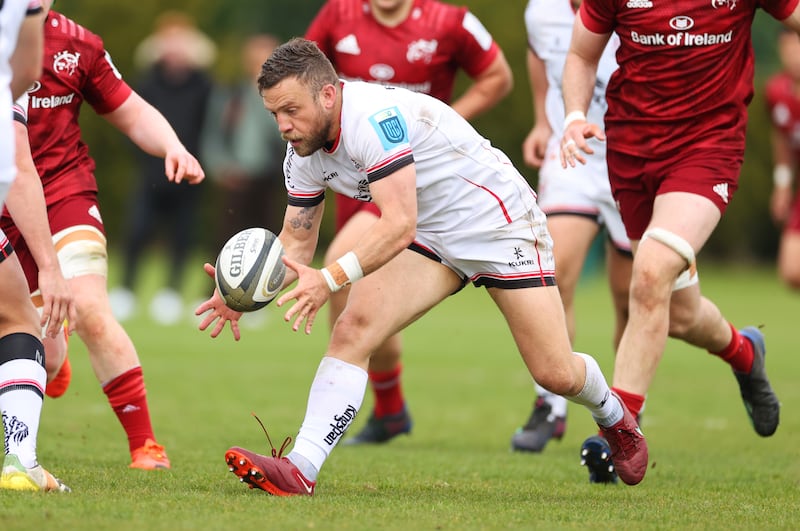 Ian Madigan of Ulster in a Munster A vs Ulster A
in Dublin in April 2023. Photograph: Nick Elliott/Inpho
“I’m not emotionally detached,” he admits with a broad smile. “I try to be measured in my approach. But at the end of the day Leinster is my boyhood club. I have followed them from the age of three or four and gone to more Leinster games than you can imagine, and then played for the club for eight years after going through the underage system and the academy.”
Even in the last two years Madigan reckons he’s watched “close to 60” Leinster games.
“There are times when the club will be criticised and I’ll try and view it from their lens as well and try and be balanced and measured. But in the cold heart of the day when I’m doing commentary during the games, I want them to win, for sure. There’s no two ways about it.”
The highlight of his time with Leinster was a run of five home games either playing alongside Johnny Sexton at 12 or in his stead as they completed a Challenge Cup/Pro12 double.
“That was a very special run of games where the game felt very easy. I was very in control of the game plan that we were playing. It was just a really enjoyable period of time.”
Madigan also has two Champions Cup winners’ medals after being a late replacement for Sexton in the finals of 2011 and 2012, but they were very different experiences.
He looks back on ultimately spending the last three years of his career at Ulster “very fondly”, coming to peace with his reduced game time and adapting to more of a mentoring role.
“There’s an amazing crew of people up in that club and I would love to see them win a trophy. They deserve it because they’ve come so close.”
Madigan had also played in all five games of the 2015 World Cup and helped Ireland beat France in the pool decider as a first-half replacement for Sexton before starting the quarter-final against Argentina. But after that high came a harsh realisation, with Sexton returning from Racing 92.
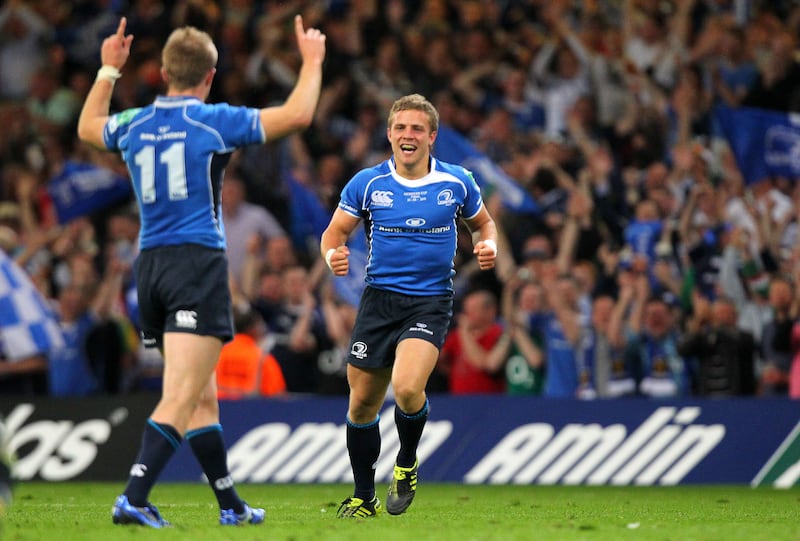 Leinster’s Ian Madigan celebrates at the final whistle in the Heineken Cup final in May 2011. Photograph: Ryan Byrne/Inpho
“I probably didn’t see myself in the starting Leinster backline when everyone was fit. That was really tough when you’ve tasted that for a few seasons.”
He also effectively ended his 30-Test international career at the end of that season by moving to Bordeaux. You wonder if Madigan had any regrets over that choice.
“No, I think every decision you make is the right one if you make it,” he reasons. “Certainly, it really made me grow up and mature as a person. I’d say that about all the moves I made. At the same time, human nature, you’re always going to look back and think ‘what if’ at times. I do that but not as regularly as people might think.
[ Ian Madigan happy to have followed his own star after a career less ordinaryOpens in new window ]
“Yes, I would love to have had more Irish caps and I would have loved to have been part of the Leinster team that won the 2018 Champions Cup but I was blessed with the career I had and I look back so fondly on the eight years that I had with Leinster.”
Looking ahead to this final, as good as UBB are, Madigan notes they’ve been beaten 10 times in the Top 14 this season, albeit there are mitigating factors in that and he also feels their style is more suited to the Champions Cup.
He points to their ability to soak up a huge amount of pressure while selectively going after opposition rucks. “And then they are the best club team in the world at capitalising from those turnovers.”
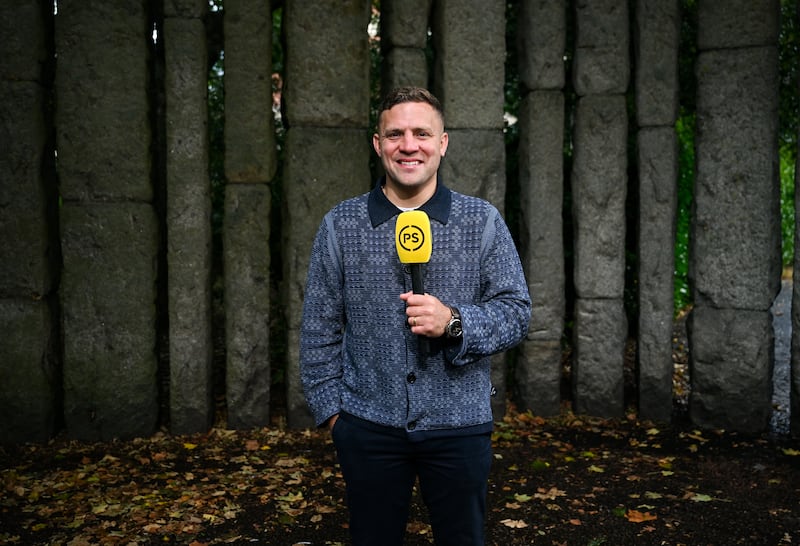 Former Ireland rugby player Ian Madigan promoting Premier Sports in September 2025. Photograph: David Fitzgerald/Sportsfile
Yet Madigan also talks enthusiastically about Jacques Nienaber’s defensive system.
“Defence wins championships. It’s won the last two World Cups for South Africa. He has run that defensive system. It works. Leo was trying to make that work for Leinster.
“It hasn’t worked at times. You think back to Northampton, but that isn’t his system not working. It’s the players not executing on the system.
“That’s what happened against Northampton – stuff like kick-chase and urgency just simply wasn’t there. But there’s been times when this defensive system has looked incredible and teams could be there for days and they won’t score.”
Madigan is not just a fan with a microphone, though, and he was critical of the Leinster attack for the first half of the season.
“I’m up in the comms box; I want to talk about moving the point of contact and deception and good pass quality and the different options the team are taking, but Leinster weren’t giving me a whole lot to analyse.
“It was blunt force, forwards around the corner, ground and pound, pound the rock as Joe McCarthy would say. It was good enough to scrape a lot of wins against teams that Leinster were considerably better than.”
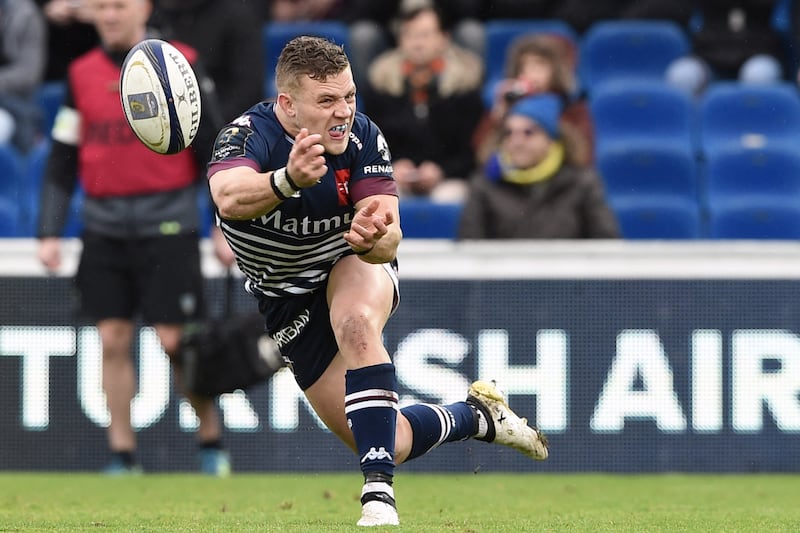 Bordeaux-Bègles’ Ian Madigan during the Champions Cup match between Bordeaux and Clermont in January 2017. Photograph: Nicolas Tucat/AFP via Getty Images
But he has been encouraged by a distinct shift since the Six Nations.
“Suddenly the ball’s getting moved out of the shapes off 9 and off 10 and suddenly the forwards are looking to tip it inside and outside and they’re putting footwork on and there’s deception with dummies and change of lines of running.”
Citing the semi-final against Toulon, the second half against the Lions and the Ospreys, he says: “I think the attack is beginning to really hum.”
[ Can Leinster break their losing streak in European finals against Bordeaux?Opens in new window ]
Central to this has been the playmaking of Harry Byrne, for whom this is a defining period of his career.
“I believe he’s ready for it. I was delighted to see him go to Bristol last year, experience a different culture, a different head coach, a different group of players, a different style of playing.
“I met him during the summer and we were talking about it. We bumped into each other and we just chatted briefly about that. I remember walking away from the conversation and thinking, ‘he’s going to have a great season this year.’
“His goal-kicking is metronomic. I love his kicking style. He’s long through the ball. He’s a really sweet striker of it. He missed a few against Toulon that he would be expected to get, but I would expect him to turn things around in this final and kick north of 80 per cent, hopefully north of 90 per cent. That’s probably what’s needed.
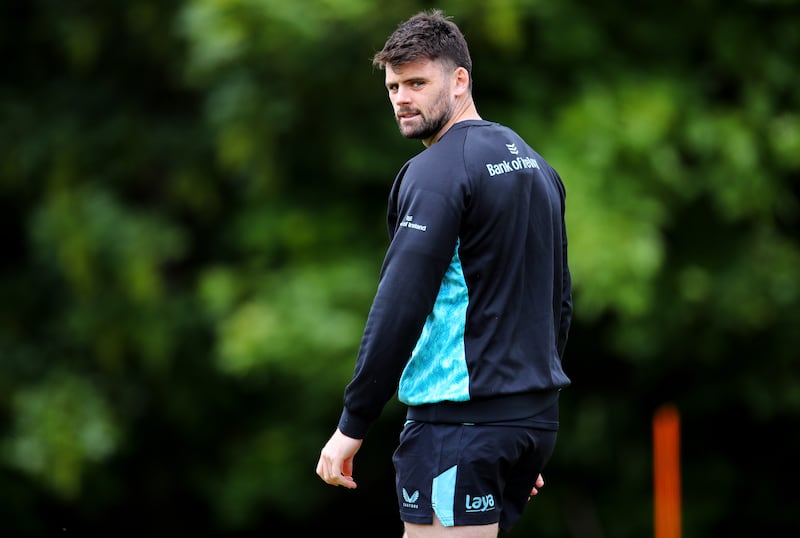 Leinster’s Harry Byrne at Leinster Rugby squad training in UCD on May 11th. Photograph: Grace Halton/Inpho
“But outside of his goal-kicking, it’s the way he’s ran the Leinster attack. He’s a seriously high-quality passer of the ball. Takes the ball to the line very well. Very slick passer.”
Madigan has other reasons for feeling optimistic about Leinster’s chances.
“The biggest thing that’s impressed me about this Leinster team this year that probably hasn’t been spoken about a whole lot is their adaptability.”
This has happened mid-game, be it adapting to the opposition or the conditions, such as taking on Leicester up front, resorting to a shorter passing game against Edinburgh, and using the short side when down to 13 players against Toulon.
“To be able to change your strategy in a game is really difficult because you’re effectively saying what we’re doing isn’t working,” says Madigan, adding: “Gibson-Park and Harry Byrne have done that.”
He doesn’t anticipate either side having a marked set-piece supremacy, whereas “the aerial contest will be huge”, before concluding: “I think the winning and losing of the game is between the 10-metre lines, where I don’t think Bordeaux are going to be able to live with the Leinster line speed. I can see Leinster forcing Bordeaux to make mistakes, forcing Bordeaux to give penalties.
“And then that’s going to allow access for Leinster to get into the Bordeaux 22. And the hurt from the last four finals, I think, is going to be enough to drive Leinster up off their feet, around the corner, ground and pound, pound that rock and find a way to win.”