
“You’ve asked me, and I am not the Finance Minister, I am just a minister saying, you ask me personally, as a former Treasurer of this country who wrote Budgets in the 1990s, I can’t see any reason to raise the Official Cash Rate.”
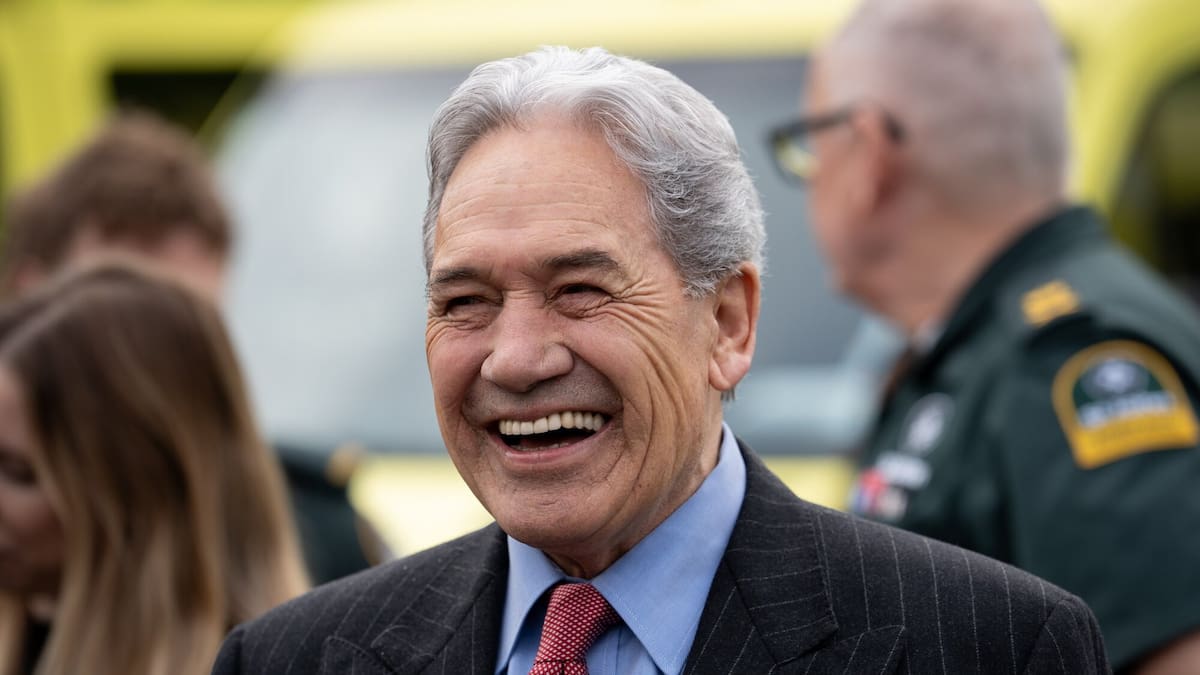
Winston Peters spoke to reporters as the Reserve Bank was about to announce its Official Cash Rate decision. Photo / Anna Heath
Later, after the Reserve Bank of New Zealand (RBNZ) said it was keeping the OCR unchanged, Peters said reporters had been “caught out” because Governor Dr Anna Breman “kept it there and so you’ve got no case at all”.
“I’m not interfering with her. I’ve just made a very clear statement about the state of affairs that I saw.”
Asked why he thought the OCR should be kept on hold, Peters said it was “very obvious”.
“It’d be counterproductive for the growth in the economy for a start.”
Peters didn’t express an opinion on what the MPC should do at future OCR meetings.
When Finance Minister Nicola Willis was asked for the Government’s opinion on today’s OCR decision, she responded by saying it’s “not for me to state a preference on what should happen with the OCR”.
“Ultimately, that is the independent decision of the Reserve Bank’s Monetary Policy Committee,” she said, noting she set the bank’s overall mandate to target inflation of between 1% and 3%.
When the Herald then highlighted that Peters had expressed his preference and asked if that was appropriate, Willis said she hadn’t reviewed his comments.
“I would want to do so before commenting on your questions.”
The Herald offered to play the Finance Minister audio of Peters’ comments, but she declined.
However, Willis said she believed Peters respected the independence of the bank.
Finance Minister Nicola Willis wouldn’t comment on Winston Peters’ remarks about the OCR. Photo / Mark Mitchell
The RBNZ said near-term inflation had been increased by the ongoing Middle East conflict, while economic activity had weakened. It projected inflation to peak at 4.3% in the September quarter, before falling back to the 2% midpoint in mid-2027.
“The outlook for medium-term inflation pressures is also uncertain,” the bank said in a summary of its decision.
“These could remain elevated if households and businesses expect higher costs in future and build those expectations into price- and wage-setting decisions today. However, weak demand and elevated unemployment will dampen medium-term inflation pressures.”
It said it wanted to ensure increased costs don’t lead to elevated inflation, but also avoid unnecessary economic volatility.
“On balance, the OCR will most likely need to increase sooner and by more than envisaged in the February Monetary Policy Statement. The pace of OCR increases will depend on the relative influence of persistent wage- and price-setting behaviour versus weaker economic activity on medium-term inflation pressures.”
Willis said the central bank had “weighed up the potential for higher inflation”, while also “acknowledging that that’s having downward pressure on the economy and its growth prospects”.
She also noted that the bank had revealed how members of the MPC voted, which she believed would help the public understand the decision.
Jamie Ensor is the NZ Herald’s chief political reporter, based in the press gallery at Parliament. He was previously a TV reporter and digital producer in the Newshub press gallery office. He was a finalist in 2025 for Political Journalist of the Year at the Voyager Media Awards.