
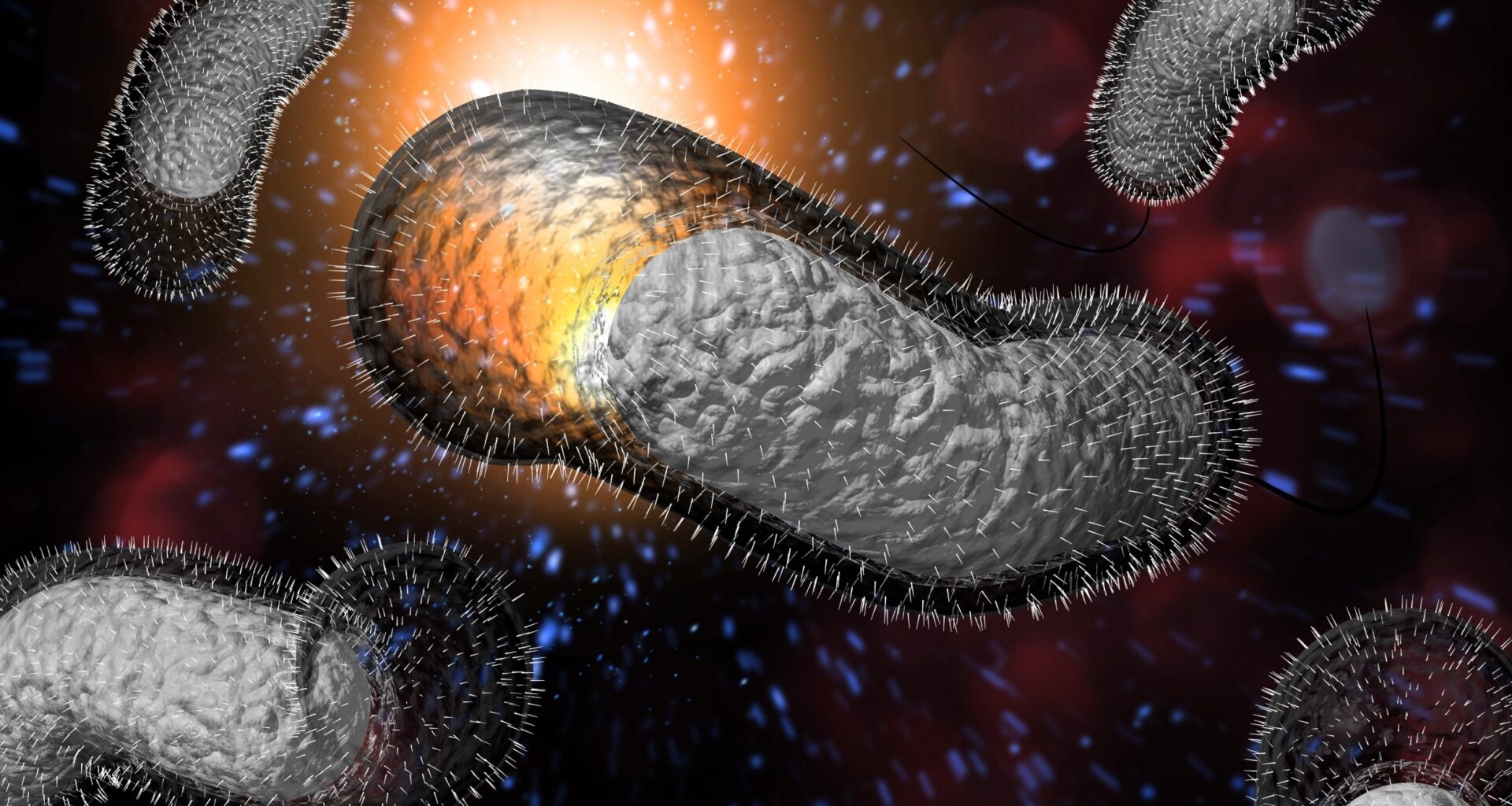
A rod-shaped bacterium stays rod-shaped because its outer wall holds it that way. Change that wall’s chemistry, and the form changes too – which is why the wall became the original target of antibiotics like penicillin.
What took far longer to understand was the role of a peculiar coating on that wall. Strip it away, and the rod dissolves into a soft, formless blob within the hour.
A mysterious bacterial transformation

The bacterium survives in this new state, growing slowly with a completely different set of builders. That transformation has a well-known trigger.
Remove a family of molecules called teichoic acids – long chains that coat the outer walls of many bacteria – and rod-shaped cells quickly become soft, rounded blobs.
Scientists knew what caused the change, but not why it happened. A team of researchers set out to investigate the decades-old puzzle.
Felix Barber led the work as a postdoctoral researcher at New York University (NYU) and now runs a lab at Ohio State.
Much of this story centers on Bacillus subtilis, a rod-like bacterium found in soil and in the human gut. It helps make the fermented Japanese food natto, certain antibiotics, and ingredients used in skincare.
Watching cells in action
To learn what teichoic acids actually do, the team had to watch the wall change as it happened.
They trapped single cells in a tiny fluid channel, stripped away the acids, and tracked the wall-building proteins with a laser-tuned microscope.
Two systems build that wall. Clusters of proteins called Rod complexes add material in tight bands around the cell, hooping it into a firm cylinder.
A separate enzyme, PBP1, usually plays a minor role, patching small flaws left behind.
The circling motion of those protein clusters is a reliable sign that they are hard at work.
A separate paper has traced how they keep the cylinder at a steady width as the cell grows.
How rods lose their form
Removing the acids set off a fast chain reaction. Within minutes, the rod-builders stalled, and the cell stopped reinforcing its sides.
At nearly the same moment, the patch-up enzyme that normally stays quiet sprang into overdrive.
That swap explains the blob. Rod complexes build in one direction, cinching the cell into a rod. PBP1 adds material in every direction at once.
With PBP1 activity now dominating, the cell widened and lost its outline.
Until this work, no one had caught it as it happened. Earlier studies had seen the finished blobs and the busy proteins, but not the switch from one builder to the other.
Holes in the wall
The harder question was why. Why would pulling out teichoic acids wake an enzyme that normally sits idle? The team suspected the acids were doing a humble but vital job: filling holes.
Zarina Akbary, a graduate student on the team, built a method to gauge the wall’s pores at a scale too small to see.
With it, the team watched holes open across the wall within minutes of stripping the acids out.
That pointed to a small but central job for teichoic acids: filling the wall’s natural gaps.
With those gaps sealed, Rod complexes keep working smoothly and PBP1 stays quiet. Remove the acids, and the gaps reopen.
The holes themselves appear to be the signal. PBP1 carries a floppy, charged tail that seems to sense the gaps and rush to seal them. Exactly how it reads the damage is still unsettled.
A cellular backup plan
Strip the acids from cells that also lack PBP1, and growth stops cold. The wall thins. Pores multiply.
The cell quits dividing – yet, oddly, the rod form remains right to the end.
Blob growth needed a partner, too. A second enzyme, one that normally trims the wall so a rod can stretch, turned out to be just as essential once the acids were gone.
The cell wasn’t limping along on a broken system. It had switched to a different one.
Teichoic acids steer both the building and the breaking down of the wall – and when drugs strip them away, the cell falls back on this backup.
A separate study has shown how tightly cells tune these enzymes as they grow.
Broader implications of the study
The blobs may also echo deep history. Stripped of teichoic acids, B. subtilis runs on a much smaller toolkit than a rod needs.
“Cells without teichoic acids could therefore represent a model for simpler, primordial cells,” said Barber.
These findings have implications for medicine. The bacterial wall is the target of frontline antibiotics, and teichoic acids sit near the heart of antibiotic resistance.
Block the production of teichoic acids in the drug-resistant staph called MRSA, and it can fall to old drugs again.
What long stumped scientists now has an answer: teichoic acids seal the wall so the right builder stays in command. For drug developers, that offers a precise new target.
One recent study found that pairing teichoic acid blockers with other wall-targeting drugs can push bacteria over the edge. That kind of combination could sharpen the next round of treatments.
The study is published in the journal Nature Microbiology.
—–
Like what you read? Subscribe to our newsletter for engaging articles, exclusive content, and the latest updates.
Check us out on EarthSnap, a free app brought to you by Eric Ralls and Earth.com.
—–