
How does the planet Venus resurface itself? This is what a recent study published in the Journal of Geophysical Research: Planets hopes to address as a team of scientists investigated the geological and volcanic processes responsible for resurfacing Venus. This study has the potential to help scientists better understand the active geological processes on planetary bodies, along with their formation and evolution history.
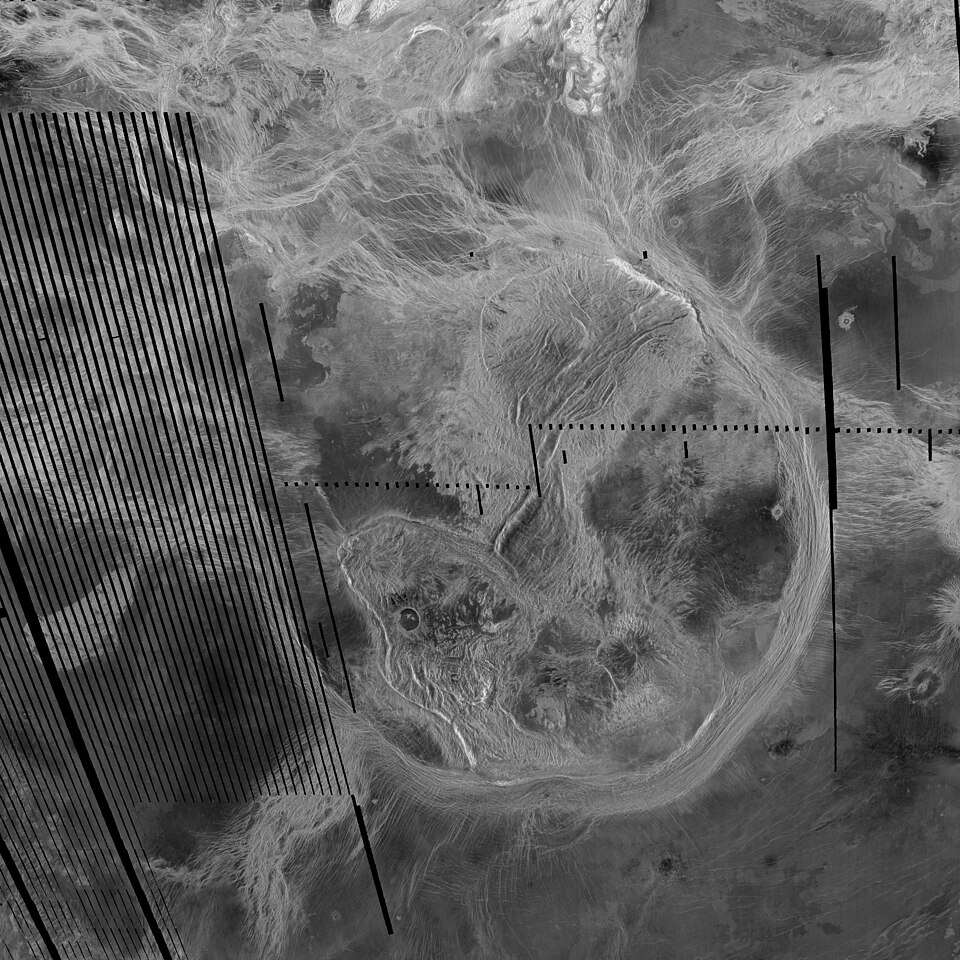
For the study, the researchers studied coronae, which are large, crown-like volcanic features on Venus’ surface and can often span hundreds of miles across. They are formed from the upwelling of magma from the planet’s outer crust and collapse upon the magma cooling. Their immense size is owed to the intense surface temperatures (~860 degrees Fahrenheit), flexible crust, and lack of plate tectonics. In the end, the researchers found that coronae are responsible for up to 27 percent of Venus’ resurfacing and note how coronae could be used to help provide insights into a planetary surface that lack craters or exhibit small numbers of craters.
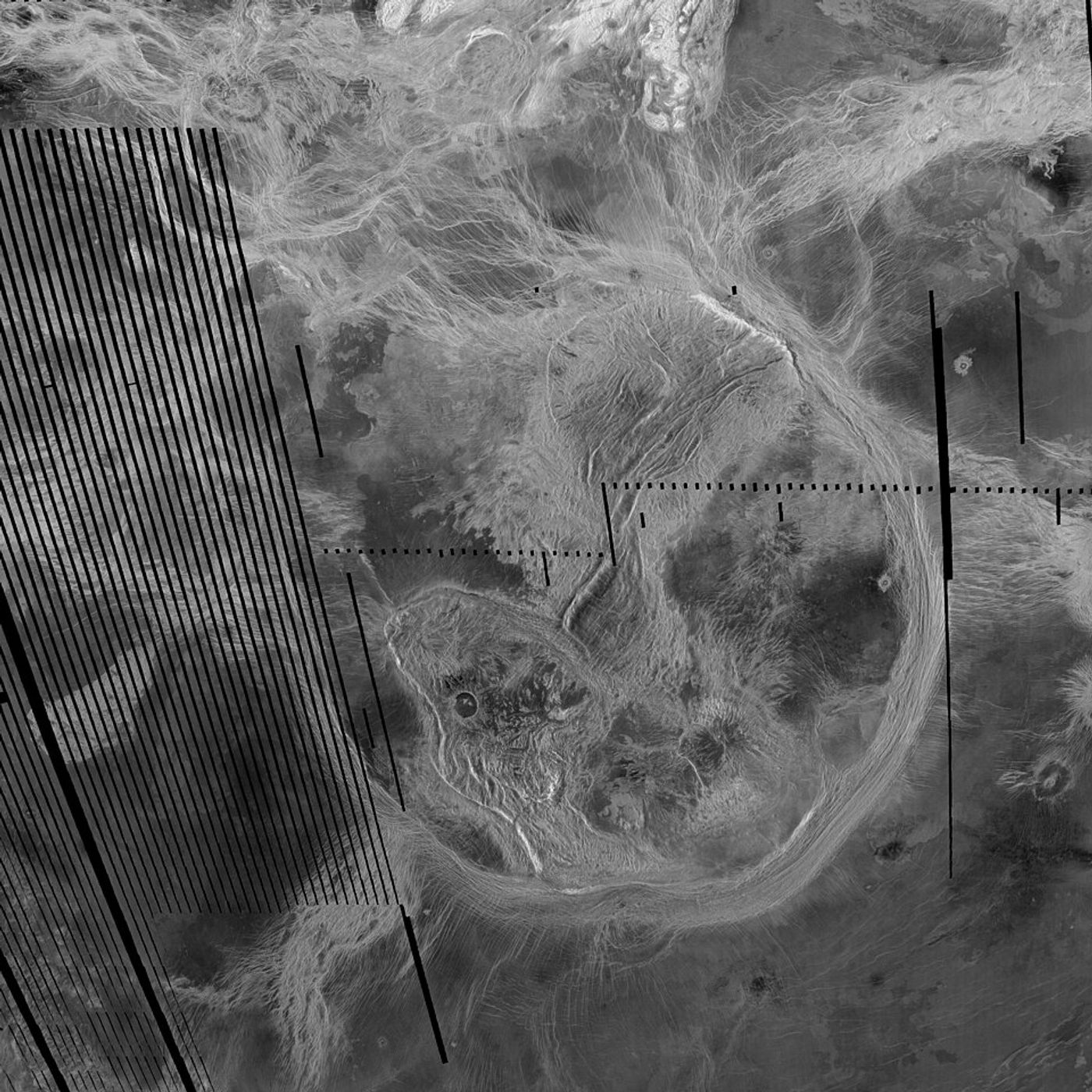
Radar image of Artemis Corona obtained by NASA’s Magellan spacecraft. Artemis Corona spans approximately 2,600 kilometers (1,600 miles) in diameter and is the largest known corona on Venus. (Credit: NASA)
The study notes, “If this model of volcanic repaving of the region around coronae is accurate, then volcanism must be occurring in places that would allow outflow. This may limit the kinds of coronae where and the time periods over which coronal resurfacing can occur because coronae exhibit variations in topography and annulus type and may evolve from one classification to another. Previous work has shown that this can significantly alter the direction of lava flow from coronae, so a more robust understanding of corona evolution is required to accurately characterize resurfacing via coronae.”
This study comes as NASA is developing its VERITAS mission, which is slated to launch in June 2031 and will be tasked with mapping the Venusian surface for the first time since NASA’s Magellan spacecraft in the 1990s.
What new insights into Venusian coronae will researchers make in the coming years and decades? Only time will tell, and this is why we science!
As always, keep doing science & keep looking up!