
Via Getty Images
Canteen Coffee Shop on Catherine Street has been awarded the McKennas Guides plaque.
Canteen café on Catherine Street has been a staple in Limerick for over 14 years.
Founded on Mallow Street in 2012, the café has witnessed the rise of Ireland’s third-wave coffee culture firsthand.
They were recently honoured with the McKenna’s Guides Plaque, widely considered one of the most respected badges of honour in the Irish hospitality and artisan food industry.
The café produces its own sourdough, ferments its own hot sauce, bakes its own pastries, and sources ingredients from local suppliers like Crowe’s Farm.
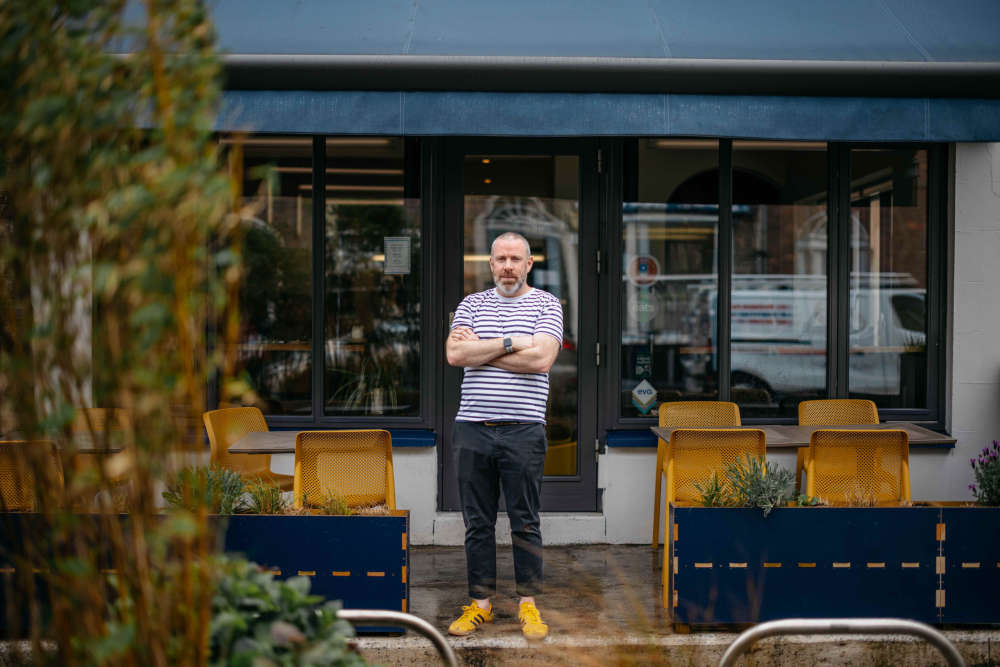
Yet, despite recently being honoured with the plaque, owner Paul Williams said there are still some harsh realities facing small independent businesses in 2026.
Paul said that providing handmade, premium food has become an increasingly expensive endeavour, one that customers sometimes struggle to reconcile with their own tightening budgets.
“People go into their local artisan café or their coffee shop, and they think the food is expensive. But you’re getting something handmade in Ireland,” he explained. “We don’t make phones here, we don’t make cars, we don’t make furniture, we make food.”
“If you think about what a handmade watch would be, or a handmade pair of shoes, they are four or five times the multiples of a factory-produced thing. A handmade loaf of bread or a handmade coffee needs to be expensive to give people a living wage so they can live in the city centre.”
Reflecting on the early days of the business in 2012, Paul said that the administrative and financial pressure on small and medium enterprises (SMEs) has grown exponentially.
The biggest shock has come from skyrocketing utility bills, forcing the café to closely monitor its margins just to stay afloat.
“You can’t put up your prices that much… a customer is not going to pay that for food, so you just kind of have to really work on your margins,” he said.
“That’s the big challenge in running a café now compared to when I opened. Now, every month you have to look at staff costs, energy costs. I had an energy broker assigned to me by the Local Enterprise Office (LEO) to lock in prices. You’ve become a manager, a chef, and maybe the most important thing has been an accountant.”
When asked if he feels supported as a Limerick business owner, Paul expressed frustration with local infrastructure decisions, particularly the loss of the café’s outdoor parklet.
He said that while major projects like the Opera Centre aim to bring footfall to one side of Limerick, the city centre’s independent traders are often left to fend for themselves.
Looking toward the future, Paul believes the survival of Irish high streets relies on shifting the focus away from traditional retail, which has largely moved online, and heavily leaning into food, entertainment, and culture.
“We can move small levers in our own café, we can cut an hour and ask staff to work a bit harder… and I can move coffee up 20 cents,” he said. “But I don’t know if it changes the big levers like the cost of food, the cost of buying a product, the energy cost. We have the second-highest electricity rates in Europe, we have one of the highest minimum wages in Europe, and rents are going up.”
“If we can’t afford to keep restaurants and cafés open, I don’t know how we will survive. Maybe the government need a task force looking at how we can manage to keep businesses open.”
Despite the strenuous economic landscape, Paul attributes Canteen’s longevity to “dogged determination” and a deeply loyal Limerick customer base.
For him, the ultimate reward remains the community built over the last 14 years.
“I think working with the staff every day… we’ve been really lucky. There’s just great energy working with young people every day,” he said. “And then, you know, we’ve had some customers for 14 years. They started as strangers, then they became customers, and now they’re really good friends.”