
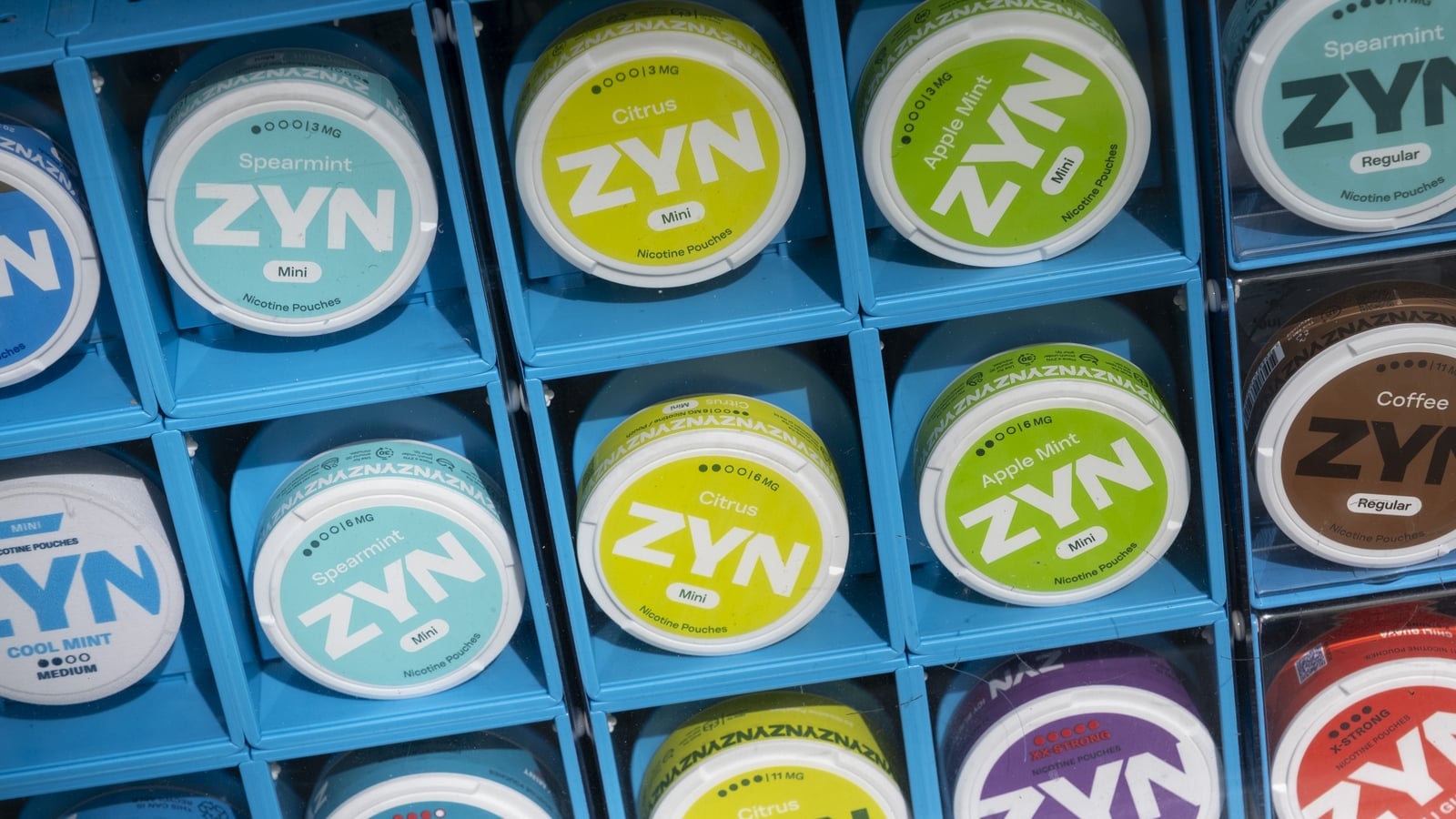
Health experts have raised concerns about the rise of tobacco-free nicotine pouches known as “snus” in Ireland.
Snus is easily found for sale and advertised in Ireland. The white pouch looks like a small teabag and is placed between the gum and lip for a release of nicotine.
Professor Ray Walley, a GP and a board member of the Standing Committee of European Doctors – a body that represents national medical organisations at the European level – has said Ireland should be a world leader in banning snus, just as it was when in introduced the smoking ban in 2004.
We need your consent to load this rte-player contentWe use rte-player to manage extra content that can set cookies on your device and collect data about your activity. Please review their details and accept them to load the content.Manage Preferences
Speaking on RTÉ’s This Week, Prof Walley said these products are “highly addictive” and have health consequences in their own right.
“These are gateways to further addiction issues, including tobacco,” he added.
Because the products are tobacco free, they are not subject to the same restrictions that apply to other nicotine products, which also contain tobacco, such as age limits and restrictions on advertising and branding of products.
One pouch of snus can have a nicotine content 20 times that of a cigarette and France recently banned the product.
Rise of snus
Snus began to appear in Ireland around 2019 and became popular around 2022 and 2023. Its rise in popularity here is mirrored in countries across the world.
Last year, the global market for nicotine pouch products was estimated at nearly $7 billion (€6.1bn).
Global retail sales of nicotine pouches reached over 23bn units in 2024 – an increase of over 50% from the previous year.
In Ireland, sales of one brand of nicotine pouches increased nearly five-fold in just one year.
“Nicotine pouches are widely available,” said Dr Denise Proudfoot of DCU, who is researching the health impacts of vaping and snus on young people in Ireland
She added: “Pouches [snus] are available in many shops.”
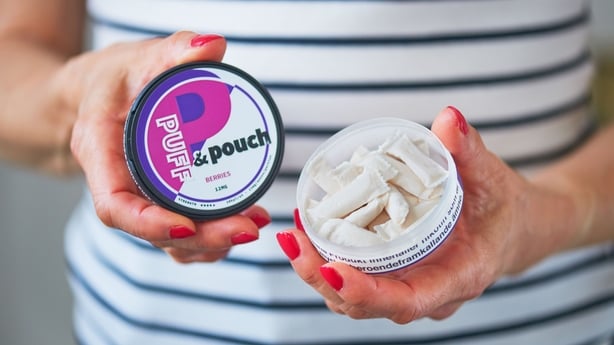
Sales of one brand of nicotine pouches increased nearly five-fold in just one year (stock image)
Because they are tobacco free they can be sold and advertised in Ireland without any of the restrictions placed on similar products such as cigarettes and vapes. They are also significantly cheaper to buy.
Snus comes in a discreet box that dissolves slowly and doesn’t give off a smell, meaning it is hard to tell when a person is taking snus.
This can add to its attractions as it can be used in public places where smoking and vaping are banned.
Last month, the World Health Organization (WHO) issued what it called a “strong warning” over the rapid expansion of these nicotine products which, it said, “are being aggressively marketed to adolescents and young people”.
Dr Proudfoot said she has observed these products employing “slick and effective” marketing to young people.

The WHO said more safeguards are needed to protect people from addiction to these products
“It’s one of the big concerns that the WHO has is the marketing and the tactics that they’re using to entice people to start experimenting and start trying out the products and the flavours,” she said.
The WHO report specifically said that tobacco companies are promoting snus with cigarette brands and exploiting regulatorily loopholes to grow their industry.
“Snus is produced by the tobacco industry with one aim and that’s addiction,” Prof Walley said.
“They are targeting our children to ensure that they have a next generation of addicted population,” he added.
Health impacts of nicotine products
Prof Walley said that while the health implications of tobacco are well known, nicotine is also dangerous to health but there is less research on its effects.
The nicotine content in snus is far higher than that of a cigarette, leading to high addiction rates.
Nicotine also has adverse effects on blood pressure, brain development, attention spans, anxiety and mouth and oral health.
Dr Proudfoot said she is worried about the spread of snus, especially considering how quickly it has spread in popularity.
“It’s quite staggering. Sometimes research takes time to kind of catch up … we know nicotine is not a safe product.
“It has a health impact both physical and psychological, so it’s definitely worrying,” she said.
Regulations needed
The European doctors’ group has said legislation is needed to cover tobacco-free nicotine products like snus.
They are calling for an increased level of taxation of heated tobacco products and nicotine products to “prevent misleading ‘less harmful’ perceptions and discourage use”.
France recently banned the sale of nicotine pouches, something Prof Walley would be in favour of Ireland also doing.
However, he believes the best approach would be for an EU-wide regulation.
In 2004, Ireland was the first country in the world to introduce comprehensive workplace smoking ban. Prof Walley said with snus, Ireland can be a world leader again.
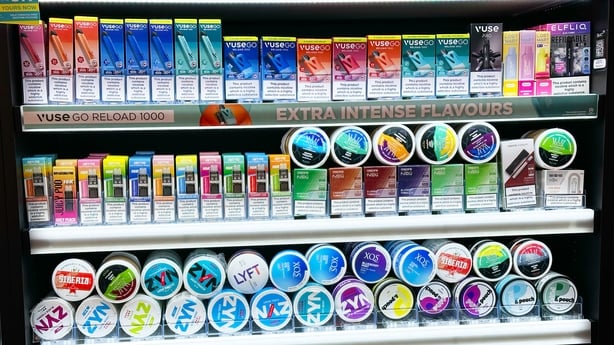
Nicotine pouches on display for sale alongside vapes
A bill to regulate the packaging and appearance of nicotine inhaling products such as snus is currently working its way through the Oireachtas.
Once passed, it will be illegal to sell snus to people under the age of 18.
The retail display of snus in mixed retail outlets and the advertising of the products in all shops will be banned.
The Department of Health said in a statement that Minister for Health Jennifer Carroll MacNeill has repeatedly called on the European Commission to revise the law so that there would be the same regulations on nicotine products across the EU.
“The evidence is that what we have done [in regard to restriction of tobacco products] has worked,” Prof Walley said.
He added: “The tobacco industry are trying to exploit regulatory loopholes and undermine laws to fuel rapid growth of the usage of nicotine.
“They’re using the same methodology that they used successfully before.
“And we need to approach it in the same way that we have successfully, in many European countries, reduced tobacco use.”