
DIY ‘plug in solar’ with storage could significantly cut your bills
09:28, 09 Jun 2026Updated 09:55, 09 Jun 2026
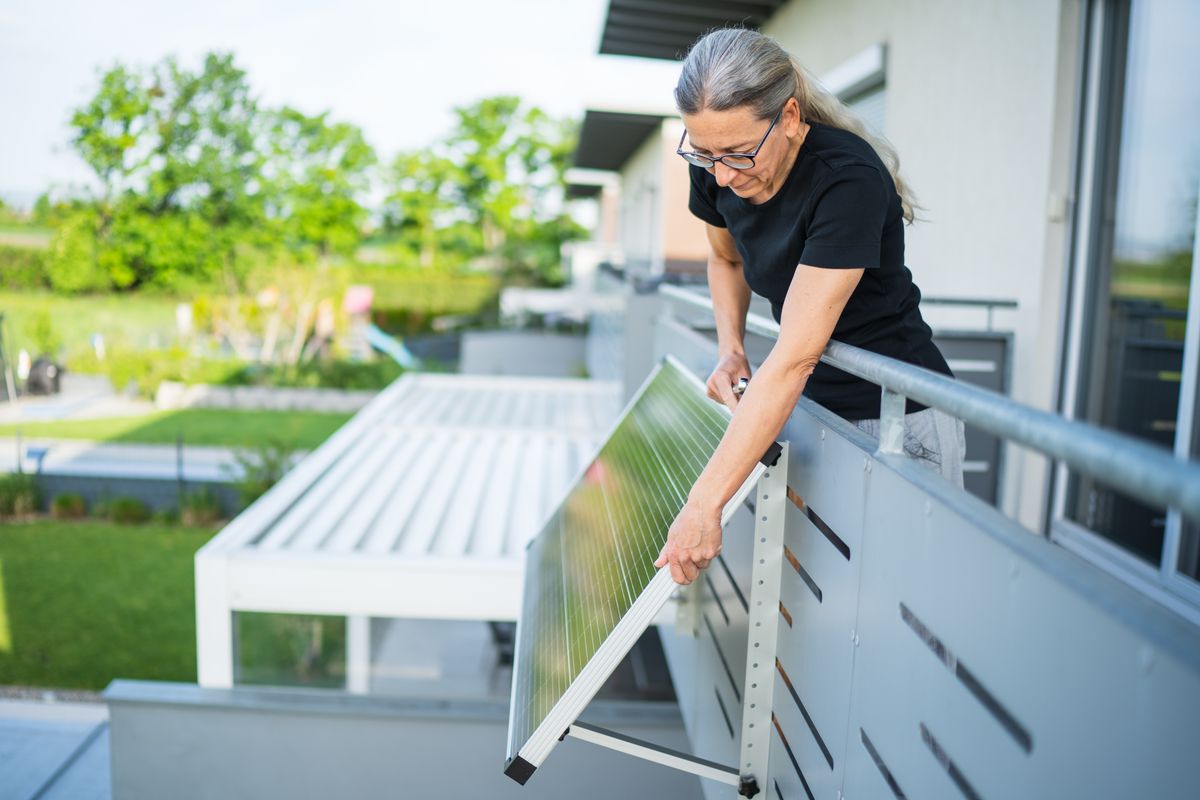
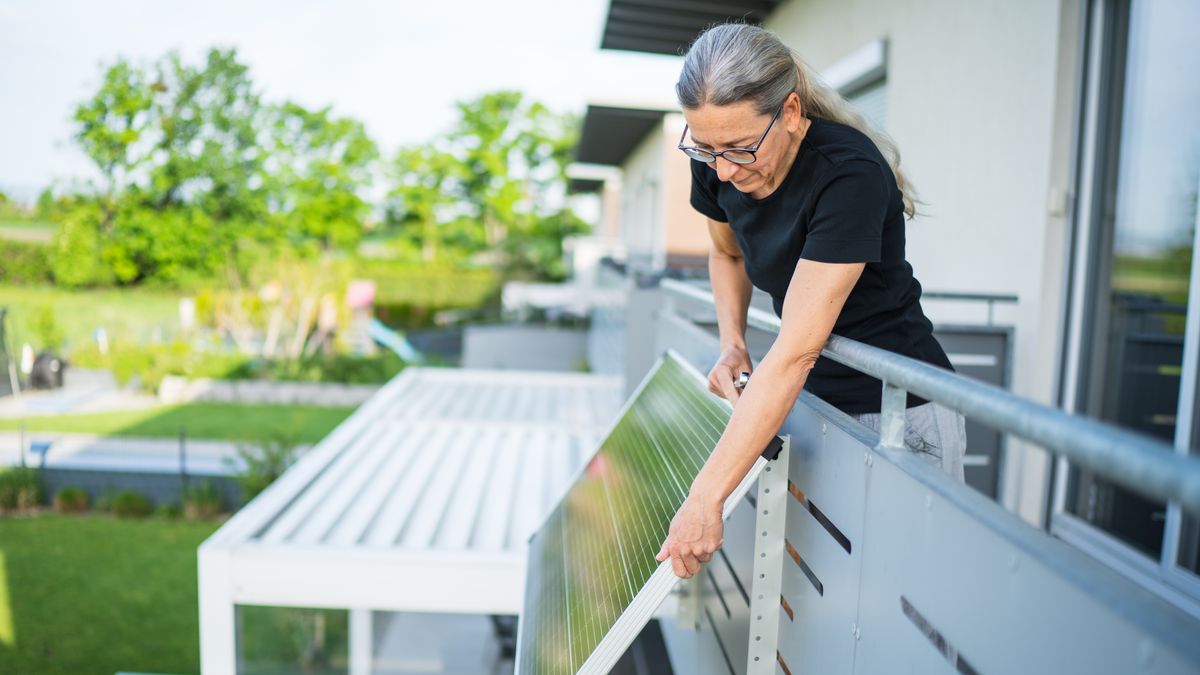
mature adult woman wearing glasses installing adjustable solar panel on balcony of her house in estate of terraced houses in rural landscape on sunny morning(Image: Getty)
Lidl has launched an affordable solar battery in Germany, as more and more people across Europe turn to ‘DIY plug-in solar’ to cut their energy bills amid soaring rates.
The budget supermarket chain is offering the batteries, which will allow households to store energy generated during the day from cheap, portable ‘plug-in’ solar panels, starting from €299. There is a larger-capacity battery that also comes with an App that allows you to manage it remotely, from €399.
These cheap and portable plug-in systems, which can be set up in minutes and don’t need costly or expert installation, are taking off across Europe as householders look to cut their soaring energy bills. They are called ‘DIY’ or ‘Balcony Solar’ but you do not necessarily need a balcony, they can be hung off the sides of houses, put on extension roofs or set up anywhere that’s in the sun.
However, while Lidl could offer these systems in Ireland within a matter of months, there is a catch. Under current rules, anyone who wants to install solar panels on their house needs to fill in an N6 form with a registered installer and have the system approved by the ESB.
Some householders might be tempted to just go ahead and install ‘balcony’ or ‘plug-in’ solar and deal with the red tape later if it comes up. And there could be a grey area as the N6 forms only apply to microgeneration systems (small domestic solar or wind) that are connected to the grid.
The Irish Government has been urged to look at relaxing the laws to allow for the next-gen microgeneration systems to be easily installed in domestic properties on a DIY basis. There would need to be an upgrade of grid codes and wiring rules to allow plug-in solar panels and connected batteries to be used safely.
Lidl’s new batteries are
The battery is designed to work with most plug-in solar panels, which are already common across parts of Europe. According to PV Magazine, Lidl’s newest solar offering is a 2.24kWh battery, with a 1,000W input and 800W output and is compatible with most plug-in solar panel systems.
The battery unit measures 31cm × 17cm × 350cm and weighs approximately 19.8kgs. In terms of price, the Lidl battery costs €299, wand there is an app-controlled version that Lidl is also selling for €399 (roughly £345). Those who buy the battery will need to buy the plug-in solar panels and microinverter separately.
However, for a relatively low initial investment, under €1,000, you could start generating significant domestic electricity to cut bills.