
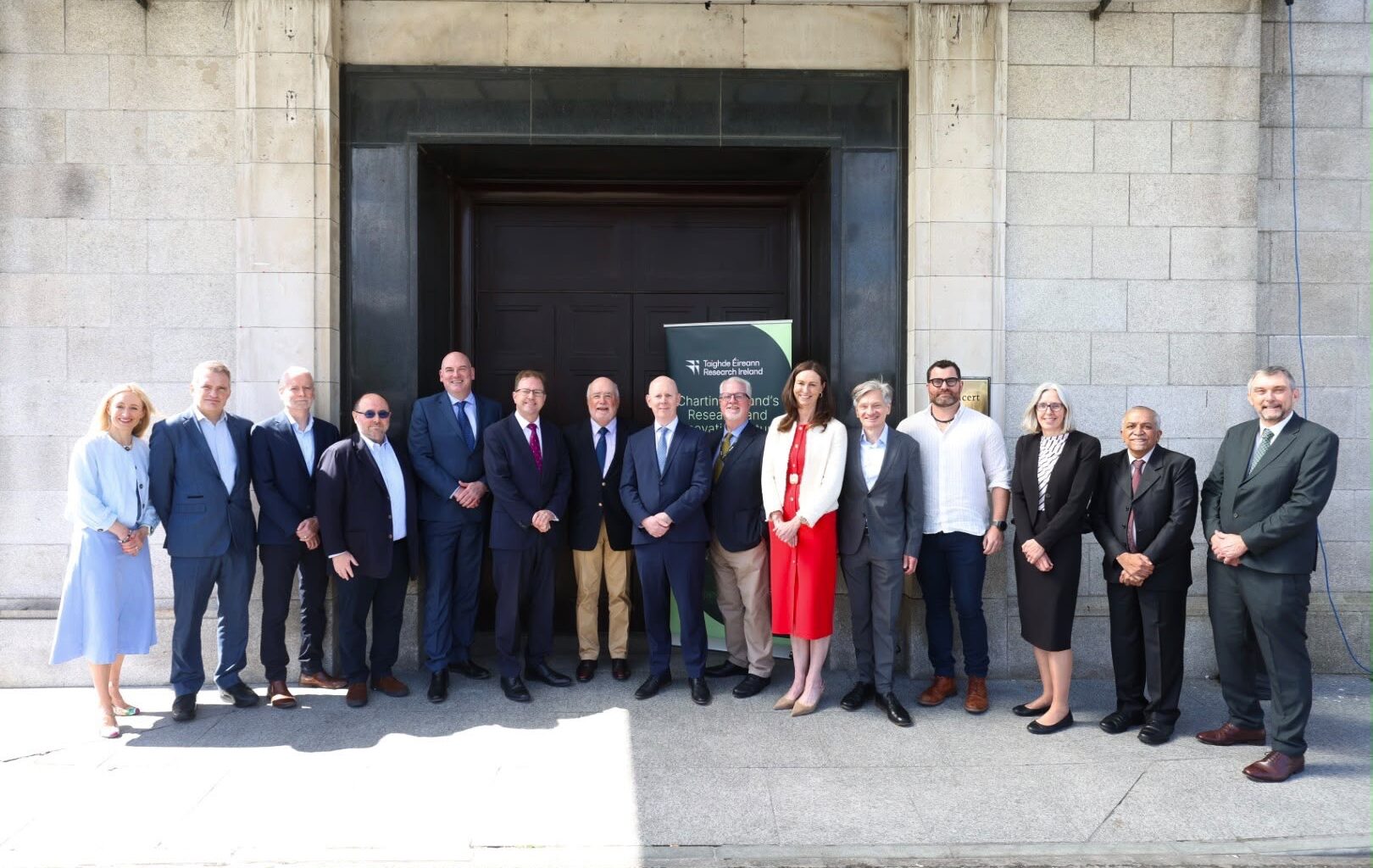
Ireland has unveiled seven major new Rinn centres backed by a combined investment of €460m, marking one of the largest research and innovation funding commitments in the nation’s history.
The announcement was made by Minister for Further and Higher Education, Research, Innovation and Science, James Lawless TD, as part of a national strategy to strengthen Ireland’s position in advanced scientific research and technology development.
The new Rinn centres will operate within a newly launched national research network, Rinn, which brings together leading universities, institutes and research organisations in a coordinated framework.
The initiative is designed to increase collaboration, improve governance and attract greater international engagement across key scientific sectors.
The programme is expected to create 577 research positions, support the development of more than 800 PhD graduates and leverage a further €500m in funding from industry and other sources.
More than 200 industry partners, including multinational corporations and small and medium-sized enterprises, are already involved in the initiative.
Commenting on the landmark funding, Minister Lawless said: “The scale and scope of this €460m investment is a powerful statement of Ireland’s ambition in research and innovation.
“Research Ireland centres have, over the last 13 years, fundamentally reshaped our innovation landscape – turning excellent and innovative research into real-world societal and economic impact. Our higher education institutions and enterprise collaborators have been critical to that success.
“With these seven new Rinn, we are building on this progress by supporting talent, strengthening industry partnerships, attracting foreign direct investment, advancing indigenous industry growth, promoting regional development, and enabling Ireland to remain internationally competitive.
7 strategic research hubs
The seven newly funded Rinn centres will focus on areas identified as critical to Ireland’s future economic competitiveness and technological leadership.
The centres cover:
Advanced therapies (€51.1m)
Artificial intelligence (€121.8m)
Energy system decarbonisation (€51.8m)
Medical devices (€64.5m)
Pharma and biopharma manufacturing (€60.3m)
Quantum science and technology (€39.6m)
Semiconductor Systems (€71m)
AI received the largest allocation, reflecting the growing importance of AI research and its role in national digital transformation.
National collaboration on an unprecedented scale
Seventeen research-performing organisations will participate in the network, including universities, technological universities, specialist research institutes and industry-focused innovation centres.
Participating institutions include Trinity College Dublin, University College Dublin, University College Cork, University of Galway, Dublin City University, Maynooth University, University of Limerick and several technological universities across the country.
The network also includes the Tyndall National Institute, the National Institute for Bioprocessing Research and Training, and the Economic and Social Research Institute.
The scale of participation is intended to create a more unified national research ecosystem capable of competing internationally while delivering economic and societal benefits within Ireland.
Supporting national innovation strategies
The Rinn centres are closely aligned with several government policies, including the Programme for Government, the National Development Plan, Impact 2030, Quantum 2030 and Ireland’s National Semiconductor Strategy, known as “Silicon Island”.
The AI and quantum centres are also expected to play a central role in delivering objectives outlined in Digital Ireland, the country’s recently launched National Digital and AI Strategy.
The investment is expected to accelerate research excellence, strengthen innovation capacity and help position Ireland as a global leader in emerging technologies.
Launch set for July 2026
The seven Rinn centres were selected following a competitive funding process involving independent international expert evaluation.
Their activities will officially begin on 1 July 2026, ushering in a new phase of coordinated research investment that aims to deliver long-term scientific, economic and societal impact both nationally and internationally.