
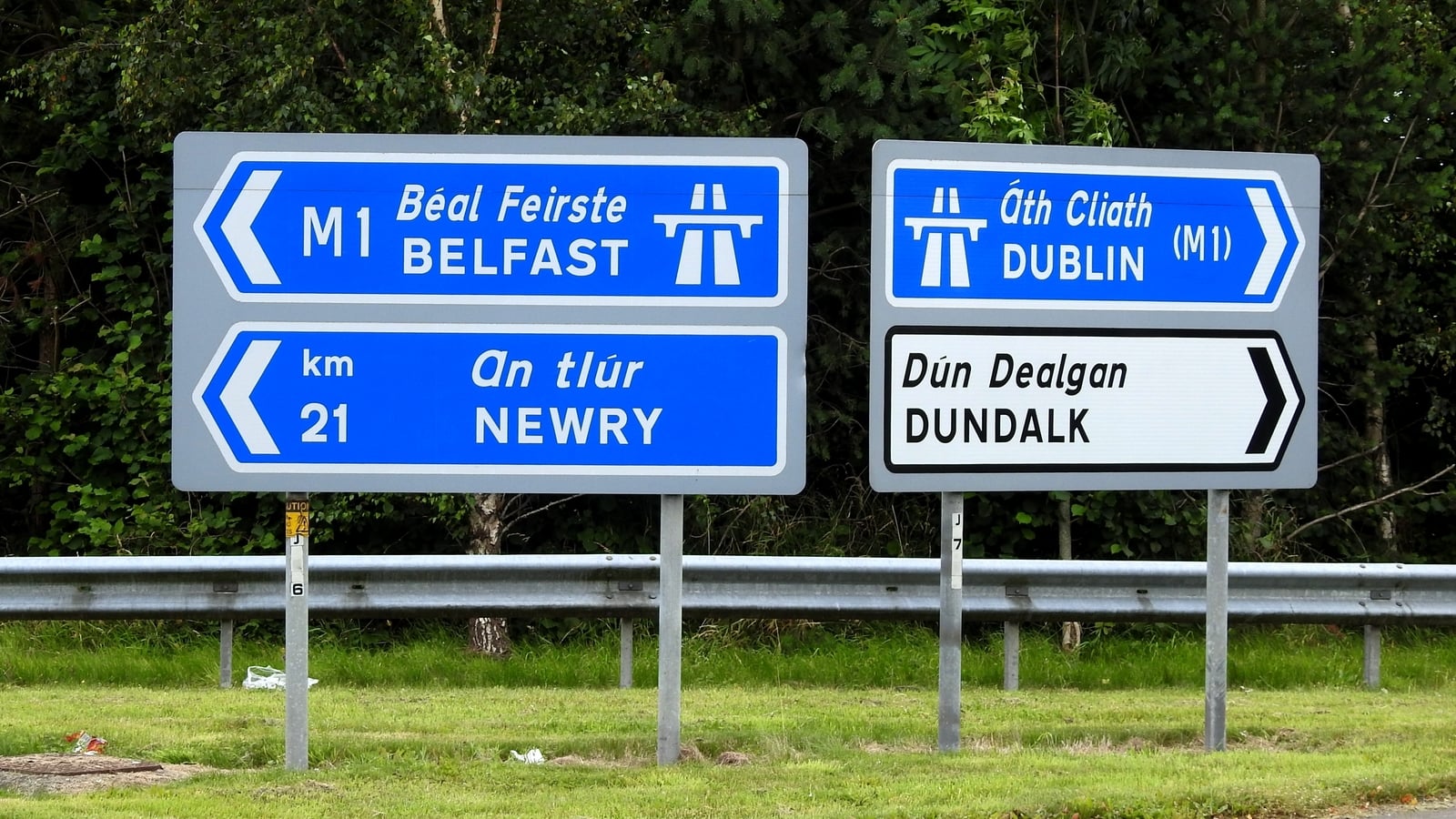
The Common Travel Area (CTA) between Ireland and the UK has come under scrutiny in recent days following an attack in Belfast on Monday.
The PSNI said the man accused of the attack entered Northern Ireland across the Irish border by bus in February 2023, having flown to Dublin from Paris.
It has led to calls from DUP leader Gavin Robinson that the Irish border should be closed.
What is the Common Travel Area?
The Common Travel Area (CTA) is comprised of the United Kingdom, the Channel Islands, the Isle of Man and Ireland.
The arrangement began in 1922 and gives British and Irish citizens reciprocal rights in each other’s countries.
Within the CTA, Irish and British citizens can travel freely.
So how does it work?
Essentially, there are no passports and no immigration controls.
During the Brexit process, a Memorandum of Understanding was signed by the Irish and British governments reaffirming the Common Travel Area.
However, these freedoms do not extend to non-Irish/non-UK citizens.
Why is it back in the news?
Following a stabbing incident in Belfast on Monday, the suspect Hadi Alodid, a Sudanese national with an address at Duncairn Avenue in the city, appeared in court facing charges of attempted murder, possession of a knife and making threats to kill.
The British Home Office said Mr Alodid was on leave to remain in the UK until 2028.
The PSNI said that he entered Northern Ireland across the Irish border by bus in February 2023, having flown to Dublin from Paris.
Once in the Republic, Mr Alodid would have been able to travel to Northern Ireland without facing any routine immigration border checks because of the CTA arrangement.
He then claimed asylum upon arrival in Northern Ireland. Mr Alodid was granted asylum under a fast-track application scheme because of his nationality.
He only had to complete a British Home Office questionnaire rather than attend a face-to-face interview because of the “security and humanitarian situation” in Sudan.
Gaps in the published data mean it is not known how many asylum seekers are travelling via Ireland to the UK, or in the opposite direction.
However, British Home Office figures show the UK removed only one migrant under an asylum returns deal signed with Ireland in 2020.
What is the response from Belfast, Dublin and London?
Taoiseach Micheál Martin said the CTA has been in place for a long time and is very positive for Irish and British people.
However, he acknowledged that it needs to be managed as people will “endeavour to abuse it”.
Northern Ireland deputy First Minister Emma Little-Pengelly said there were “questions to be asked” about immigration policy across the two islands and about the checks taking place in Dublin.
Mr Robinson has said the “open, porous border” with Ireland should be closed.
A UK Government spokesperson said yesterday that immigration enforcement against “illegal migrants” would intensify in Northern Ireland – including intelligence-led operations along CTA routes.
What’s next?
Northern Ireland Minister for Justice Naomi Long and Secretary of State for Northern Ireland, Hilary Benn, have agreed to work with Minister for Justice Jim O’Callaghan to prevent abuse of the CTA.
“The invisible border on the island of Ireland is among the most tangible gains of the peace process and is essential to the continuing normalisation of relationships,” Ireland’s Department of Justice said in a statement.
The Irish Government said it will share data with the UK government, and vice versa.
Mr Martin is also due to speak to British Prime Minister Keir Starmer in the coming days about the situation in the North.