
Video by Leah Carroll. Words by Donal Byrne.
In a market dominated by SUV-styled cars, estates have become a relative rarity, yet recent statistics suggest they are making something of a comeback.
While medium and small SUVs accounted for almost 50,000 sales so far this year, estates accounted for just over 4,000, which is a 15 per cent increase over the same period in 2025. Clearly, there’s a demand for more space and practicality, and not just from people like country vets.
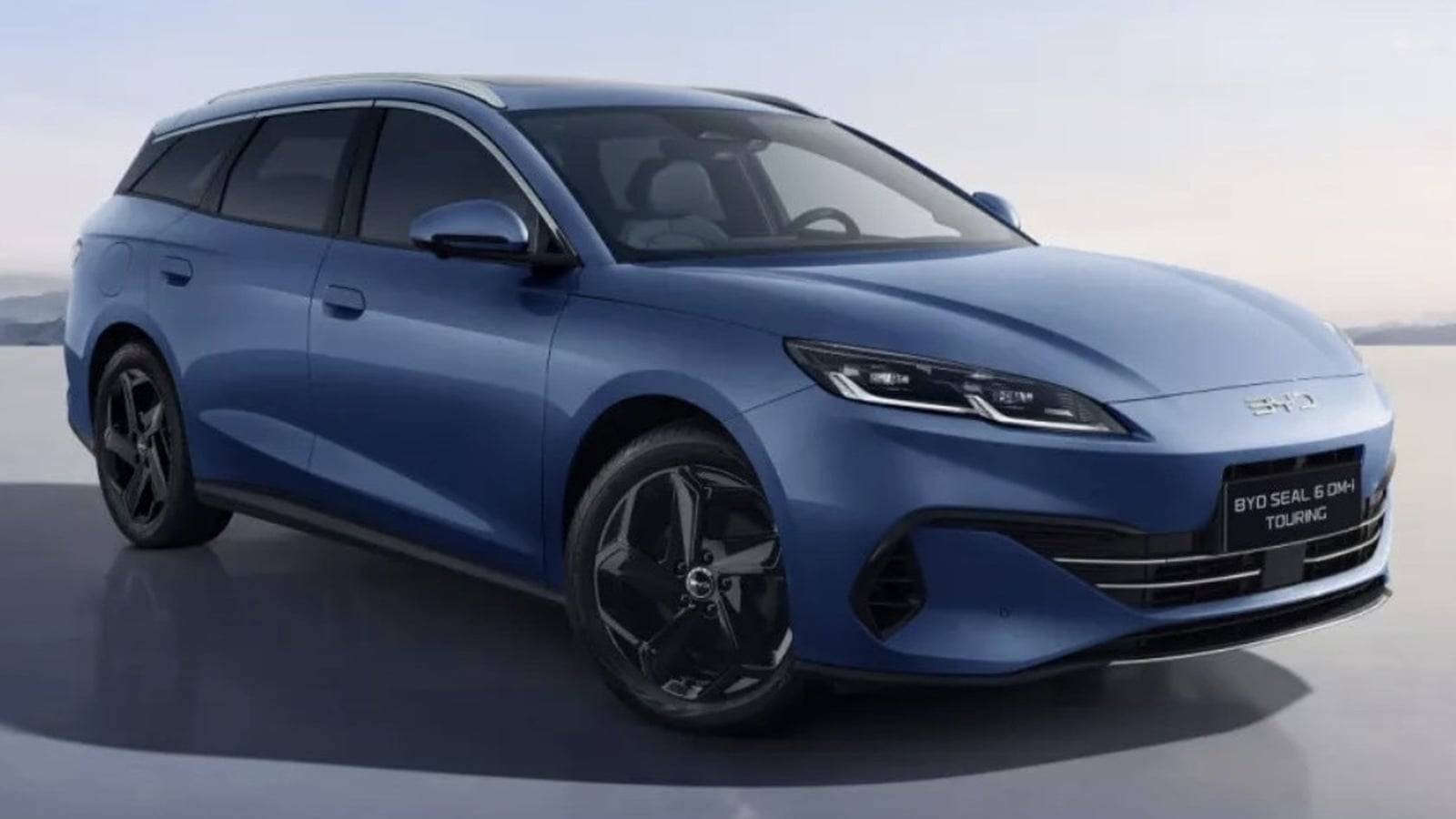
The Chinese manufacturer, BYD – anxious to build its market share wherever it can – is hoping to tap into that demand with the arrival of its Seal 6 Super hybrid Touring, which majors on three things: price, economy and practicality.
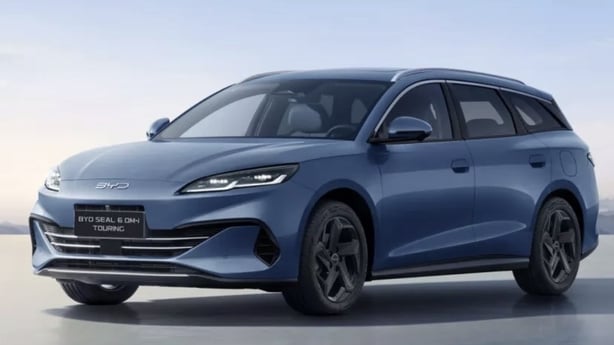
If you are in the market for an estate, the Seal will have to come onto your radar on the basis of price alone. It starts at €38,990 for the entry-level version with a 1.5 litre petrol engine and a full hybrid system.
By comparison, the Skoda Superb Combi, which is one of the most popular estates, starts at €51,435 for the entry-level 1.5 litre mild hybrid. As usual, the BYD combination of competitive pricing and high specifications presents a tough challenge for the competition.
The Sealion Tourer is not a very elegant car and is designed with function rather than form in mind. It sits low, and its sleekness doesn’t match the more muscular design of the Skoda.
Aerodynamically, though, it can deliver when it comes to fuel consumption. On a long journey, I managed a rate of 4.6 litres of petrol per 100 kilometres, which is as good a figure as I can remember getting from any hybrid, and city driving was very economical too. The battery-only range is also good around town.
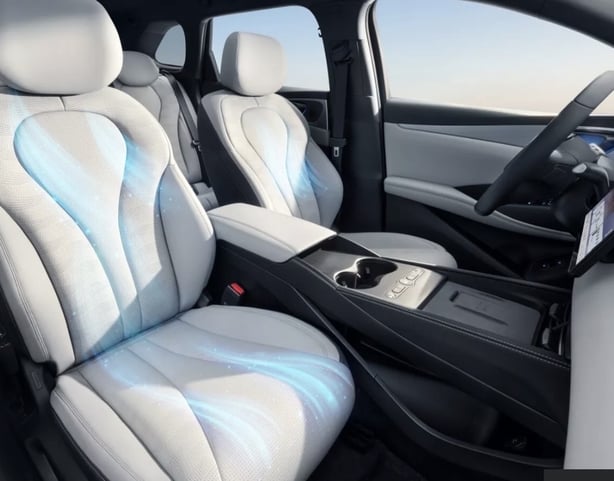
The car does have some issues, however. Its suspension is quite harsh over rougher surfaces, the steering is relatively light, its front seats are very low for taller occupants, and they are not very supportive over longer distances.
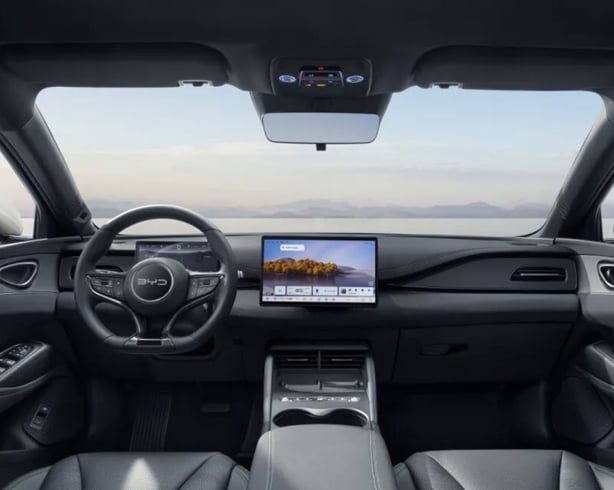
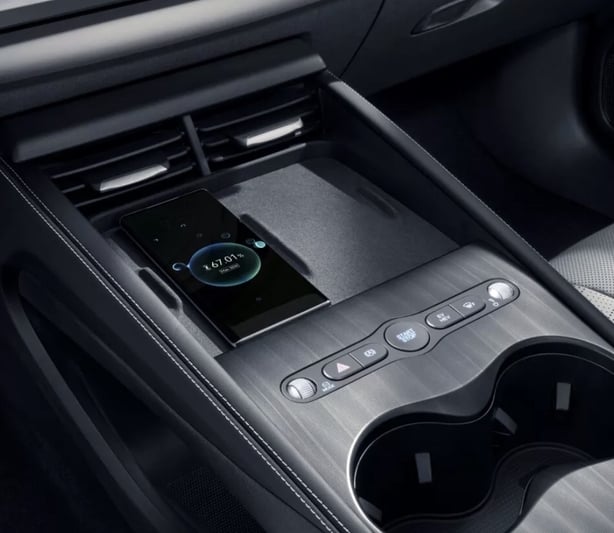
The interior is, as usual with BYD, dominated by a large infotainment screen (there’s a choice of either a 12.8″or a 15.6″ screen) through which pretty much every function has to be routed, and it’s not easy to navigate. There aren’t any easily accessible buttons to help avoid distraction when driving.
There is also a lot of black plastic, and not all of the interior has a high-quality feel. That preponderance of plastic can make the interior feel a bit gloomy.
The 8.8″ driver’s information screen displays figures such as average fuel consumption in almost minuscule size, and it’s hard to read at a glance.
The fact that the car is fitted with a driver monitoring camera may not be to everyone’s taste, and it can be over-sensitive at times – even a sideways glance prompts a warning to pay attention, and I don’t really know why the screen suggested I stop for a coffee break after only 100 kilometres of driving.
There’s a fairly generous 425 litre boot, but because there’s an engine up front, there isn’t any forward storage for your charging cables, and they eat up quite a bit of space, so you’ll need to drop the back seats for bigger than normal loads.
While the entry-level version doesn’t get things like the panoramic roof, it has a huge list of standard features – ranging from a full suite of safety features to adaptive cruise control, automatic braking, LED lights front and rear and front mirror blind spot detection.
There’s also a EuroNCAP full five-star rating for safety and an eight-year battery warranty.
While I might consider the Skoda to be a preferable option, the BYD represents the better choice in terms of equipment levels and price where, yet again, Chinese manufacturers test their competitors to the maximum.
Even the second level version, which also has that panoramic sunroof, the bigger screen and a 360 degree camera, comes in at €42,490.