
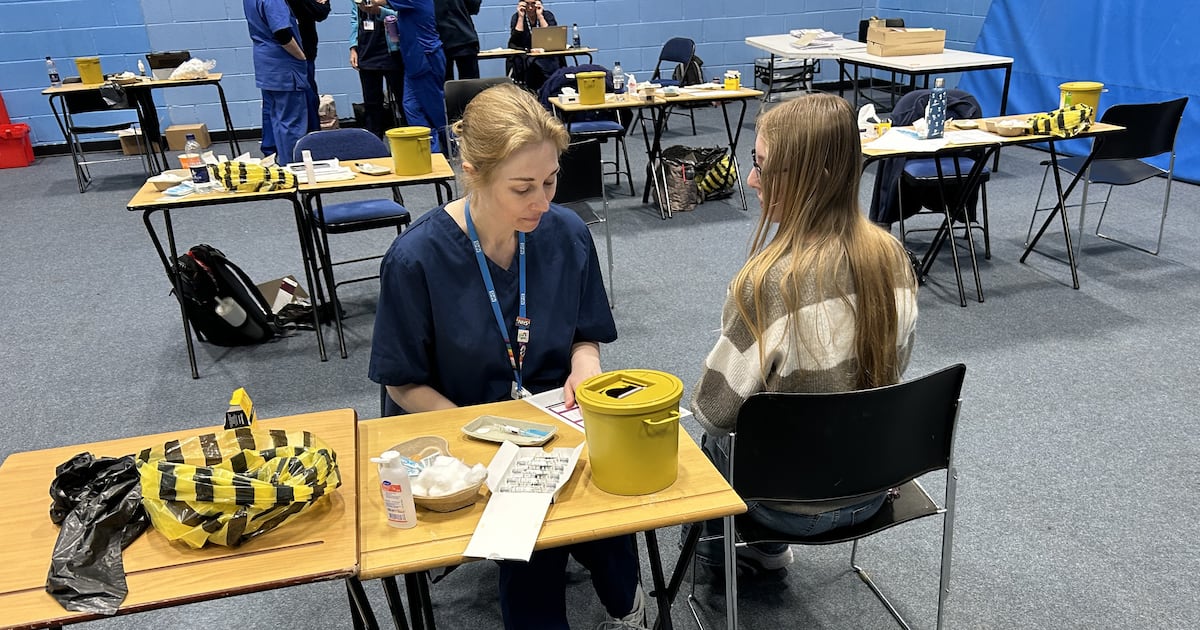
Students in Northern Ireland up to the age of 25 are to be offered a one-off meningitis vaccine.
The Health Minister Mike Nesbitt announced the Meningococcal B (MenB) programme for adolescents in line with announcements across the UK.
Around a million young people are being offered the jab after an outbreak of the disease in Kent this year as well as clusters in other parts of England.
It is expected to be made available in Northern Ireland in mid to late July, aimed at those considered to be at the highest risk of Men-B, and in time for the new academic term.
 Students queuing to receive vaccines and antibiotics at the University of Kent campus in Canterbury earlier this year. (Gareth Fuller/PA)

Those eligible include; all of the current year 14 age group aged 17-18 and anyone up to 25-years-old attending higher education or a residential further education institution for the first time in Autumn 2026, which will include international students.
The vaccination offers protection against serious illnesses like IMD, meningitis and sepsis.
Mr Nesbitt said: “MenB is a serious illness and can cause serious health implications amongst young people. The vaccination offers good protection and will help prevent serious harm among those who are most vulnerable.
“I strongly recommend those young people who are eligible to take up the offer of a vaccination, particularly those planning to go to Higher Education or a Residential Further Education Institution for the first time this Autumn.
“I also would ask that parents and guardians speak with their teenagers and young adults to encourage them to take up the offer of a vaccination to help protect them from MenB.
Chief Medical Officer Professor Sir Michael McBride added: “As we have seen in recent outbreaks elsewhere in the UK, MenB can have a devastating and distruptive impact.
“Immunisation is one of the most effective ways of preventing illness from infectious disease. This vaccination programme will have significant public health benefits for young people who receive the vaccine, and the wider population.
“Put simply, if you are not vaccinated, you are not protected.”