
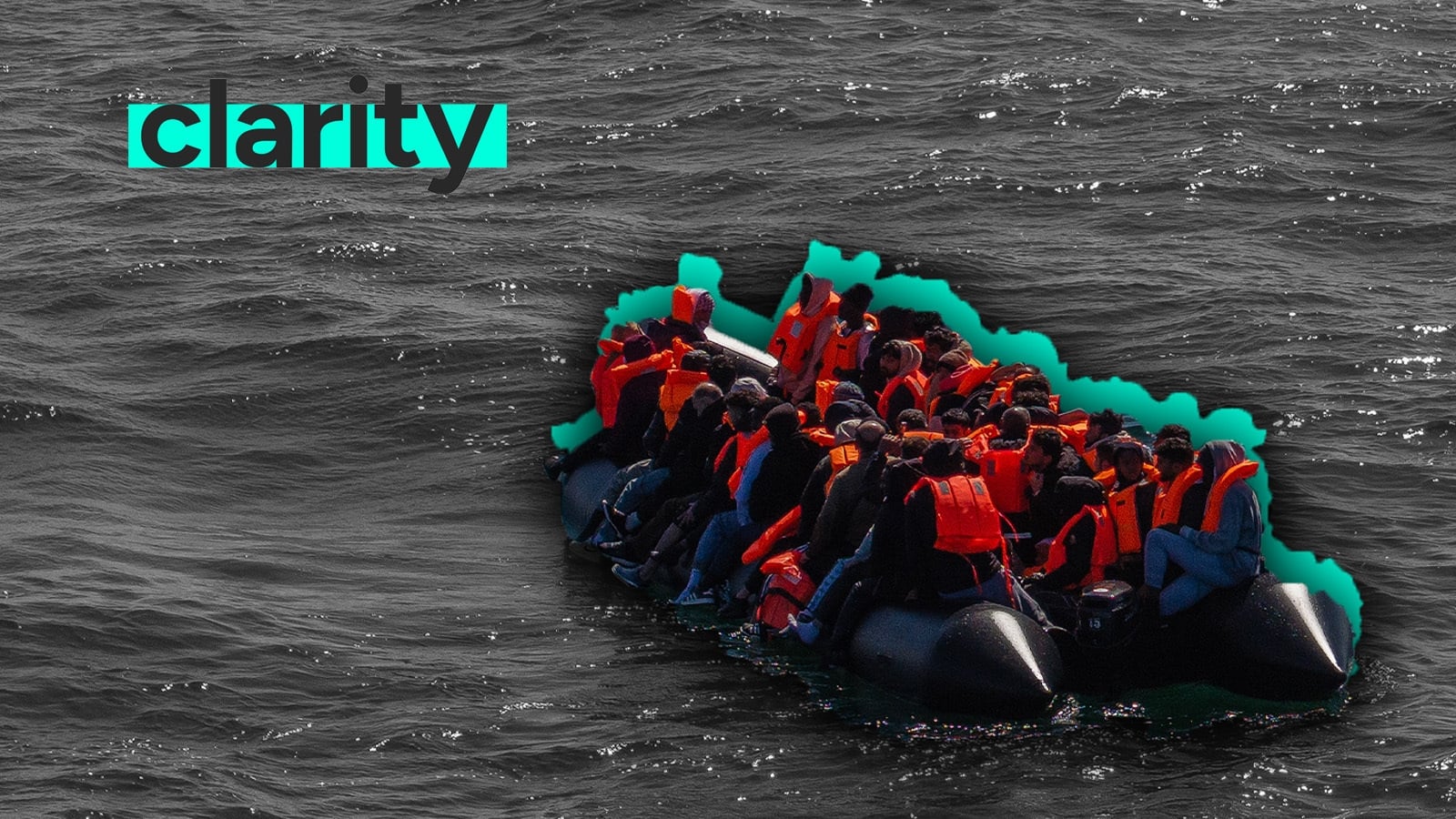
The EU Migration Pact, which came into effect yesterday, is one of the most complex and contested pieces of European legislation in many years.
It is a radical overhaul of how the EU handles all aspects of migration and asylum.
It aims to provide a more efficient and streamlined approach to migration, which has become the most polarising issue in European politics for over a decade.
Inevitably, the pact has been attacked by hard-right parties for not going far enough in cracking down on irregular migration, and roundly criticised by human rights organisations for appearing to take a punitive approach to those fleeing wars and conflict.
The migration issue has fuelled culture wars and – arguably – led to a surge in support for far-right parties.
The pact has also been the subject of intense debate and no shortage of misinformation.
Here’s what the EU Pact on Migration and Asylum is, and how it evolved.
Why was an overhaul of EU law needed?
In 2015, the civil war in Syria triggered the biggest movement of people across Europe since World War II.
The vast majority were fleeing not just the war in Syria, but conflicts in Iraq, Afghanistan, Eritrea, Somalia and Darfur.
There were also significant numbers of economic migrants from countries like Kosovo and Albania.
Over a two-year period, there were 2.3 million irregular movements into the EU across Balkan, Adriatic and Mediterranean routes.
The 2015 crisis put enormous strain on the EU’s existing system for handling migration.
It exposed the frailty of external border controls, as huge numbers arrived by land and by sea on unsafe boats; there was a lack of proper health, vetting and security screenings at entry points.
The human cost was graphically displayed in countless drownings.
The tragedy was crystalised by the image of two-year-old Aylan Kurdi, a Syrian refugee, whose lifeless body was washed up on a Turkish beach in September 2015.
The crisis also damaged the notion of solidarity between EU member states.
As frontline countries like Greece and Italy appeared overwhelmed, the European Commission tried and failed to get other countries to take in 120,000 asylum seekers.
The EU’s Dublin Regulation, which determined that any person seeking asylum in the EU should be returned to the country where they first arrived, seemed no longer fit for purpose.
Within months, the impact of the huge influx of migrants began to test the political and social systems of the most affected member states.
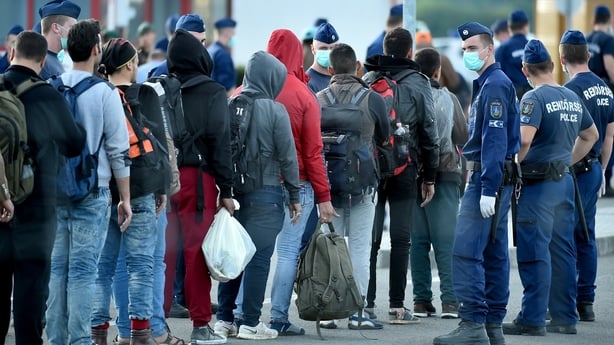
Migrants arrive at a border point between Croatia and Hungary in 2015
What was the EU’s initial response?
The European Commission was confronted with mounting problems: how to restore freedom of movement, how to crack down on people smuggling, how to save lives in the Mediterranean, and how to update an asylum and migration system not designed for the kind of crisis that had materialised.
The commission began by updating the EU’s Common European Asylum System (CEAS).
First adopted in 1999, the CEAS was originally designed to prevent asylum shopping, whereby a migrant would seek asylum in another member state if denied in the first port of call.
It also harmonised asylum procedures and social benefits in order to stop migrants gravitating to a member state where such entitlements were more generous.
The CEAS also established a centralised database for fingerprinting all asylum seekers and irregular migrants over the age of six, known as Eurodac.
Yet, despite these updates the system was still no match for the 2015 crisis.
Those arriving were simply not properly processed and were easily able to move across Europe’s borders to their preferred destinations (usually Germany or Sweden).
In July 2016, the European Commission proposed a further reform of the CEAS, whereby asylum procedures would be simplified, with decisions taken within six months or less.
There would be shortened appeal times, stricter rules obliging migrants to cooperate with the authorities, and harmonised rules on what constituted a safe country to which an applicant could be returned (this option would be mandatory and an agreed EU list of safe countries would replace national designations).
Was this overhaul successful?
Not entirely.
The reform was made up of seven separate pieces of legislation: new rules on who qualifies for international protection, an updated directive on minimum conditions at reception centres, a new regulation to beef up the EU’s asylum support office (which became known as the European Union Asylum Agency (EUAA)) and financial support for member states who volunteered to take in asylum seekers.
There was a reform of the Dublin Regulation, a revision of the Asylum Procedures Directive and a reform of Eurodac biometrics system member states.
However, the European Parliament could only agree on four of the seven files, meaning that by 2018 the effort had stalled.
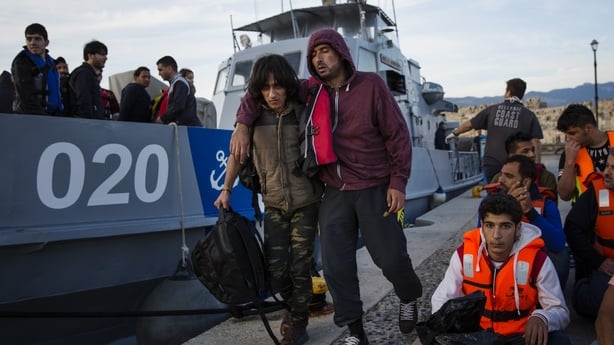
A man is escorted to an ambulance after being rescued off the coast of Greece in June 2015
What happened next?
In 2019, the European Parliament elections returned a significant increase in far-right MEPs.
Mindful of the toll the migration crisis was taking on European politics, a new European Commission, under President Ursula von der Leyen, made a second attempt.
In September 2020, the Commission launched the New Pact on Migration and Asylum – commonly known as the EU Migration Pact – which is what came into effect yesterday.
Overall, the new Migration Pact envisaged four main pillars:
Efficient and faster procedures at the external borders.
More robust and swifter asylum and return procedures.
The establishment of a compulsory “solidarity mechanism” between member states share the management of asylum seekers.
Enhanced cooperation with third countries of origin and transit to address root causes, combat smuggling and provide legal pathways for migration through international partnerships
It was presented as a rational response to the years of chaos and destabilising politics flowing from the 2015 crisis.
The new system would be strict but fair, there would be mandatory screening at locations where migrants arrived, reception facilities would be more efficient, with better vetting facilities and health checks, there would swifter processing of asylum claims and faster returns for those whose applications failed.
This would be balanced by a clearer pathway for legal migration into the EU, there would be a basic level of solidarity between member states in shouldering the burden and more resources for search and rescue operations.
The European Commission argued that the overall aim was to deter irregular migration, reduce pressure on frontline states, and prevent a repeat of the 2015 crisis.
Is the pact tougher than previous initiatives?
That appears to be the case.
Screening procedures and the processing of asylum claims will be sped up, and those who do not qualify will be returned more quickly.
The pact places more obligations on member states, with a more centralised approach.
Large parts of EU migration policy previously governed through directives would now be done by regulation.
“In practice, this means that EU law will become directly applicable within member states to a much greater extent,” noted Karen Åberg, a specialist in migration policy at the University of Gothenburg.
“Significant parts of national migration law, including national terminology and legal interpretations, will become obsolete,” she added.
The commission believes that an effective EU wide system will not work unless there is some element of mandatory cooperation.
What is the Solidarity Mechanism?
Where the mandatory aspect of the Migration Pact has drawn most heat is in the so-called “Solidarity Mechanism”.
The European Commission has long argued that those member states exposed to large waves of migration “should be able to rely on the solidarity of other member states” in times of crisis.
Those frontline countries would be supported through EU funds and asylum agencies, but other member states would be obliged to help as well.
This solidarity would include the most controversial element: the relocation of migrants from a frontline state to another member state.
However, mindful of the backlash against recommended relocations back in 2015, this time member states would be able to choose from a menu of “solidarity” options.

The tragedy was crystalised by the image of Aylan Kurdi whose body washed up on a Turkish beach
They could agree to take in migrants to relieve the burden on, say, Greece, or they could make a financial contribution to the problem, or they could provide support staff to help a frontline state process asylum applications.
The pact would enshrine an annual “Solidarity Pool”, outlining how many migrants should be relocated in a given year, and how much of a financial contribution those member states who are not taking in migrants should make.
In a regular year, with normal levels of migration into the EU, a minimum number of 30,000 migrants should be redistributed across those member states willing to accept them.
For those countries unwilling, there would be a minimum threshold for financial contributions of €600 million.
The basic formula is that a member state will contribute €20,000, to help another country under pressure, for every migrant that member state has declined to take in.
If a crisis erupts, then those thresholds could increase; the logic is that the Migration Pact would act as a deterrent, over time reducing the numbers of irregular movements into the EU.
Who decides which member states are under migratory pressure?
Every year the commission will adopt an annual report assessing which countries are under migratory pressure (i.e., when there is a surge of arrivals and applications).
A country can be identified as facing a “significant” migratory situation thanks to the cumulative effect of current and previous arrivals of non-EU nationals and stateless individuals.
In making its annual assessment, the Commission will take into account the number of people who have disembarked following search and rescue operations, the number who apply for international protection and so on.
Where does Ireland fit in?
Under the Lisbon Treaty, Ireland is not automatically bound by EU migration policy (or other justice or home affairs measures) because we are outside the Schengen Area and share a Common Travel Area with the UK.
Instead, Ireland opts in on a case-by-case basis, but historically successive governments have taken a cautious approach to the migration issue.
When the European Commission began to overhaul the migration system in 2016, Ireland did not officially express an intention to opt in.
Again, when the new Migration Pact was proposed in 2020, the government continued to hedge and did not fully commit to opting in until just two months before the narrow Dáil vote (79-72 in favour) in June 2024.
Following the vote, Ireland officially opted in to eight of the non-Schengen parts of the legislation.
We need your consent to load this flourish contentWe use flourish to manage extra content that can set cookies on your device and collect data about your activity. Please review their details and accept them to load the content.Manage Preferences
The government then said it would align with two of those parts in national legislation.
One is the ‘Screening Regulation’, which introduces identity, health, vulnerability and security checks as well as biometric registration.
A second is the ‘Return Borders Procedure Regulation’, which will allow the swift return of a person whose asylum application has been rejected.
The government made it clear from the start that Ireland will make a financial contribution rather than take in migrants from a frontline state.
On 9 December, Minister for Justice Jim O’Callaghan said Ireland’s contribution in 2027 would be €9.26 million.
In the meantime, Ireland was due to receive €66.9 million in EU funding to help manage migration from 2021 to 2027.
In November, the European Commission declared that Ireland – alongside Belgium, Bulgaria, Germany, Estonia, France, Croatia, Latvia, Lithuania, the Netherlands, Poland and Finland – was “at risk of migratory pressure” due to the high numbers of arrivals in the previous year, and “ongoing strains on their reception systems”.
With this designation, Ireland can apply for EU technical, operational, and financial assistance.
When was the EU Migration Pact officially adopted?
After three years of fraught negotiations, the pact was finally adopted by member states and the European Parliament in May 2024.
However, given the broad and deep scope of the pact – remember, this has 10 pieces of legislation – national capitals were given two years to prepare for its arrival (the deadline for completion was yesterday, hence the pact coming fully into force at this time).
Each member state was given a national implementation plan with milestones to complete.
Ireland submitted its implementation plan in March 2025.
The International Protection Act (2026), which is the legislation that gives effect to the Migration Pact, came into law on yesterday and replaces the 2015 Act.
What does Ireland’s National Implementation Plan (NIP) look like?
The Government set up a team in the Department of Justice, with input from other government departments, An Garda Síochána, the Legal Aid Board (LAB), the Attorney General’s office, the HSE, as well civil society groups, NGOs, UN and EU bodies.
The NIP worked off four scenarios: 10,000 arrivals at the lower end, 15,000, 18,000 (reflecting asylum applications in 2024) and a “surge scenario” of 24,000 arrivals.
A briefing note emphasised the deterrent nature of the Pact: “Overall, the introduction of the pact is expected to reduce the number of applicants, firstly by reducing secondary movement through the EU, and secondly through the increased use of significantly accelerated processes.”
We need your consent to load this flourish contentWe use flourish to manage extra content that can set cookies on your device and collect data about your activity. Please review their details and accept them to load the content.Manage Preferences
The State will have to make significant up-front investments, more than other member states who – unlike Ireland – have had no opt outs from EU migration law.
Furthermore, the indigenous system will operate in parallel for the first couple of years.
Working off a projected caseload of 15,000 per year, the Government predicts annual staffing cost at €117m, with €875m needed to provide 14,000 State-owned beds and running cost of €725m.
The new digital systems for “end-to-end international processing” will also require “a multi-annual and multi-million euro investment”.
The Government expects to draw down €25m in EU funding to support the new digital roll out.
What will be the most important changes?
Undoubtedly, the intensity of the screening process, the swiftness of the assessment of an asylum applicant, and the speed at which failed applicants are returned.
Member states are expected to set up designated reception centres, “one-stop shops” with multi-disciplinary teams on site.
In Ireland, this will be the Citywest Reception Centre in Dublin.
Arrivals will have fingerprints and photographs taken, questioned about how they travelled to Ireland, what documents used, and asked why they came irregularly.
Applicants will undergo a health assessment to identify any serious diseases or needs, a ‘Preliminary Vulnerability Assessment’ to identify any special needs when it comes to accommodation/reception.
They will then make an application for asylum. The procedure should take seven days and applicants remain at Citywest during this period.
An immigration officer will decide, based on the screening process, what happens next.
It might be decided that a case is:
Inadmissible – meaning the authorities do not want to provide access to the asylum process because, for example, the applicant has protection status in another EU country or they have arrived from a safe third country (eg the UK) subject to the Asylum and Migration Management Regulation (AMMR) – meaning Ireland intends to send the applicant back to another EU country for the claim to be processed there.
If these cases don’t apply, then the International Protection Officer can place the applicant in one of three different procedures:
Standard procedure – the applicant may be referred to this procedure due to vulnerability identified during the screening process; the applicant may then be referred to an accommodation centre (not Citywest), and the asylum application should take six months (extendable up to 21 months).
The applicant will have one month to appeal any protection decision to the new Tribunal for Asylum and Returns Appeals (TARA).
Border procedure – the applicant will have to remain at Citywest while the application is being processed if they did not have permission to enter Ireland, or if they applied at a port or screening centre, were transferred back to Ireland under the AMMR, or were apprehended in connection with an unauthorised crossing of the external border.
Under the border procedure the application will be assessed within 12 weeks (including the appeal), and the applicant will have to report up to every 24 hours.
This procedure can be mandatory if the applicant is deemed to have intentionally misled the authorities, to be a security risk, to have destroyed a travel document (in bad faith), or if they arrived from a country with an EU-wide recognition rate of lower than 20% (in other words, if fewer than 20% of applicants from that country on average across the EU are granted asylum).
Accelerated procedure – this applies to applicants not subject to the border procedure, but whose case is deemed inconsistent, false, improbable or misleading following the screening process.
It may be applied if the person delayed making a claim for asylum, is considered a security threat, is making a second application, is from a safe country of origin, and so on.
The application process should be completed within three months, and the applicant would be appointed to an IPAS accommodation centre. The applicant will have 10 days to appeal a negative decision.

Over a two-year period there were 2.3 million irregular movements into the EU
What will the appeals system look like?
Again, the appeals process will be swifter.
A new appeal system, which will require resources and legislation, will replace the existing International Protection Appeals Tribunal (IPAT).
Under the Asylum Procedures Regulation (APR), one of the new elements of the Migration Pact, there will be one appeal available only after a “first instance” decision.
In all, there are five types of decisions that can be appealed:
An appeal to reject an application as inadmissible.
An appeal against a decision that the asylum application is unfounded in relation to both refugee and Subsidiary Protection status.
An appeal against the rejection of an application because it has been “implicitly” withdrawn.
An appeal against the withdrawal of international protection.
An appeal against a return decision.
Even if an asylum seeker appeals a negative decision, he or she will still be subject to the “returns” process while the appeal is being considered.
The future appeals mechanism will either set the original decision aside or uphold a return decision.
How will a person be returned?
Sending a person back to their country of origin has always been a challenge for the EU, mainly because of a lack of a “returns” agreement between individual member states and the countries to which an applicant might be returned.
An EU Returns Directive was adopted in 2008, which Ireland did not opt into.
However, with the experience of the 2015 crisis, and subsequent heavy waves of migration that followed the Covid-19 pandemic, a new Returns Regulation was proposed by the Commission and was adopted on 2 June by member states and the European Parliament.
Although it comes as a separate piece of legislation, it is regarded as a core element of the Migration Pact.
The Returns Regulation establishes a coordinated approach across the EU so that one member state will recognise a return decision made by another.
There will be mandatory rules if a failed applicant fails to cooperate or absconds to another member state (or poses a security risk).
The new rules also encourage voluntary return and will mean assistance for third countries receiving returned asylum seekers.
Among the most controversial elements of the Returns Regulation is the prospect of “return hubs”, whereby failed asylum seekers could be sent to a third country.
This would not be an EU-third country arrangement.
Rather, the legislation would allow member states to enter into bilateral arrangements, so long as the return hub country complies with international law and fundamental rights.
This brings to mind the ill-fated UK-Rwanda proposal (although that would have involved asylum seekers being immediately sent there).
The countries mentioned in dispatches which could operate as return hubs include Kazakhstan, Uzbekistan and Uganda.
Italy already has a bilateral arrangement with Albania, where a purpose-built asylum centre was constructed, but that initiative ran afoul of the Italian courts where it is still being litigated.
Minister for Justice Jim O’Callaghan has said Ireland is in favour of opting in to the Returns Regulation.
Under the Migration Pact, if a person has had their asylum application rejected, a decision on their return will be issued simultaneously.
The Government has said there are three routes to return: voluntary departure, enforced deportation or return under the AMMR.
If an applicant is eligible for voluntary departure, a period of between seven and 30 days will be provided for in national legislation.
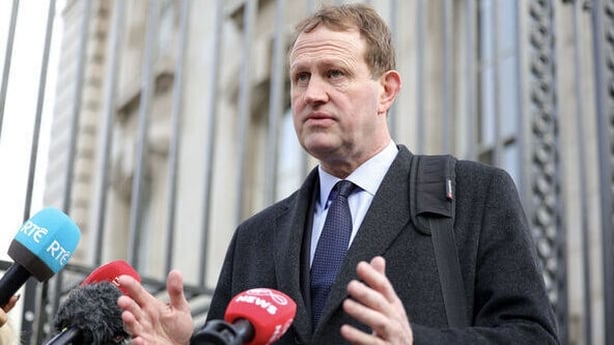
Ireland is in favour of opting in to the Returns Regulation, Jim O’Callaghan has said
What are the criticisms of the Migration Pact?
As expected, there have been plenty of complaints from all quarters, although the pact – following its tortuous progress through the EU’s legislative system – ultimately commanded the support of the European Parliament and member states.
Politically, there was a major push by the EU institutions and member states to get the pact agreed just before the European Parliament elections in June 2024, to show voters that Europe was getting to grips with the migration issue.
Domestically, Sinn Féin and others have harried the government, saying the pact undermines Irish sovereignty, with leader Mary Lou McDonald telling the Dáil on Tuesday that “decisions on migration should be taken, must be taken by the people of this country”.
Sinn Féin has also accused the Government of failing to provide special provisions in the pact to take account of the Common Travel Area with the UK, an issue which has taken on an added relevance given the events surrounding the violence in Belfast, and the fact that the Sudanese suspect Hadi Alodid had entered Northern Ireland via Dublin en route from Paris.
According to Ms McDonald, the pact “won’t deliver the robust, fast, enforced system that we need. And it certainly won’t provide respect, dignity and a human rights-based response for those who flee war and persecution for safety”.
In a written Dáil response in February, Mr O’Callaghan said: “If Ireland had not opted into the pact, it is likely that we would face higher levels of secondary movement, slower processing and a less efficient returns system.
“This would result in applicants staying in the system for much longer, at much greater cost to the State, in terms of the provision of accommodation and other supports.”
Following the violence in Belfast, a spokesperson for the minister said that at the UK-Ireland Summit in March it was agreed “that further steps would be taken to ensure that the Common Travel Area (CTA) remains secure by working together to expand immigration data sharing arrangements, particularly in preventing abuse of CTA free movement by those not entitled to its benefits”.
There have been concerns raised by refugee organisations about the speed of the appeals process, the fact that decisions are being made in “first-instance”, meaning at the first stage of the process, and that the legal support in the appeals process will be a legal clerk, as opposed to a solicitor or barrister.
While the UN refugee agency (UNHCR) welcomed the passing of the International Protection Bill that will allow for the Migration Pact to take effect, it expressed concern that it could still lead to the detention of children in exceptional circumstances “even if only as a measure of last resort”.
The Government has said one part of the pact – the Reception Conditions Directive – provides safeguards for the treatment of asylum applicants.
Under the directive, detention can be an option “only … when it proves necessary and proportionate based on an individual assessment, as a measure of last resort when less coercive measures are not possible, and subject to judicial scrutiny”.
Where detention is used it will be managed through gardaí and the prison service.
“Alternatives to detention are being explored to deliver enhanced monitoring of applicants.”
The Irish Refugee Council (IRC) has been critical of the speed with which the new system will operate.
“The pact will rush people through the asylum decision-making process,” IRC chief executive Nick Henderson said.
He added: “That will make it much harder for somebody to establish their reasons for why they are applying for protection, and it will make it much harder to get access to a lawyer.
“While there are several safeguards within the pact – the representative service, the independent monitor, and the appeals body – there are question marks about each, certainly in terms of who will perform these roles, how they will be resourced, and how independent will the appeals body actually be from the Department of Justice?”
The pact has been criticised internationally by NGOs and refugee organisations.
The European Council on Refugees and Exiles (ECRE) argues that the pact will “restrict access to asylum in Europe, lower fundamental rights guarantees for people applying for asylum in the EU and keep people in need of protection at the EU’s external border”.
Overall, the ECRE has concerns about a lack of proper training and sensitivity by those staffing the initial screening process and insufficient numbers of trained personnel.
The organisation is also concerned about what is calls the lack of a clear definition of “legal counselling” – a new term under EU asylum law – potentially giving rise to differing interpretations across the EU, and what it calls a “worryingly limited” right to appeal.
According to a Government briefing note, Ireland’s NIP is “anchored in the EU and the State’s commitment to the delivery and protection of human rights in line with the European Union Charter of Fundamental Rights (CFR), the European Convention on Human Rights (ECHR), and the UN Refugee Convention”.
Another criticism is that while asylum seekers will have their claims processed more quickly, with potentially many facing potential deportation, such a process is only as good as the returns agreements member states have made with third countries.
“Returns are not only a matter for EU authorities, as it is not possible to return an individual to a given country without cooperation from that country’s authorities,” wrote Luigi Scazzieri of the Centre for European Reform (CER) shortly after the pact was adopted.
He added: “Processing applications more quickly will only lead to a buildup of individuals stuck in a limbo unless returns can be made to work better.
“Many countries, for example in Africa, lack the administrative capacity to deal with returns effectively and often have little incentive to cooperate, as it is unpopular to look like the EU’s migration enforcer.”
According to Eurostat, in the fourth quarter of 2025, while 117,545 non-EU citizens were ordered to leave a member state, only 33,860 people were actually returned to third countries.
Compared to the previous year, the number of non-EU citizens ordered to leave fell by 6.1%, while the number returned increased by 13%.