
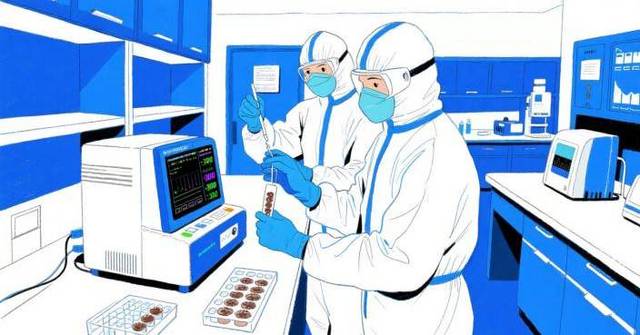
Speech by FS at International Bio-Computing Innovation Summit 2025
Following is the speech by the Financial Secretary, Mr Paul Chan, at the International Bio-Computing Innovation Summit 2025 today (September 29):
Liu Wei (Co-founder and Chief Executive Officer of BioMap), Clara (Chief Executive Officer of the Hong Kong Investment Corporation Limited (HKIC), Ms Clara Chan), distinguished speakers and guests, ladies and gentlemen,
It is a pleasure to join you all today for the Second International Bio-Computing Innovation Summit. I’m delighted to see such a strong turnout of global scientists, industry leaders, investors and young innovators in Hong Kong. Your presence reflects the growing momentum and shared vision in shaping the future of bio-computing.
Just over a year ago, we gathered here with a sense of anticipation and purpose. We discussed the transformative potential of AI in accelerating the development of life sciences and pharmaceuticals. We also witnessed the strategic collaboration between the Hong Kong Investment Corporation and BioMap, marked by the establishment of BioMap’s InnoHub right here in Hong Kong.
Fast forward one year, we find ourselves in a world evolving at an extraordinary pace – especially in the realm of AI innovation. Large language models such as DeepSeek are shocking the world. Embodied AI is breaking new ground, with dramatic breakthroughs in vision-language-action models and robot dynamics.
In healthcare, the applications of AI are expanding at a remarkable scale. AI is now helping us predict molecular structures and accelerate drug discovery. It is enhancing diagnostic accuracy, enabling personalised medicine, and supporting the creation of human digital twins that revolutionise clinical trials. It is also empowering synthetic biology, opening up many new application frontiers, from biomaterials to agriculture.
These exciting developments all point to the fact that AI can be a powerful force for good, helping people live longer, stay healthier and lead happier lives.
Hong Kong’s vision
Hong Kong is actively positioning itself at the forefront of AI and biotech development. We are making strategic and substantial investments in these fields, and forging closer partnerships among the Government, the industry, academia as well as the research and investment sectors.
The HKIC plays a vital role in driving these investments. By investing and co-investing in projects, it is channelling capital into sectors that we aim to develop. Currently, among its portfolio of over 130 projects, a significant number are focused on AI and biotech. Notably, around 20 per cent of its invested capital are deployed in biotech initiatives.
I’m pleased to see that the HKIC’s collaboration with BioMap is already bearing fruit. Since its establishment last year, the InnoHub has commissioned a number of high-impact initiatives. Today, we will witness the launch of three new projects, developed in partnership with leading local universities and regional collaborators. These projects are pushing the boundaries of research excellence, empowering education and accelerating the commercialisation of research outcomes.
Hong Kong is indeed brimming with collaboration opportunities in this space. Both of our medical schools rank among the world’s top 25. Five of our universities rank in the global top 50 in AI and data science. Twenty-eight laboratories and centres in the InnoHK research cluster are in partnership with leading institutions worldwide. All these are home to world-class research teams and pioneering projects.
Taking a broader perspective, Hong Kong has what it takes to shine in bio-computing. That includes a thriving innovation and technology ecosystem; access to capital, data and markets; supportive government policies, and world-class talent. In the interest of time, I’d like to highlight just two of these strengths: capital and government policies.
A vibrant capital market
First, access to capital. Hong Kong offers a full range of financing options for companies at different stages of development to grow and scale.
Our stock market is an important pillar. Since listing reforms were implemented in 2018, over 75 biotech firms have listed in Hong Kong, raising over US$30 billion, making us the world’s second-largest biotech fundraising hub. This year, our stock market has been performing very well, with IPOs (initial public offerings) raising over US$17 billion in the first eight months, nearly seven times the amount raised during the same period last year. Notably, biotech companies accounted for around 20 per cent of these funds.
Beyond public markets, Hong Kong boasts a vibrant private capital ecosystem. We are home to over 650 private equity and venture capital firms, managing US$230 billion in assets, second only to the Chinese Mainland in Asia.
Supportive government policies
Second, supportive government policies. AI and biotech are among the strategic sectors prioritised by the Government. In the Policy Address as well as the Budget this year, we outlined a series of forward-looking initiatives to accelerate AI development – focusing on algorithms, computing power, data, capital and talent.
To drive the biotech sector forward, we are working to establish a primary evaluation mechanism for drug approvals, aiming to position Hong Kong as an internationally recognised regulatory authority. We are also strengthening cross-boundary collaboration on drug development. For example, in the Hetao Innovation and Technology Park, Hong Kong and Shenzhen have established cross-boundary clinical trial institutions, enabling studies that meet the regulatory standards of both jurisdictions. These efforts will help Hong Kong emerge as a regional drug development hub because the time-to-market for innovative drugs to be developed here can be greatly shortened.
Enterprises and talent
But for our vision to materialise, it ultimately comes down to people and the enterprises they build. That’s why we are relentlessly attracting high-impact enterprises engaged in cutting-edge technologies to Hong Kong. In fact, many of the companies attracted through our Office for Attracting Strategic Enterprises are leading players in AI and biotech. A new batch of strategic enterprises to be announced in a couple of weeks will include several world-class pharmaceutical leaders. I’m proud to say that our AI and biotech ecosystem is becoming more dynamic and globally connected.
In a world that is increasingly complex, fast-changing and technologically fragmented, Hong Kong remains open: open to talent, and open to innovation and collaboration. We welcome scientists, innovators, entrepreneurs, researchers and students to join our growing ecosystem and co-create a future where technology advances the progress of humanity.
Ladies and gentlemen, the convergence of AI and biotech will be one of the most powerful forces shaping the future of science, healthcare and innovation. Hong Kong is committed to being a leader in this journey, where we connect the brightest minds, the best resources and boundless opportunities across borders.
On this note, I wish this Summit every success, and to all of you, good health and business in the time ahead.
Source: AI-found images
Government announces appointments to Research Council
The Government announced today (September 29) the appointments of 13 non-official members to the Research Council for a term of two years, and the appointment of four additional ex-officio members to the Council. All appointments will take effect from October 1, 2025.
The non-official members include four new members and nine reappointed members. The new members are Professor Anthony Chan Tak-cheung, Professor Tatia Lee Mei-chun, Professor Ronald Ma Ching-wan and Dr Alexander Ng Man-tat. The reappointed members are Professor Engle Angela Chan, Professor Karen Chan Kar-loen, Professor Paul Chan Kay-sheung, Professor Ivan Hung Fan-ngai, Dr Raymond Lai Wai-man, Professor Linda Lam Chiu-wa, Professor Leung Wai-keung, Professor Karl Tsim Wah-keung and Professor Samuel Wong Yeung-shan.
Moreover, the Dean of the Faculty of Health and Social Sciences of the Hong Kong Polytechnic University or his representative, and the Convenor of the Institute for Medical Advancement and Clinical Excellence or his representative, have been appointed as new ex-officio members of the Council. As such, Professor David Shum Ho-keung and Professor Gilberto Leung Ka-kit, who are incumbent non-official members, have been appointed as ex-officio members in their respective capacities.
In addition, the Commissioner for Primary Healthcare or his representative, and the President of the Hong Kong Academy of Medicine or his representative, have been appointed as ex-officio members of the Council.
The Secretary for Health, Professor Lo Chung-mau, expressed gratitude to the outgoing members, Professor Juliana Chan Chung-ngor, Professor Lin Chia-chin and Professor Tony Mok Shu-kam, for their invaluable contributions to the Council.
The Council, chaired by the Secretary for Health, is responsible for providing strategic guidance on funding for health and medical research, and health promotion projects. It oversees the management of funds under the Health Bureau, including the Health and Medical Research Fund, encompassing the allocation of funding to approved projects.
The membership list of the Council with effect from October 1, 2025, is as follows:
Chairperson:
Secretary for Health/Permanent Secretary for Health
Members:
Professor Engle Angela Chan
Professor Karen Chan Kar-loen
Professor Paul Chan Kay-sheung
Professor Anthony Chan Tak-cheung
Professor Ivan Hung Fan-ngai
Dr Raymond Lai Wai-man
Professor Linda Lam Chiu-wa
Professor Tatia Lee Mei-chun
Professor Leung Wai-keung
Professor Ronald Ma Ching-wan
Dr Alexander Ng Man-tat
Professor Karl Tsim Wah-keung
Professor Samuel Wong Yeung-shan
Secretary for Innovation, Technology and Industry or representative
Director of Health or representative
Commissioner for Primary Healthcare or representative
Secretary-General of the University Grants Committee or representative
Chief Executive of the Hospital Authority or representative
Dean of the Faculty of Health and Social Sciences of the Hong Kong Polytechnic University or representative
Dean of the Faculty of Medicine of the Chinese University of Hong Kong or representative
Dean of the Li Ka Shing Faculty of Medicine of the University of Hong Kong or representative
President of the Hong Kong Academy of Medicine or representative
Convenor of the Institute for Medical Advancement and Clinical Excellence or representative
Head of Research and Data Analytics Office of the Health Bureau (Secretary)
Source: AI-found images