
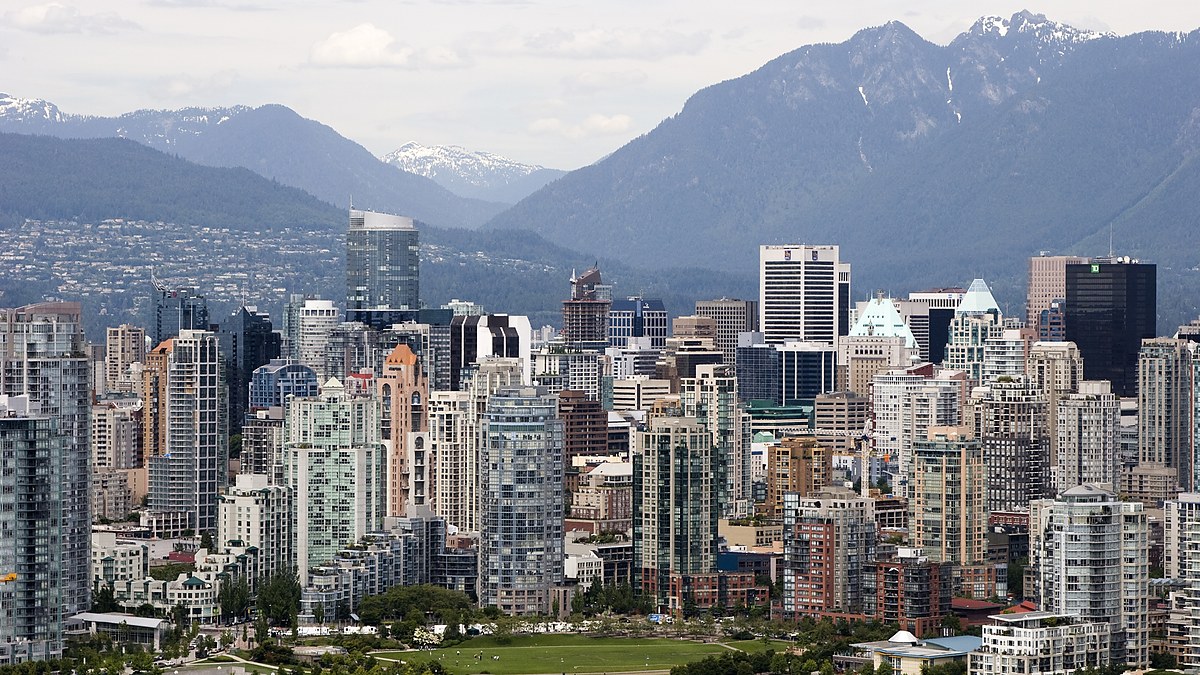
Vancouver will inventory and grade its building stock for earthquake risk, screening structures from the exterior to flag those most likely to fail in the next major quake. That is according to the city’s lead seismic policy planner, Micah Hilt, whose plan to council makes Vancouver the latest Pacific Ring of Fire city racing to register its most dangerous buildings.
No major Canadian city is more earthquake-exposed than Vancouver, which sits above a Cascadia megathrust that Wood Central understands last ruptured in a major quake in 1700. Current models give a one-in-five chance of a very strong earthquake within 50 years, yet “we could have an earthquake at any moment,” Hilt told the council yesterday.
Because broad models can only estimate risk by building type, Hilt wants a design professional to inspect each structure from the exterior and assign it a risk grade, as Seattle did to power its “fix-the-bricks” campaign on unreinforced masonry. The grades would then steer policy, retrofit incentives, and the order in which the riskiest buildings are addressed.
The Cascadia “Big One” is the scenario driving Vancouver’s push to grade its buildings. (Video: CBC Vancouver via YouTube)
Should a 7.2-magnitude quake centred in the Georgia Strait hit the city, modelling Hilt co-authored in 2024 with Natural Resources Canada scientist Tiegan Hobbs puts the toll at up to 1,350 dead or severely injured and nearly 6,100 privately owned buildings heavily damaged. Such a quake would displace more than a third of Vancouver’s residents and workers for months, with direct losses near $17 billion.
Their 2024 study found five building types account for nearly 80 per cent of the city’s risk, concentrated in six neighbourhoods that carry about 65 per cent of it. Vancouver’s single-room-occupancy hotels rank among the most exposed of all, nearly every one built before seismic design entered the building bylaw.
Although tenant advocates want the grades made public, commercial and rental property owners warned the city that publishing building-level risk would hurt leasing, insurance, and lending. Seattle, San Francisco and quake-scarred New Zealand have each built registers that now steer retrofit programs, though New Zealand is mid-overhaul as it eases remediation deadlines and trims thousands of buildings from its scheme.
Can Timber Help Buildings Bounce Back?
As these cities grade what they have already built, the question of what to build next increasingly centres on engineered wood, a material whose lightness counts in its favour when the ground moves. Christian Málaga-Chuquitaype, a structural engineering lecturer at Imperial College London, has noted that timber buildings attract smaller seismic forces because they are relatively light, an effect that grows more useful the taller the building.
Shake-table testing has demonstrated as much, with a 10-storey cross-laminated timber tower absorbing more than 100 simulated quakes at UC San Diego without structural damage, self-centring after every run. So complete was the recovery that the project’s principal investigator, Shiling Pei, judged it almost dull, “if you’re looking for damage, this is a very boring test,” he said.
 The 10-storey TallWood tower at UC San Diego, where the mass timber structure later withstood more than 100 simulated earthquakes without structural damage. (Photo Credit: David Baillot/University of California, San Diego)
A University of Auckland test produced the same result this month, with a cross-laminated timber building led by Ashkan Hashemi and Pierre Quenneville withstanding 100 strong shakes and returning to centre each time, its main timber elements undamaged before some 60 industry professionals. Built as a two-storey rig loaded to mimic the medium-density townhouses now common across New Zealand, the structure let each storey move in a controlled way, “they’re not used to seeing a building sustain even one major earthquake,” Hashemi said.
About 60 industry professionals watch the cross-laminated timber test building at the University of Auckland’s Structures Test Hall, where it withstood 100 strong shakes and returned to centre each time. (Photo Credit: University of Auckland)
The performance is not automatic in the most violent zones, where Japan’s seismic codes push engineers toward framed systems and far heavier connections than the panelised construction used elsewhere. Those codes date back more than a century to the 1923 Great Kanto earthquake, which killed more than 100,000 people across Tokyo and Yokohama and forced Japan to write some of the world’s first modern seismic standards.
That record has begun to feed back into how seismic cities write their codes, with Vancouver’s own engineers judging mass timber five times lighter than concrete and easier to design to a higher seismic standard when the city cleared encapsulated timber to 18 storeys in 2024. Pei has said the rocking-wall system proven at TallWood could feed into the International Building Code, the standard behind much of the timber world’s seismic engineering.

Jason Ross, publisher, is a 15-year professional in building and construction, connecting with more than 400 specifiers. A Gottstein Fellowship recipient, he is passionate about growing the market for wood-based information. Jason is Wood Central’s in-house emcee and is available for corporate host and MC services.