
Despite Hollywood’s vast history, the names of only a handful of directors have become synonymous with the general public. Perhaps as little as two? And when I say the public, I mean my mother. My mum would not know who Christopher Nolan or Quentin Tarantino are. But Hitchcock? Oh yes. Psycho being a formative viewing experience with her when I was growing up (no subtext implied, please.)
1982 was a banner year for family film experiences. Like most of the Irish nation, we all gathered around the TV to watch the premiere of Jaws on RTÉ. You’d think gouged eyes and body parts floating to the bottom of the sea would be, well, traumatic. No. As all my Lindsay Rd. National School classmates agreed the next day, it was one of the coolest things we’d ever seen.
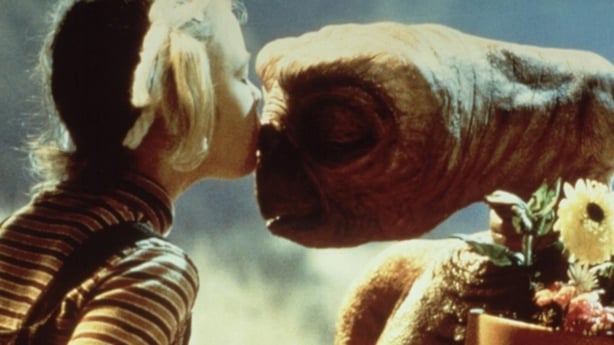
Drew Barrymore and E.T.
The actual trauma came that Autumn, when my dad brought home a dodgy video of the big hit of the summer in America. Steven Spielberg’s E.T. The Extra-Terrestrial would not be released in Irish cinemas until Christmas. But one September night we all sat down in the living room and watched it on VHS. These were the heady days of video piracy. And E.T.’s arrival in Irish homes via the back door caused such a bombshell for the video’s distributors (CIC), they took out ads in the Herald and Press warning people they were watching an illegal alien.
What happened the night we all collectively broke the law has never left me – and even today this scene is hard to watch: it’s when they find E.T. dying in the forest. I looked over at my mum, bereft. To my shock, she was pale-faced and crying. I’d never seen her like this. I’m usually the one who did the crying, while she did the finger wagging. It was shocking to my eleven-year-old eyes. That was the first time I really registered the name ‘Steven Spielberg’. He made my mum cry. I was a fan for life.
Forty-four years later, I found myself waiting impatiently for the release of his return to the big summer movie with his extra-terrestrial themed Disclosure Day, a spiritual sequel of sorts to an encounter audiences had decades ago, when sci-fi was mostly lo-fi.
Star Wars usually gets the blame for the tidal wave that became the movie blockbuster in 1977. But as far as the studios were concerned, that was an outlier, a one-off. The term ‘blockbuster’ came into popular use on the crest of the success of Spielberg’s aforementioned Jaws two years earlier. But it was the unexpected box office smash release of his UFO movie Close Encounters of the Third Kind, six months after George Lucas’ movie, which changed everything. Box office affairs were watched keenly and closely by intelligences greater than man’s: studio heads. Hollywood looked with sorcerer eyes as the numbers came in. Science fiction, a second-rate b-movie genre, one that even Stanley Kubrick’s vast and cool and sympathetic intellect failed to resurrect (despite his success with 2001: A Space Odyssey), was now open for business – blockbuster business!
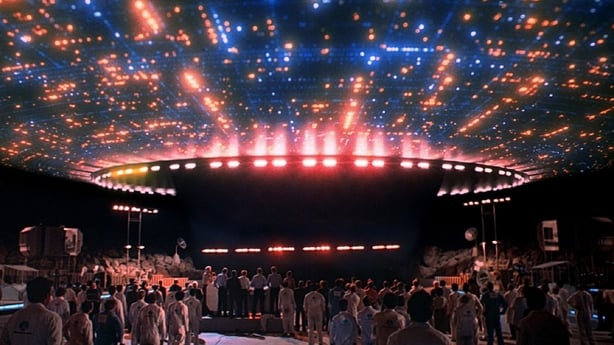
Close Encounters Of The Third Kind
Jaws, Close Encounters and their follow-up, Spielberg’s World War II comedy 1941, have one thing in common. Okay, the first two were record-breaking smashes, the third a failure – but they all went over budget and behind schedule. Spielberg entered the eighties with something to prove to himself and to Hollywood. Only recently did he admit that the main reason he accepted George Lucas’ offer to direct Raiders of the Lost Ark in 1981 was to show the industry he could deliver a picture on time and on budget. Not only did he succeed, but the movie was a smash hit, making Harrison Ford a leading man and bona fide Hollywood superstar.
After several viewings, I can confirm that Disclosure Day answers the biggest question: has Steven Spielberg still got it? Absolutely.
Spielberg himself became the main attraction the following year, when E.T. The Extra Terrestrial became the most successful movie ever made. (I also have a soft spot for the horror movie he produced and released just a week before E.T. – Poltergeist, another pirate video stalwart in our house.)
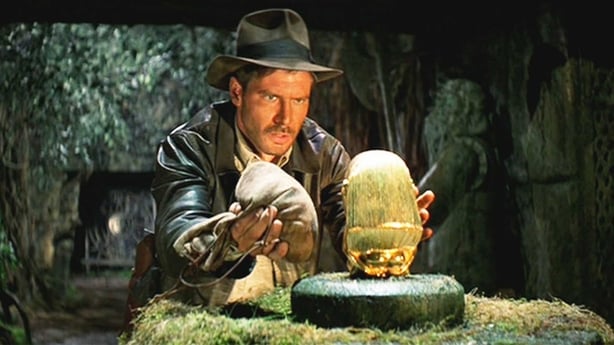
Harrison Ford in Raiders Of The Ark
So how do you follow making the most successful film ever made? A smart fellow, he chose… wisely, by drinking from the grail of consistency. A Steven Spielberg production, whether as director or producer, would always be of an exceptional standard, in both conception and execution. With no internet, no social media, no distractions: cinema was still the great entertainment unifier back then. Following his initial success in the seventies, then throughout the 80s and much of the early 90s, Steven Spielberg became a household name. Not since the heady days of Hitchcock had someone wielded a camera and told a story with such enthralling grace that it appealed to cinemagoers of virtually every nationality.
A swath of archaeologists, dinosaurs, Nazis and Oscars later, it would take the death of his friend Stanley Kubrick for Spielberg to look science fiction right in the eye again with Kubrick’s planned follow-up to Eyes Wide Shut – A.I.: Artificial Intelligence. (A.I., a whole twenty-five years ago. Stanley and Steven were so far ahead of the game.) The subject seemed to stick with him, as he shot the film almost back-to-back with Tom Cruise in 2002’s Blade Runner-y Minority Report. Spielberg has a history with this working method of two-for-one. Remarkably, he was editing Jurassic Park remotely (remote working in 1992!) while shooting Schindler’s List in Poland. The terrorist attacks in New York spurred him to return to extra terrestrial territory the following year, with a modern adaptation of H.G. Wells’ War of the Worlds, again starring Tom Cruise. Evil aliens trash the planet and use human beings as fertilizer. And that was a Steven Spielberg blockbuster?
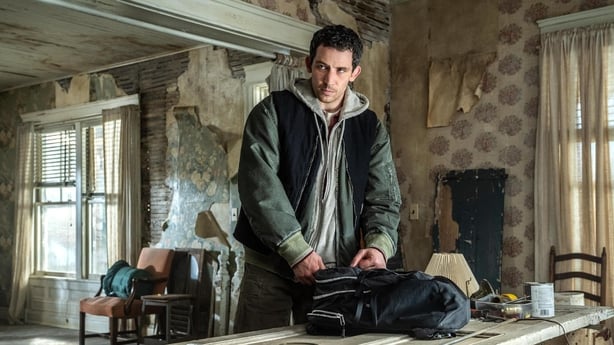
Josh O’Connor in Disclosure Day
Disclosure Day has been upon us for several days now, and what are we to take from its revelations? Well, after several viewings I can confirm it answers the biggest question: has Steven Spielberg still got it? Absolutely. Not only has he returned triumphantly to the science fiction genre that made him. But he’s succeeded in one of the greatest challenges facing any artist working for half a century: not repeating themselves. Disclosure Day is a great topper to his unofficial UFO trilogy. This is no Close Encounters or E.T. redux. This is first and foremost a thriller, and ultimately very much not a giant special FX spectacle. A fact which (I think) may have tempered some folks’ reaction, going by some snarky online reviews. This why I’d argue for a second viewing, one for which you leave your baggage at the door of the cinema. Spielberg said recently, when he hires an actor he’s never worked with before, the first thing he says to them is to forget all his movies and just concentrate on making a good film. This is exactly how you should experience it.
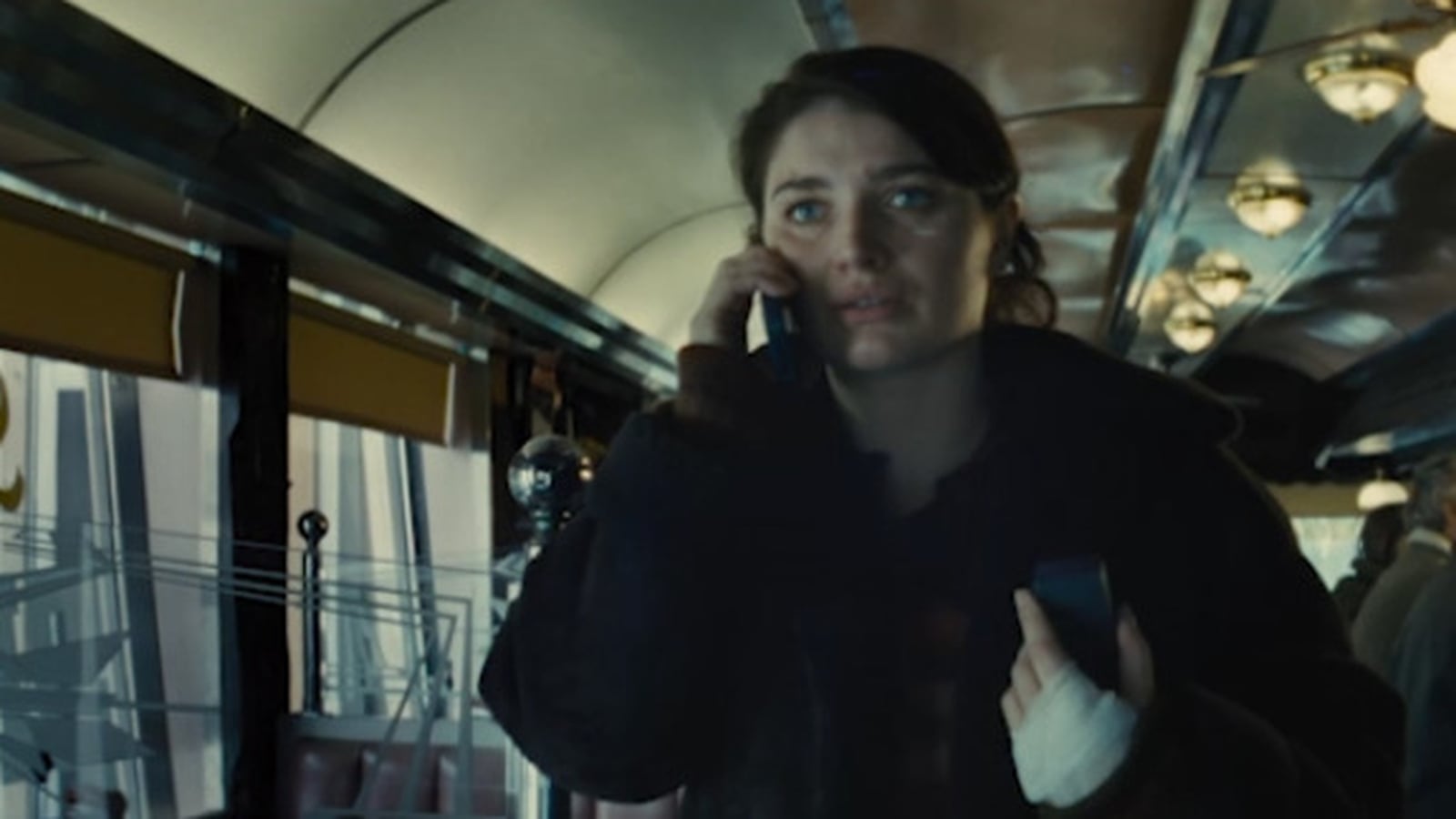
Disclosure Day is a thrilling, tense movie, of car chases and train smashes, childhood trauma (it’s a Spielberg movie) and alien technology (I’m not spoiling anything here except maybe the first sixty seconds). But ultimately, it’s a philosophical one, filled with awe and optimism.
The only thing we’re certain of is that we’re in the hands of a true cinematic maestro. Keep watching the skies and go to the pictures. In Spielberg we should trust. Just ask my mum.
A short season of Steven Spielberg’s sci-fi films, including some of the above, will accompany the exclusive release of the 70mm film print of Disclosure Day at the Irish Film Institute this month – find out more here