
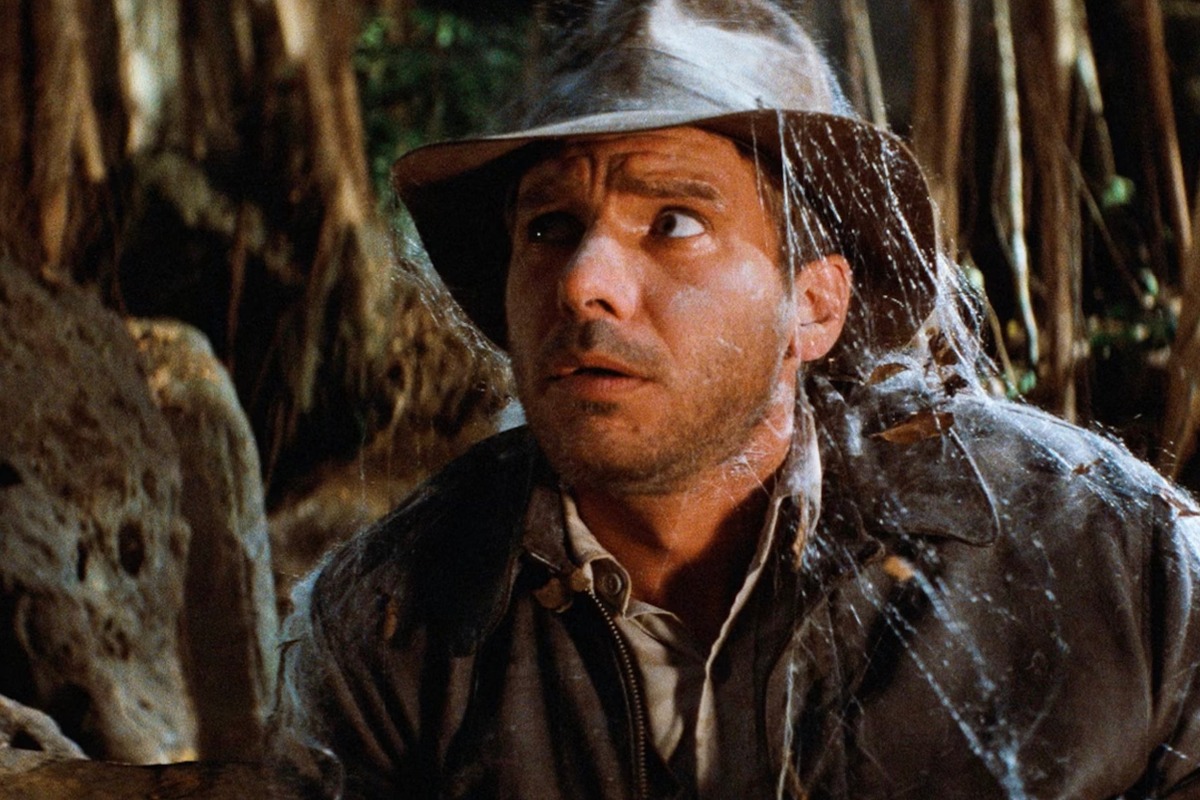
Steven Spielberg says Harrison Ford was first offered Dr. Alan Grant in Jurassic Park but turned it down, leading to Sam Neill’s casting. He shared the anecdote while promoting his new sci-fi thriller Disclosure Day, released June 10 and featuring Emily Blunt, Josh O’Connor and Colin Firth.
Steven Spielberg has revealed that he once offered Dr. Alan Grant to Harrison Ford, who passed on the role during the run-up to Jurassic Park. Speaking on the Happy Sad Confused podcast while promoting his new film Disclosure Day, the director recalled pivoting to Sam Neill, whose quieter charisma reshaped the character. The detour also mirrors Spielberg’s long-standing taste for grounded heroes, a thread he’s pulling again with Emily Blunt headlining his latest sci-fi thriller.
Harrison Ford’s surprising connection to Jurassic Park
Sometimes a single casting decision rewrites pop culture memory. While promoting his new sci‑fi thriller, Disclosure Day, director Steven Spielberg told the podcast “Happy Sad Confused” that he first offered the role of Dr. Alan Grant in Jurassic Park to Harrison Ford. Ford passed. Spielberg admitted the refusal stung at the time, a rare glimpse of vulnerability behind a landmark blockbuster.
How Sam Neill became the iconic Dr. Grant
With Ford out, Spielberg pivoted quickly. Sam Neill entered the frame and brought steady warmth, skepticism and dry humor that shaped the film’s heartbeat. This is the case where timing made the character. Neill’s Grant, gruff yet awed by living fossils, grounded the spectacle, which explains why audiences still feel the sand and terror of Isla Nublar in his reactions.
Spielberg’s latest: Disclosure Day hits the big screen
The anecdote arrives as Spielberg returns to cerebral science fiction with Disclosure Day, now in U.S. theaters as of June 10, 2026. The cast features Emily Blunt, Josh O’Connor and Colin Firth, a trio calibrated for tension and empathy. Early reactions highlight a taut conspiracy thriller threaded with extraterrestrial riddles, a lane Spielberg knows well without repeating old tricks.
For American moviegoers, this pairing of revelation and release is convenient: a look back at a foundational 1993 pivot while a fresh film lands nearby. According to this study in contrast, the new title aims smaller in canvas but sharper in mood, letting paranoia slip into everyday spaces rather than roaring through theme‑park terror.
How casting shapes Spielberg’s cinematic legacy
Spielberg stressed that he prizes recognizably human reactions over invincible swagger. That philosophy steered Neill into Grant and, decades later, puts Blunt at the center of Disclosure Day’s moral weather. In addition to spectacle, he wants the flinch, the pause, the second thought. It is why his set pieces often begin with a face, not a visual effect.
Would Jurassic Park have felt different with Ford under the hat? Certainly. But the choice that didn’t happen clarifies the one that did. Neill’s everyman steadied a seismic movie, and that lesson echoes forward. Casting is not trivia. It is architecture, the invisible frame that lets stories stand long after the lights come up.