
Need to knowCork urged to conserve water we face into major hot stretch
17:42, 22 Jun 2026Updated 20:09, 22 Jun 2026
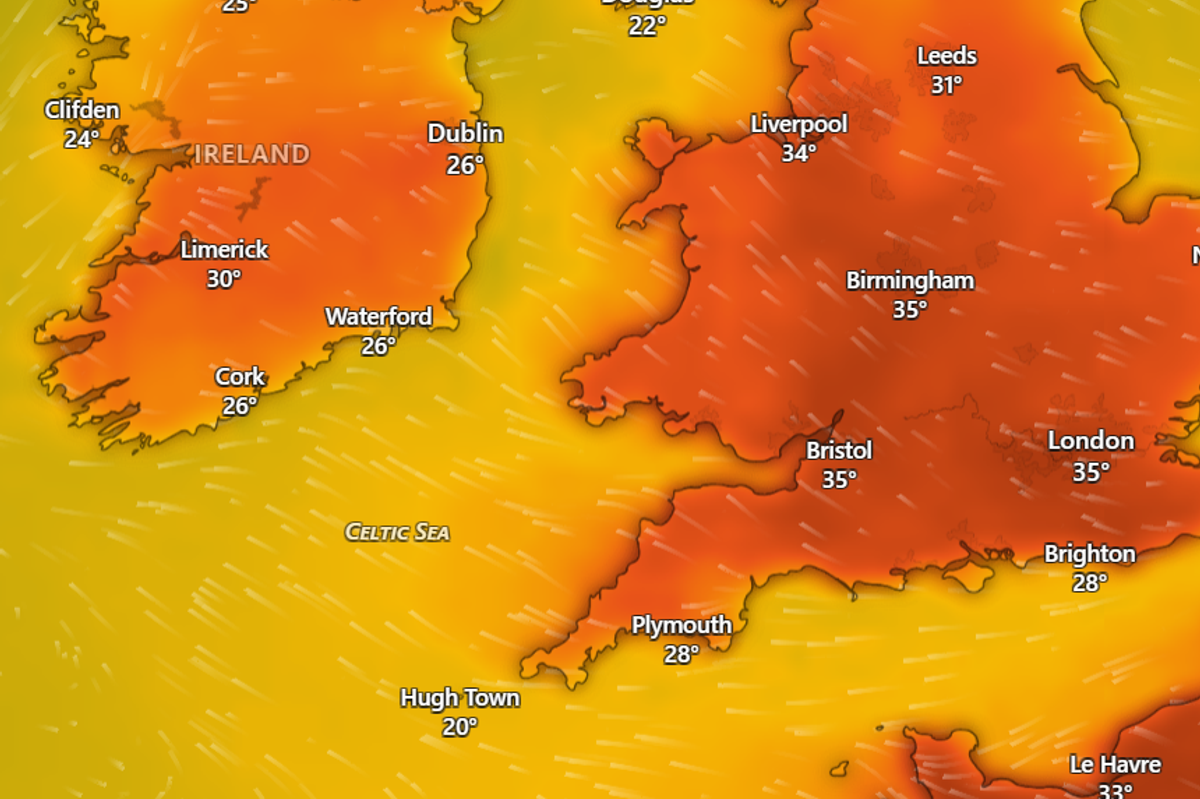
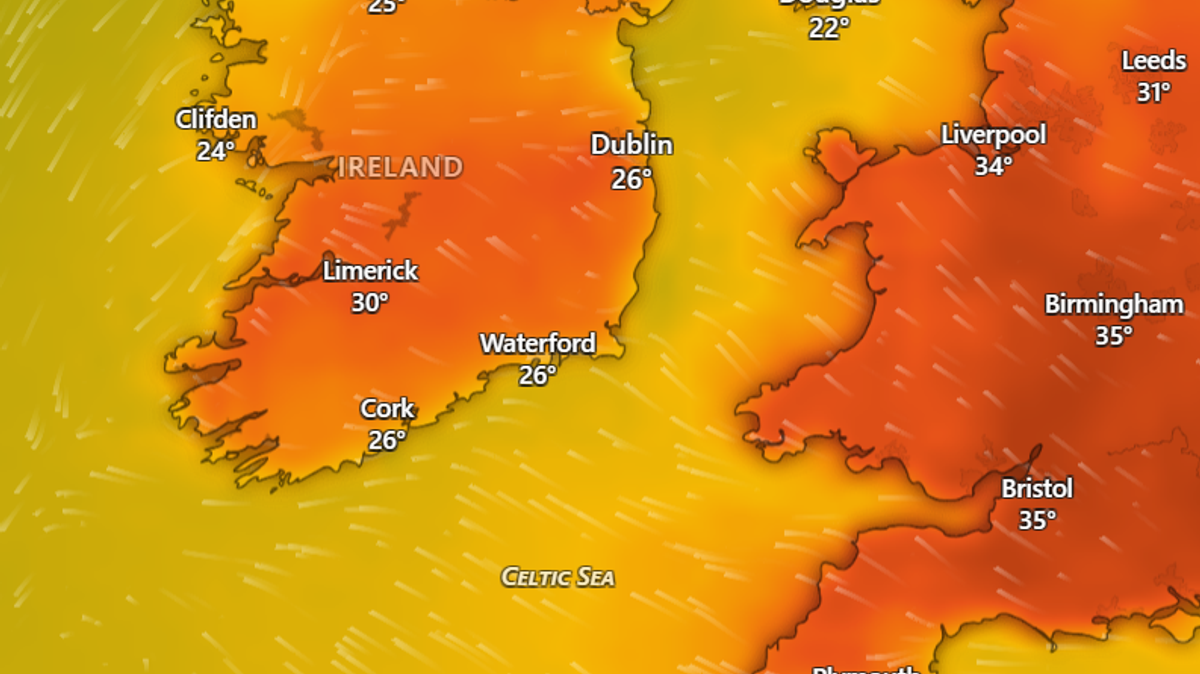
Projection: the heat of things to come on Thursday(Image: Windy.com)
With a major heatwave on the way, and a rare week-long temperature warning issued by Met Éireann, a number of agencies have urged the public to stay safe – whether that means getting plenty of water, looking out for vulnerable neighbours or even taking precautions on the road.
It’s not the first hot summer that Ireland has seen, but spikes in temperature are becoming more frequent and intense. Until this spring, Ireland’s May heat record stood at 28.4C, set in Kerry in 1997. In May this year, that watermark was surpassed by a leap of two degrees, with the record May figure soaring to a sweltering new high of 30.5C.
Usually, heat records tend to climb by a matter of decimal places – but now new highs are skipping entire degrees at a time.
And that was just for May. Now Ireland is facing into a very hot summer stretch, as the weather service warns of temps in excess of 30C in some areas and thunderstorms – with both to peak on Thursday. Several agencies, including Irish Water, the RSA and the HSE, have issued their own advice in advance of the heatwave.
Uisce Éireann urges water conservation
Uisce Éireann has launched its water conservation campaign asking people in Cork to conserve and help protect and preserve water supplies by adopting simple water saving practices at home, in the garden and at work. The appeal comes as almost a third of Irish people admit to being “completely disengaged with any form of water conservation.”
By taking some simple steps to conserve water at home, in the garden and at work, people can play their part in protecting local water supplies for themselves and their neighbours.
Below are some simple water-saving tips everyone can do, to help protect supplies:
Leak free : Check that your home is leak free. Check for running overflows and fix any dripping taps, cisterns or pipes.Don’t let the tap run : Brushing your teeth with the tap running can use up to a staggering 6 litres per minute. Brushing your teeth with the tap off will use a more modest 1 litre of water.Shower vs. Bath: The average bath uses 80 litres of water, while a 7-minute shower uses just 49 litres. Switching to showers can save a significant amount of water.Drop the hose: Drop the hose during the summer months. Use a rose head watering can to water your plants, instead of a hose or sprinkler.Install a water butt: Use it to collect rainwater from your gutters for gardening or washing the yard.Fully loaded: Always ensure your dishwasher and washing machines are fully loaded. A modern washing machine uses approximately 65 litres of water per cycle while a dishwasher uses 20 litres. By ensuring they are fully loaded, not only will you conserve water, but you will also reduce your energy bills.Don’t flush it all away: A third of all water used in the home is flushed down the toilet. Some larger cisterns can continue to work effectively with a smaller flush. Place a displacement device into the cistern (out of the way of moving parts) to save water.
To access the water conservation calculator or find out more about water conservation tips, visit www.water.ie/conservation
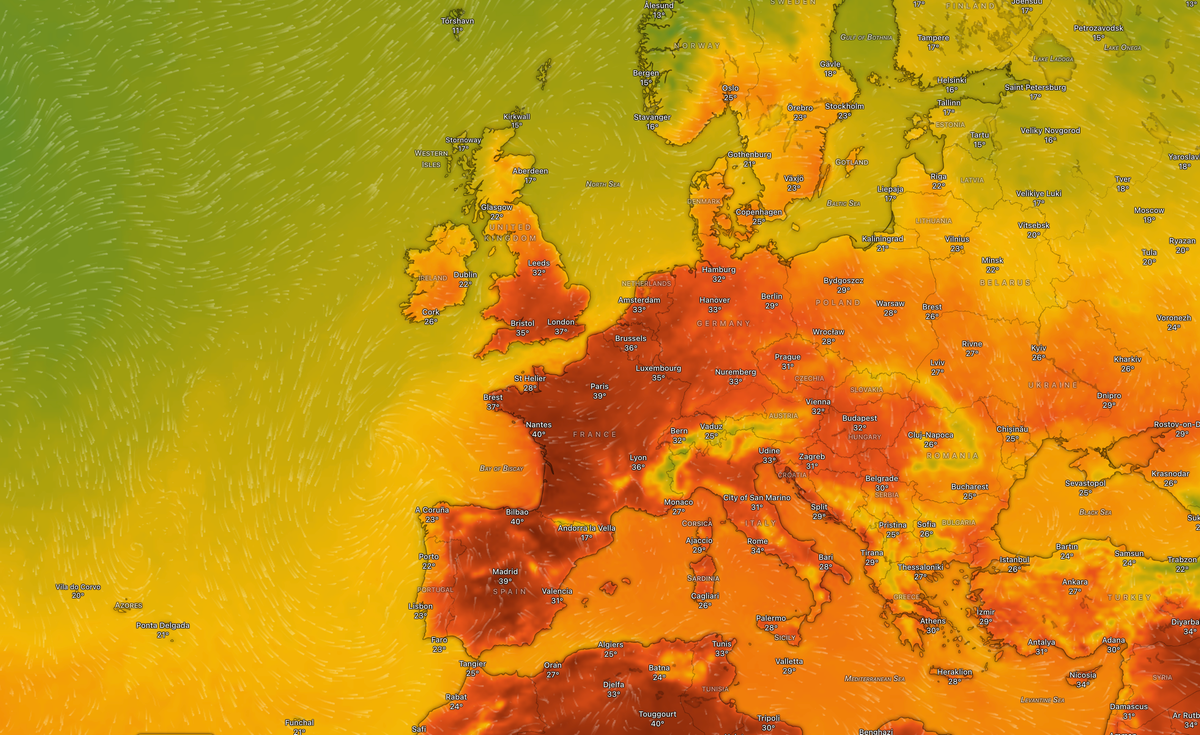
Picture on Wednesday at 3pm(Image: Windy.com)
RSA Advice
The Road Safety Authority (RSA) is asking road users to exercise caution on the roads as Met Éireann has issued a weather warning for high temperatures. With clear sunny conditions and high temperatures forecast over the next number of days, the RSA is advising drivers to:
Reduce the risk from sun glare by wearing sunglasses. Be aware of the dangers of sun glare when travelling east in the mornings and west later in the day.Be prepared and ensure you have adequate supplies of water. Any delays to journeys could result in road users being stuck in traffic for a period time in hot conditions. Children and pets are particularly at risk during these hot spells of weather.Ensure your windscreen is clear of grease or grime inside and out. Make sure you have plenty of window washer fluid to clear flies/insects and excess dust from the road when driving.Watch out for vulnerable road users such as pedestrians, cyclists, horse riders and motorcyclists. Slow down and allow extra space when passing.
Advice to pedestrians, people who cycle, e-scooter users and motorcyclists:
Beware of the dangers that sun glare can cause, especially when crossing the road and at junctions.Follow current health messaging around the use of sun block when out walking and cycling.HSE health advice
The HSE has reminded people to take steps to protect their health during the current period of hot weather: “High temperatures can affect anyone, but some people are more vulnerable to the effects of heat, including older people, infants and young children, people with chronic medical conditions, pregnant women, and those who work or spend long periods outdoors. Heat can lead to dehydration, heat exhaustion and heatstroke.”
Keep cool
Avoid spending long periods outdoors during the hottest part of the day (11am to 3pm)Stay in the shade whenever possibleWear light-coloured, loose-fitting clothesMinimise unnecessary heating – turn off central heating, electrical equipment and lights that are not neededKeep your home cool by closing curtains or blinds during the day and opening windows when temperatures are cooler in the evening and overnightDampening your skin with a wet cloth or wet towel may help to keep you cool
Stay hydrated
Drink water regularly throughout the day, even if you do not feel thirstyAvoid alcoholic drinks, which can also cause dehydrationCheck that older adults and young children are drinking enough fluidsAim for pale-coloured pee as a sign of good hydrationBabies under 6 months should continue to receive breast milk or infant formula as their source of fluids. Babies over 6 months may be offered water in addition to their usual milk feeds. Make sure they are having plenty of wet nappies.Oral rehydration sachets may be helpful if you are feel symptoms of dehydration – talk to your pharmacist about how best to use them
Dr Caitriona Kelly, Consultant in Public Health Medicine, HSE National Health Protection Office said: “High temperatures can cause people to become very sick. We are urging people to keep cool and stay hydrated during the hot weather. This is especially important for older people, young children and those with chronic medical conditions”.
Stay sun safe:
Slip on clothing: Cover skin as much as possible, wear long sleeves.Slop on sunscreen. Apply a generous amount of sunscreen with a SPF of at least 30+ for adults and 50+ for children that has a high UVA protection and is water resistant. Reapply every 2 hours, more frequently after swimming or sweating.Slap on a wide-brimmed hat. Protect your face, ears and neck. Baseball caps do not provide enough protection.Seek shade – especially if outdoors between 11am and 3pm – and always use a sunshade on a child’s buggy. Keep babies out of direct sunlight.Slide on sunglasses. Guard your eyes from harm by wearing sunglasses with UV protection.
The HSE has also urged people to check in on relatives, neighbours and friends who may be more vulnerable to heat-related illnesses, particularly those who live alone. Extra care may be needed for:
Older peopleInfants and young childrenPeople with heart, lung, kidney or other chronic illnessesPeople with dementiaPeople experiencing homelessnessOutdoor workers and those involved in strenuous physical activity
Dr Caitriona Kelly said: “If you are caring for someone, they may not have a sense of how much they’re drinking. To help them, make sure they drink during mealtimes. You could even make drinking a social thing, like “having a cup of tea” or offer them food with a high-water content. Fruits like melon, ice lollies, or jelly all have a high-water content.”
Know the signs of heat-related illness
Early signs of heat exhaustion may include:
Excessive sweatingDizzinessHeadacheMuscle crampsNauseaFatigue
Seek urgent medical attention if someone develops signs of heatstroke, including:
Confusion or altered behaviourLoss of consciousnessSeizuresVery high body temperatureHot, dry skin / No longer sweating
Of temperatures trending upwards over time, the Environmental Protection Agency said: “Ireland’s climate is changing in line with global trends, with a temperature increase of, on average, 0.8°C compared with 1900.
“By the middle of this century (2041 – 2060) the average annual temperatures are projected to increase by between 1–1.2°C and 1.3–1.6°C depending on the emissions trajectory. The number of warm days is expected to increase and heat waves are expected to occur more frequently.”
On heatwaves, Met Éireann added: “While extremely hot weather does occur within natural climate variability, the kinds of temperature extremes we are seeing in Europe are directly influenced by climate change.
“Due to climate change, we are expecting to see heatwaves become longer, more frequent and intense than in the past. This increase in heat increases the odds of temperature records being broken.””
Sign up here for our daily newsletter and get breaking news and top stories from Cork Beo direct to your inbox