
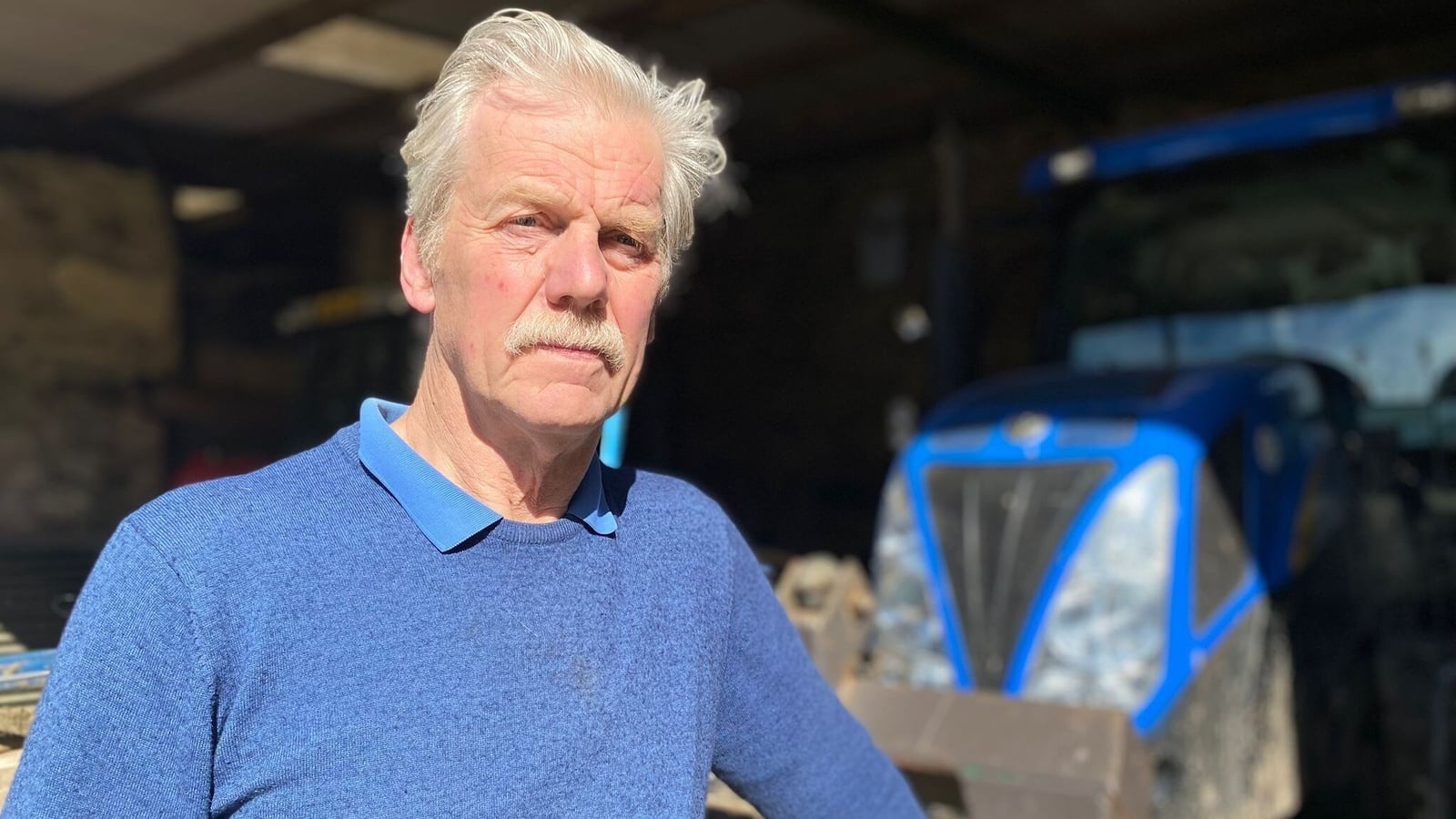
Robert Moore reflects on the decade since he voted for the UK to leave the European Union.
“How has it turned out now? Certainly not as well as we had hoped.”
An arable and beef farmer, he and his family have been farming their land at Ballougry in Co Derry for more than 200 years.
Situated on the west bank of the River Foyle, the farm is a few miles south of Derry City and less than half a mile from the border with Donegal.
Speaking to RTÉ Drivetime, Mr Moore said he voted Leave from his point of view as a farmer.
“I decided that we would be much better off making our own decisions in our own country, and working with our neighbours, you know, but making decisions that suited our businesses, our farming within our own country.”
“It probably hasn’t worked out that well. But unfortunately, if we look at the state of our politics, both in the south and in the UK, we’ve got a lot of people there who, I’m sorry to have to say, don’t know what they’re doing or don’t know what they’re doing about their particular brief.”
Despite the disappointment, Mr Moore said he does not regret his decision.
“I still believe in the basic principle that each country, particularly when it comes to food production, should be able to make its own choices.”
When it comes to his own farming business, Mr Moore said not a lot has changed, except for some changes in prices and availability of certain products such as spray for crops and some veterinary medicines.
He believes farmers in Northern Ireland are neither better nor worse off since Brexit.
“We here in Northern Ireland are a little bit in the middle because we’re trying to work with the Republic that is in the EU and GB that isn’t. Sometimes getting the best of both worlds or the worst of both worlds. It’s not ideal, but it’s not the end of the world.”
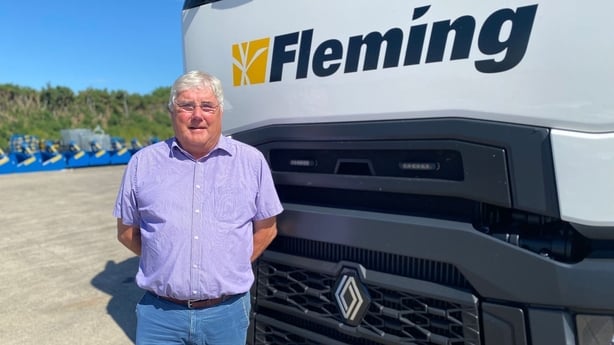
George Fleming said little has actually changed for his business
Across the river from Mr Moore’s farm, Fleming Agri Products manufactures agricultural machinery that is sold in the UK, Ireland, Europe, the US, Australia and New Zealand.
The years of political turbulence after the referendum result created uncertainty for businesses like this.
The company’s chairman, George Fleming, was dismayed at the vote.
“Me personally, having lived on a border area for all my life, I know what it was like when we used to have to go to the border and have customs papers and wait and be queued up and you could have 20 lorries in front of you, so I knew exactly what could be.”
But 10 years later, he said little has actually changed for his business.
“I was just asking some of the dispatch staff this morning there they said no, we have maybe five minutes paperwork to do for a load going to France or whatever, but there’s nothing that we would have said really obstructs our business or our flow of business.”
In order to protect the all-island economy, unique arrangements were made under the Windsor Framework deal to keep Northern Ireland in the single market for goods.
“Luckily, Northern Ireland was able to negotiate this utopia that is part of Europe and part of Britain,” Mr Fleming said.
“And that has worked very well for us, as you can see by the amount of inward investment that Northern Ireland has been getting.”
During the “Brexit years”, Mr Fleming worked alongside Manufacturing NI to lobby across the UK and in Brussels for Northern Ireland’s interests in any post-Brexit trading arrangements.
“It was all very, very hard work because we were always in limbo because we never really knew what was going to come. But I think eventually it all paid off.”
“As I’ve said many times before, when you have an obstruction in your business, business will always find a way of getting around.”
Mr Fleming said that in some respects Britain is now worse off.
“A friend of mine who is just across the border, he was buying car component parts from a company in England. Then Brexit came in and then all of a sudden the company in England decided that they needed an extra £ 90 for administration charges to send him his pallet.”
“So, he found an alternative supplier in Germany. So, what did he do? He bought it in Germany, so who lost?”
“The UK may have taken back control, but they lost a certain amount of business.”
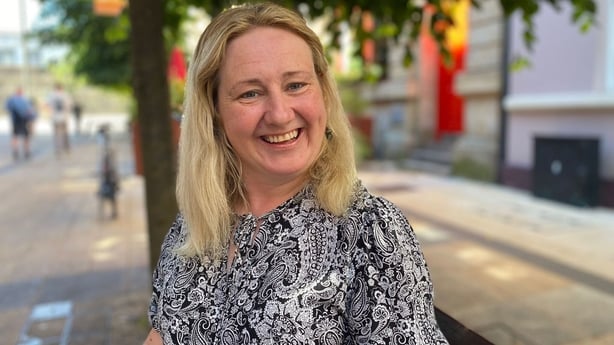
Mary Durkan joined Derry Girls Against Borders
For people living in the northwest region, the border was seamless, and many thought nothing of crossing several times per day.
Derry woman Mary Durkan said there was uncertainty over whether this would continue.
“There was genuine fear and concern about what was going to happen, and would it undermine all the good things that had come out of the Good Friday Agreement that we were enjoying, the freedom of movement.”
“Especially for people here in the northwest between Derry and Donegal, there is no border in our mind.”
Ms Durkan joined Derry Girls Against Borders, a grassroots civic campaign group that sprang up around 2018. The group aimed to platform the lived realities of life on the border and advocate against any form of hard border.
10 years later, Ms Durkan said not much has changed in daily life for people here, but she believes Brexit’s legacy is that it expedited conversations about possible constitutional change.
“We’re coming through turbulent times, but we’re also coming through maybe exciting times of future change.”
“There was a disconnect from the British government and the fact that the North was being dragged along with a Brexiteer agenda led by a Tory government. So, I think there has been an inclination for more conversation and more interest towards constitutional change for this Ireland.”
“There’s no sense of chaos, there’s no sense of panic, but there’s a hunger for keeping on the agenda conversations for finding a better way for everyone.”