
Video by Leah Carroll. Words by Donal Byrne.
As with many other things, there is the theory and the practice of owning a plug-in hybrid electric vehicle.
The theory is that you can combine a battery with a petrol engine to do quite a bit of driving, especially urban driving, on electricity alone and, with regular charging, it can be achieved.
This is notwithstanding the fact that car manufacturers often inflate the number of kilometres you can expect to achieve on just EV driving. There can be quite a gap between these ambitious claims and the real world.
The practice of regular charging, however, requires a discipline that avoids just forgetting about plugging in and falling back on petrol. Not everyone has that discipline.
A 2024 EU Commission report noted that real-world emissions from PHEV’s were 3.5 times higher than the claimed rates in ideal world conditions and that many PHEV drivers are not charging them and so the cars are not being driven in EV mode as frequently as assumed.
So, if you’re considering a car like the BYD Sealion 5 ‘super hybrid’ and using it as it should be used, you’re going to need home charging, and you’re going to need to commit to getting the best out it.
If you do, it should be a rewarding experience because you can get a range of over 900 kilometres from combined electricity and engine usage from this car, but, having said that, you will achieve this as long as your driving is mostly urban rather than on motorways, which is where the Sealion 5 becomes a deal less frugal.
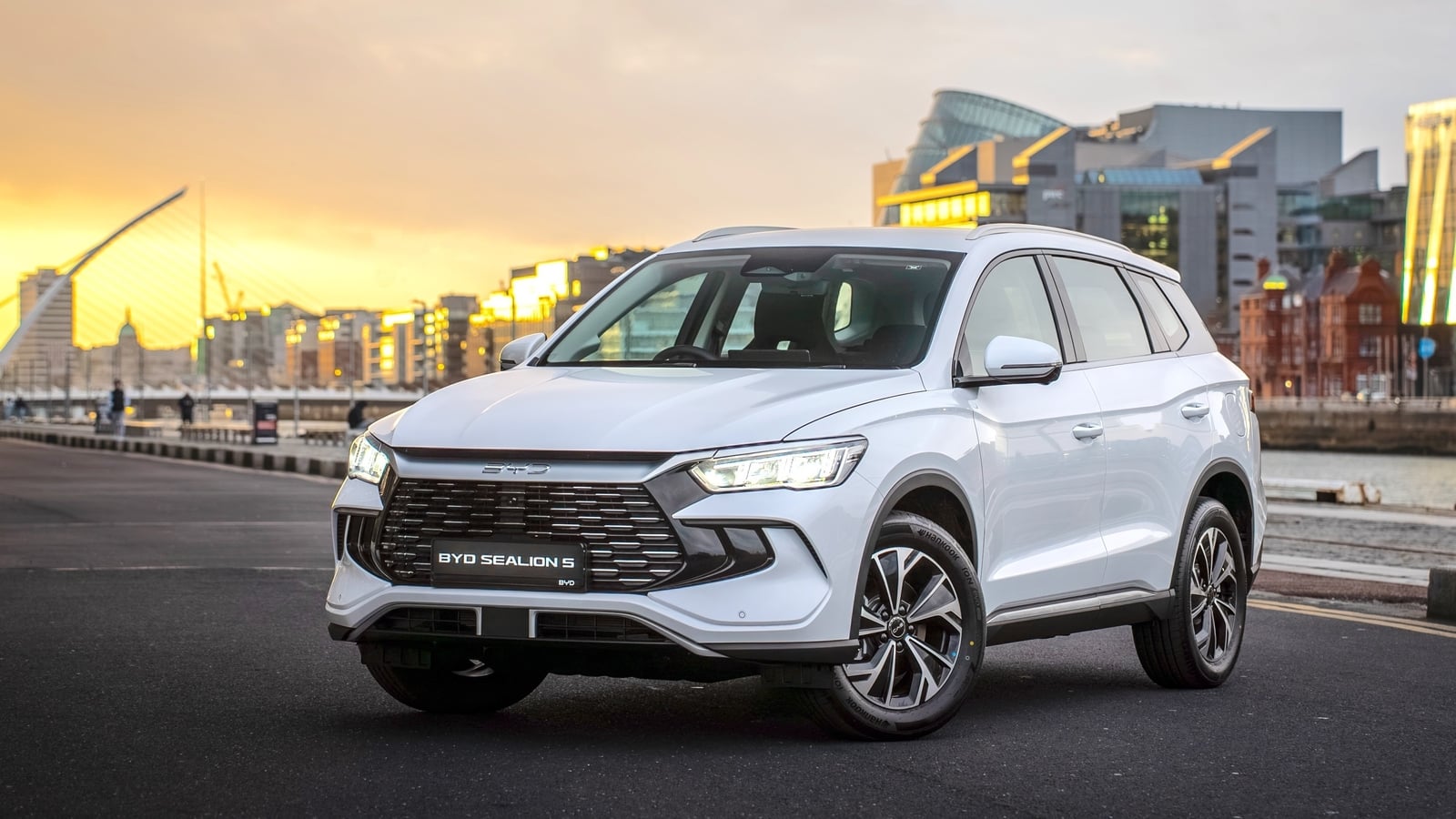
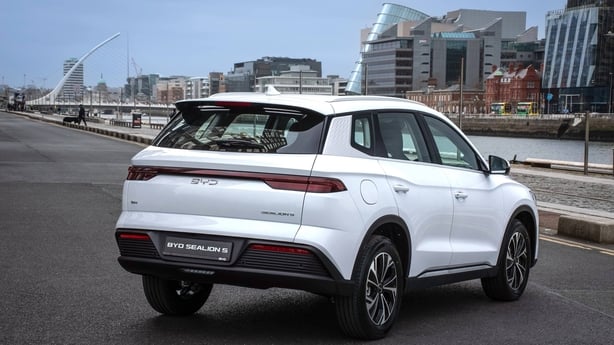
As family SUVs go, the car is not exactly exciting in its design, being rather more practical and dimensionally focused. It’s 4.7 metres long, 1.8 metres wide and 1.7 metres tall. That allows for good interior space and a pretty decent, easy-loading boot.
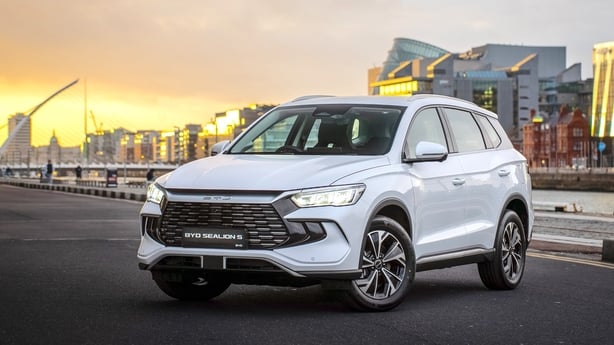
As with other BYD models – indeed, pretty much all Chinese cars on the market these days – the focus here is value for money and a high level of standard equipment. This car offers both.
The starting price is €36,990 for the entry-level Comfort model and €40,990 for the slightly better specified Design version, but if you don’t need extras such as a panoramic sunroof, you’ll be hard pressed to spend the extra money on the Design version.
That’s because even at the entry-level, you are getting things like 18″ wheels, LED lighting front and rear, a wireless phone charger, a front windscreen that has UV protection and is soundproofed, six-way electric seat adjustment in the front, voice control, navigation and a powered tailgate. That’s along with a full suite of safety features.
With many other cars, all those items might come as options and often expensive ones at that.
You also get a 12.8″ infotainment screen that is almost as big as the laptop I’m writing this on and an 8.8″ driver’s information screen. However, this is where the compromise comes in.
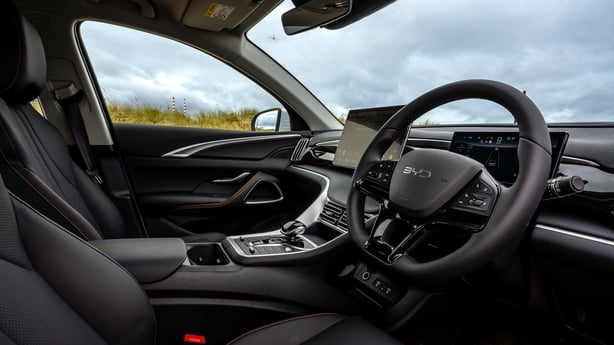
Many functions are entirely reliant on the big screen, and buttons are practically non-existent. You will find yourself having to dig deep – sometimes very deep – into menus, and you will find yourself distracted doing so.
The Volkswagen group has learned its lesson here and is moving back to buttons and physical controls. BYD and others should be taking note here.
The smaller driver’s screen presents problems with reading important information, such as speed limit displays, at a glance because its font size is too small and the contrast inadequate.
The rest of the interior is fine, but is by no means luxurious. There’s a lot of plastic and, like other manufacturers, BYD uses what it calls faux leather for the seating. It’s not leather – it’s a hard-wearing synthetic material that mimics it – and it’s practical rather than attractive.
The car has a 1.5 litre petrol engine to drive the motor, but there’s no turbo, so you find the car labouring if you push it, but it’s really there to power the motor. On shorter urban journeys, it returned as little as 3.9 litres per 100 kilometres, and on longer journeys it crept up to 5.4 kilometres per 100 kilometres. You should be able to get at least 50 km in EV mode after a full charge.
Overall, it’s a very frugal car, but, as I said, a little less so on the motorway.
Bear in mind also that the car does not support fast charging.
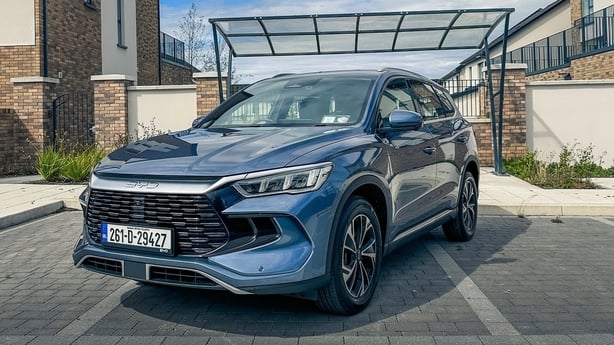
One difficulty I had was the stiff and often uncompromising suspension set-up. It needs a bit more thoughtful tuning for mixed urban and longer routes, as other manufacturers have done.
The flat floor in the rear means it’s quite comfortable back there, and the headroom is also good. There are two ISOFIX child seat tethers there. The boot is a decent 463 litres, which loads easily, and this can be extended to about 1,400 litres with the seats folded.
We don’t have a EuroNCAP crash test programme result for the car as yet, but other BYD models have achieved a full five-star rating. The car comes with a six-year, or 150,000 kilometres, warranty, whichever comes first, and the battery has an eight-year warranty.
The battery’s state of health is guaranteed at 70 per cent after eight years, or 150,000 kilometres.
The Sealion 5’s best assets are its price, which is extremely competitive, and its level of standard equipment. Just don’t expect luxury, and don’t neglect to charge it.