
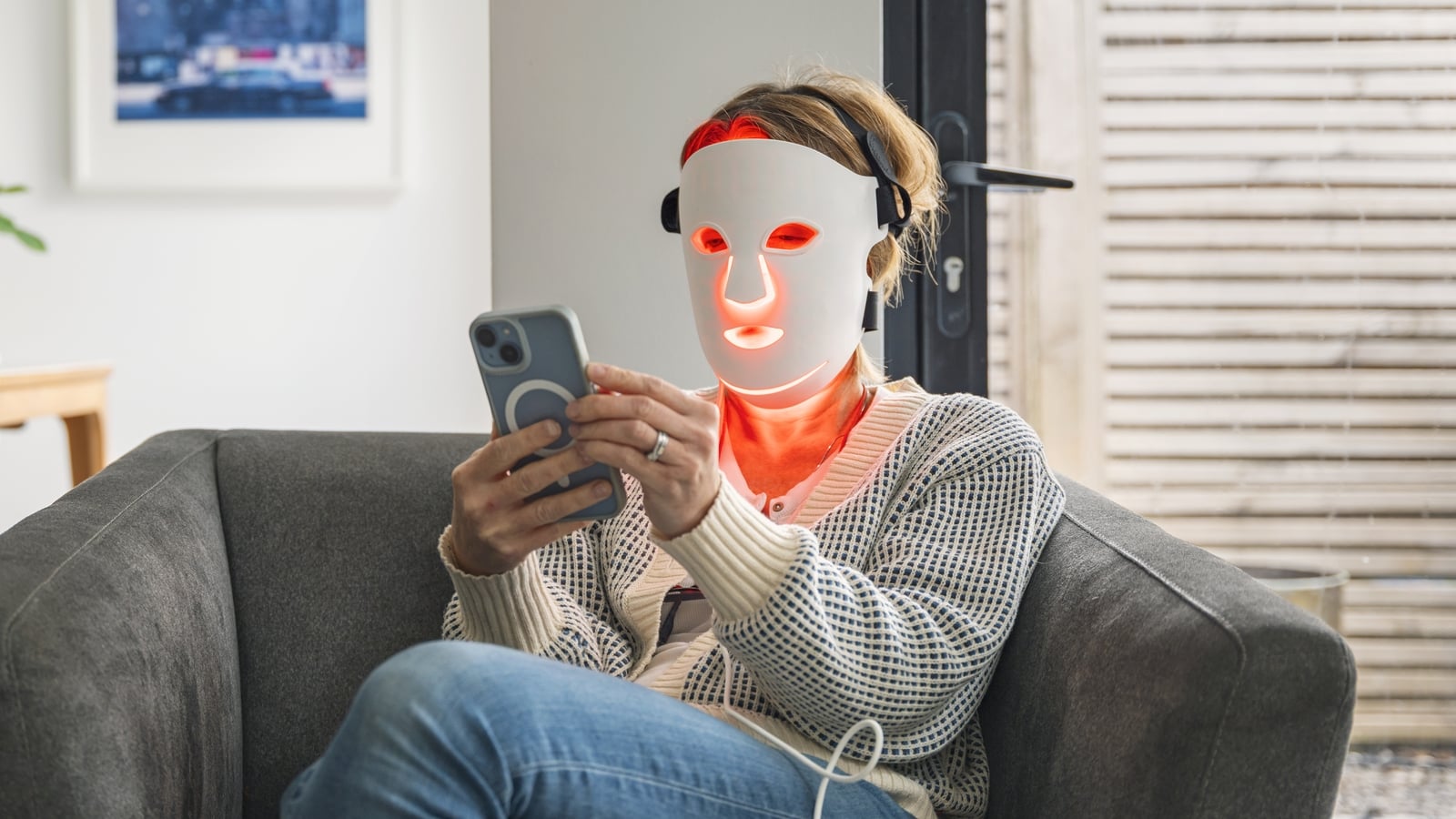
LED face masks are all the rage at the moment, but what are their benefits, and do they actually work?
Prof Caitriona Ryan, a Consultant Dermatologist from the Institute of Dermatologists, joined Brendan O’Connor to talk through the electronic and non-electronic skincare gadgets she’d recommend.
With so many at-home wellness and beauty devices on the market, Ryan says that the LED masks are one of the few innovations that she sees having some benefit.
They work by emitting light, usually in the visible spectrum, with some in the slight infrared as well. The red LED masks are particularly popular and work by encouraging your fibroblasts to produce collagen, which helps with elasticity, fullness and repair.
“It’s a very moderate benefit, it’s very mild”, Ryan cautions. “It’s nothing like getting major procedures done or laser-type of procedure in a clinic.”
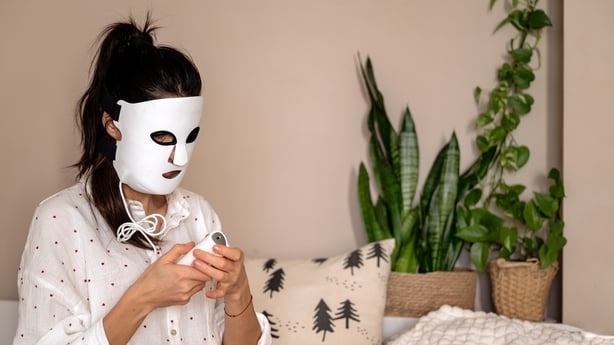
She also notes that red LED masks have been used to treat androgenic alopecia, or hair loss in men and women.
However, consistency is key: you’re more likely to see improvements if you use the device 3-5 times per week, for between 10 and 20 minutes each time. “Some people watch the TV with them on, I’ve one patient who hoovers with her LED mask on. She must hoover a lot!”
A blue LED mask is also available for anti-inflammatory properties to help soothe mild acne. However, Ryan says, it is not ideal for severe cases: “It is not a substitute for medications. If somebody has inflammatory acne, if they’ve any scars, straight to your GP. I would hate people to invest in one of these and think it’s going to fix their acne.”
She notes that blue LED light can worsen pigmentation.

So what should you look for when buying a mask? Ryan flags that the price shouldn’t be your deciding factor, especially when these devices can range in cost from €50 to €2,000: “An increased cost, Brendan, doesn’t necessarily mean it’s better at all.”
Instead, she says to make sure it is FDA-approved or CE-approved to ensure quality, and look for information about the specific wavelengths: they should be in the 600s for red and 400s for blue.
Most importantly, however, she says to look for clinical trials behind the brand’s own device: “If they don’t have that, don’t go there.”
For more tips on at-home beauty devices, listen back to the full interview above.