
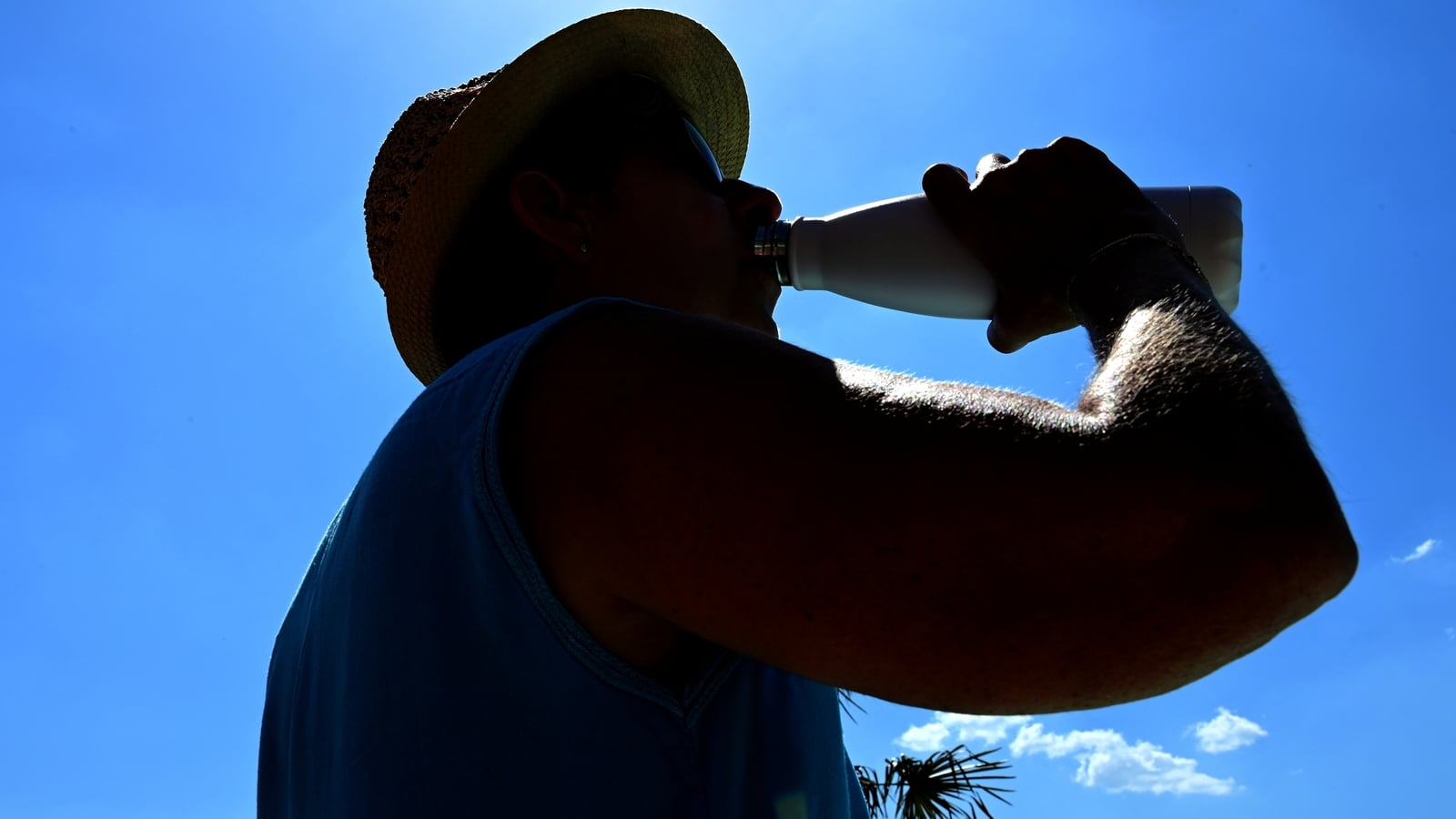
The heatwave gripping Europe is putting people’s health at risk, and the continent’s leaders must invest in making their health services more climate-resilient, the World Health Organization (WHO) chief has said.
“The data are clear: temperatures across Europe are rising at roughly twice the global average rate, increasing the likelihood and severity of extreme heat in the future,” said Tedros Adhanom Ghebreyesus, the head of WHO.
“We cannot afford further delay. Leaders must prioritise investment in climate-resilient health systems, while also accelerating climate action and mitigating the drivers of the climate crisis,” he posted on X.
Amplifying extremes
Scientists say human-driven climate change is amplifying such extremes, with weather events like heatwaves, droughts and floods becoming more intense and frequent.
The current heatwave is “significantly exacerbated by human-induced climate change”, without which the current temperatures would have been 2C to 4C cooler, according to a scientific study published this week.
Meanwhile, the head of the UN’s climate experts panel said that the heatwave has exceeded some scientific projections, warning that the continent would inevitably face more extremes as the planet warms.
The conditions hitting Europe this week are “at the edge of the envelope” of what the Intergovernmental Panel on Climate Change has long projected, IPCC chairman Jim Skea said.
But some impacts at the regional level and in the ocean have exceeded expectations, Mr Skea told journalists.
“Some things… have gone outside the envelope in terms of what we are experiencing,” he said.

Temperatures have soared above 40 degrees Celsius in Madrid, Spain
France recorded its hottest day on record on Tuesday while several other European countries, from Britain to Hungary, have issued high-level heat warnings.
At least 94 million people in Europe are expected to experience temperatures above 35C, most of them in France and Spain, according to AFP calculations.
“Inevitably, we’re going to experience more of what we’ve been seeing over the last few days,” Mr Skea said.
He noted that the hottest days warm much faster than average days, increasing by a factor of 50 to 100 percent.
In a world where temperatures would rise by 2C on average, the warmest day of the year would be 3C to 3.5C hotter.
Acute mortality
The WHO says high-intensity heatwaves can bring high acute mortality, noting that “in 2003, 70,000 people in Europe died as a result of the June-August event”.
It recommends using electric fans only when temperatures are below 40C – above that, “fans will heat the body”.
If using air conditioning, setting the thermostat to 27C and using an electric fan will make the room feel 4C cooler, it says, adding that “it may be cooler outdoors in the shade”.
It says people should drink water regularly during heat episodes, drinking at least two to three litres per day.
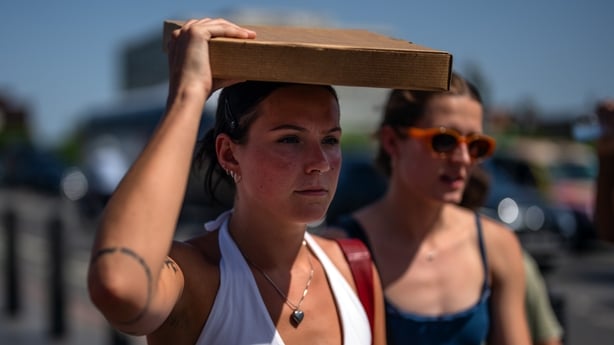
A woman uses a pizza box to shield her from the sun as she walks through central London
Speaking on RTÉ’s News at One, Mary Freil, senior climate policy officer at the International Federation of Red Cross and Red Crescent Societies (IFRC), expressed the organisation’s concerns on the dangers of prolonged extreme heat.
“This is something we are extremely concerned about. The 2003 heat event that took place in Paris… 60,000 people, who sadly lost their lives, was an absolute tragedy for many families and people. What we want to raise is that extreme heat is very dangerous.”
She also urged people to check on their family, friends and neighbours to ensure they are safe during the high temperatures.