
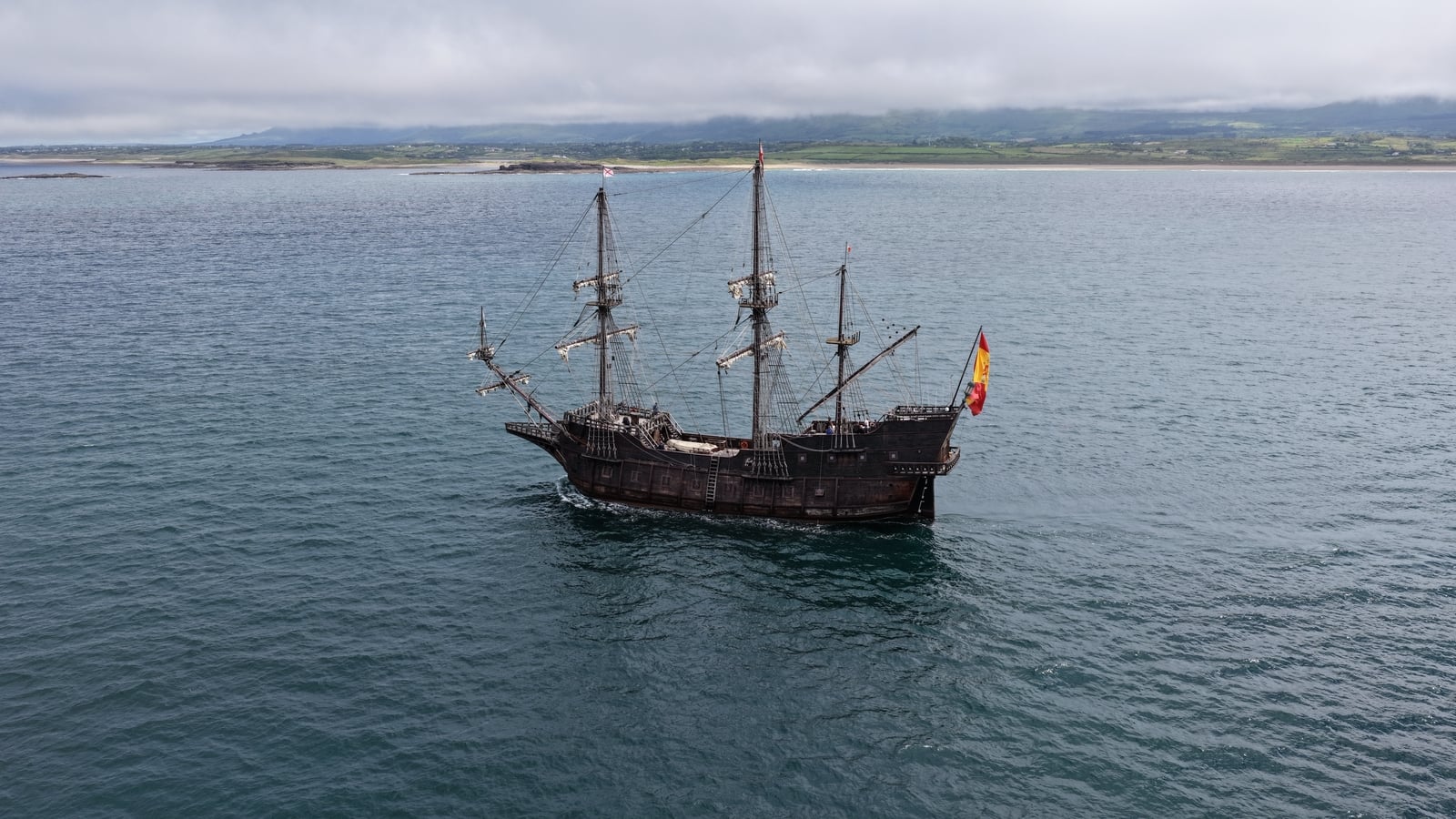
The world’s largest replica of a traditional Spanish galleon has arrived at Sligo harbour for a 12-day public visit.
The Galeón Andalucia is commemorating the loss of Spaniards who died when three Armada ships sank in September 1588, with the loss of 1,100 lives.
The 50m long ship paused offshore at Streedagh Beach to drop a wreath into the sea and fire an eight-cannon salute – this is where the three ships sank in an event known locally as the Great Gale of September 21st.
Many yachts and sailboats accompanied the galleon as it made its way into Sligo harbour, where it is moored at the docks on Deepwater road.
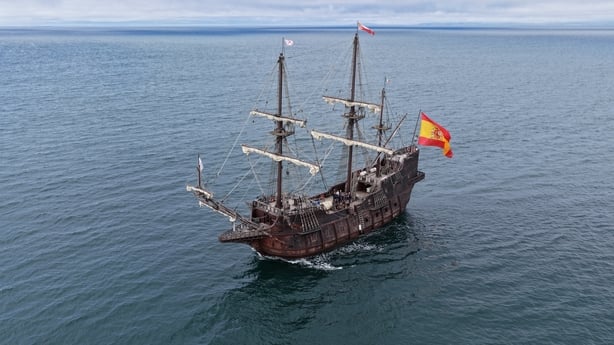
A wreath was dropped into the sea to remember the 1588 armada disaster
Cathaoirleach of Sligo County Council, Cllr Donal Gilroy said the ship represents a powerful link between Sligo’s coastline and one of the most compelling chapters in European maritime history.
“Its visit strengthens the bond between Sligo and the Armada story, honours those who were lost at Streedagh in 1588, and offers our communities and visitors a unique opportunity to engage with this shared heritage.”
Chief Executive of Sligo County Council Martin Lydon described the visit as “a truly unique experience for Sligo and a significant addition to our summer visitor offering”, adding that it showcases the county’s culture, heritage and tourism partnerships.
Chair of the Sligo Tourist Development Association Lewis Rhatigan said the visit would enhance Sligo’s visitor appeal while supporting the local tourism economy through increased footfall.
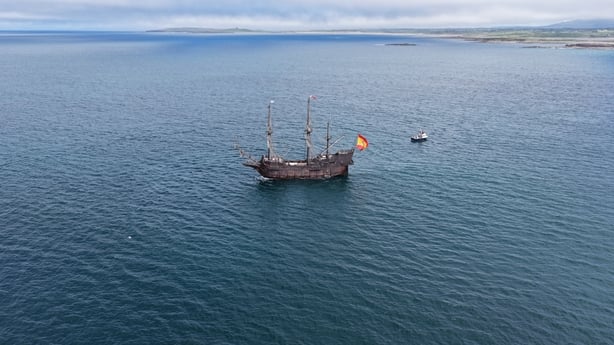
Members of the public will be able to tour the ship while it is docked in Sligo harbour
Wild Atlantic Way Manager for Sligo and Mayo at Fáilte Ireland Luke Murray said the galleon bring the county’s Spanish Armada heritage to life through “a living, immersive” experience.
The public will be invited on board over the coming two weeks with self-guided tours.
The visit is hosted and supported by Sligo County Council, with additional support from the Sligo Tourist Development Association and Fáilte Ireland.