
Antibody-drug conjugates (ADCs) have seen successes and setbacks since they hit the clinic in the early 2000s. These drugs showed promise in directing cancer drugs toward specific tissues but have struggled with off-target toxicities and cytotoxic payloads – sometimes leading to issues with regulators.
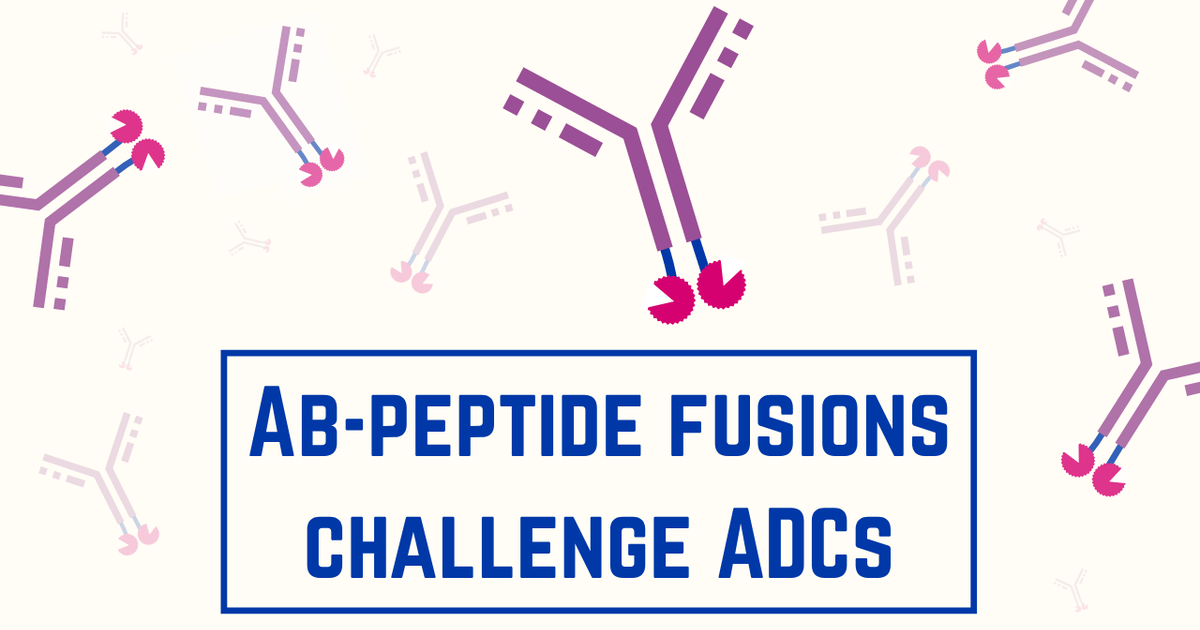
Biotechnology company ATB Therapeutics has now engineered what they call “atbodies” to help resolve these issues. Atbodies are antibodies fused to a peptide linker and enzymatic payload. Co-founder and chief business officer Max Houry spoke at the Antibody Engineering and Therapeutics conference in Basel, Switzerland, about how this design allows for increased potency while reducing toxicity.
“The goal is to extend the therapeutic window. And to do that, we completely reshaped the vision of the ADC,” detailed Houry. Houry said the team turned to a fusion protein to alleviate manufacturing concerns.
“When we created atbodies, the first question was not, ‘Does it work?’ It was, ‘How can we make it?’”
Hitting a bullseye
Houry and his team are well aware that the majority of serious adverse events from ADCs are incited by off-target toxicity. While this limitation typically narrows the therapeutic window for ADCs, by increasing specificity, ATB Therapeutics hopes to bridge the gap while maintaining efficacy.
“We have been quite carefully looking for a payload that does not enter healthy cells on their own,” explained Houry.
ATB focused on a catalytic payload that was potent in small doses but wouldn’t cross over into healthy, untargeted cells.
“[With our payload], there is an inability to cross the membrane and then damage surrounding tissues,” noted Houry. “When we enter the cell, we don’t need a huge quantity of payload reaching the cytosol because we have catalytic activity. It’s one of the key features of the atbody.”
Houry showed data demonstrating that a typical ADC carrying MMAE, a chemotherapeutic, killed 70–90% of non-targeted cells in vitro around 100–1,000 pmol. By contrast, even at 1 million pmol, the team’s atbody showed barely any toxicity (around 10% at the highest doses).
What we would like to do is position our payload as another tool for clinicians in the ADC field.
ATB’s payload, which Houry refers to as a next-generation drug that tackles protein synthesis rather than DNA damage or microtubule inhibition, is a proprietary enzyme that targets the ribosome. Additionally, because the atbody’s mechanism does not focus on high-frequency DNA replication, it could potentially target cell types previously inaccessible to ADCs.
“Activity [is targeted] at cells that are not at a high dividing ratio. We can kill a cell that is targeted and pathogenic but which is not highly dividing,” elaborated Houry. “This is one of the key features that drove us to move from BNHL [B-cell non-Hodgkin lymphoma] to autoimmune disease.”
An ADC designed for autoimmune diseases is relatively unheard of. But Houry said the features of the atbody could allow them to target activated B cells that are not yet proliferating while also reducing toxicity.
“What we would like to do is position our payload as another tool for clinicians in the ADC field.”
Dosing up
Houry was able to share potency data with the audience that showcased how effectively atbodies kill target cells in culture.
With as little as 10 pmol, the atbody reduced the cell count by around 50%. The ADC control, by contrast, only reached this level by 10–100 pmol, roughly a ten-fold increase. This could have a significant impact for patients and should further reduce off-target concerns.
The team also tried their atbody against tumors in vivo. They showed that one dose of the atbody was able to reduce a solid tumor to below 100 mm3, while a vehicle control skyrocketed to nearly 2,000 mm3 before the trial’s conclusion.
We injected up to 180 milligrams per kilo of the payload just to see where we could push the limit. We didn’t reach dose-limiting toxicities.
“In the ADC field, you can see that the successful ADCs are the ones that have activity in vivo before the maximum dose in humans,” Houry noted. “But what I can tell you here is that we are in the low double- or single-digit milligram per kilogram.”
Although the exact structure of the peptide-enzyme payload is currently unknown due to intellectual property filings, Houry was able to detail the intracellular process believed to be responsible for their results.
“The enzyme will join a ribosome and cleave a phosphodiester bond that will prevent the elongation factor-2 [from binding] to the ribosome,” clarified Houry. “We can stop protein synthesis in this way. We also have catalytic activity that has efficacy at lower concentrations.”
These results complement in vivo data showing that their atbodies exhibit safe toxicity profiles.
“We did a toxicology study in mice and rats, and we injected up to 180 milligrams per kilo of the payload just to see where we could push the limit,” detailed Houry. “We didn’t reach dose-limiting toxicities. We started to see a little bit of weight loss, but not in a way that we had to stop the treatment.”
“The key point is when the payload is released, it’s not metabolized as the ADC payload can be.”
Current preclinical work is focusing on tweaking the dosing schedules of the atbody to find the limits of its therapeutic window.
“We are really playing on the dose schedule to then have the proper comparison,” disclosed Houry. “There is no benchmark for what we are evaluating, so it means [observing] how low we can go to keep the activity and how high we can go without giving toxicity.”
Future of ADCs?
Despite promising preclinical results, Houry’s team has yet to test their approach in the clinic for either autoimmune or oncology indications.
There is also the question of atbody design and how well they will translate into other indication. While fusion proteins are one way around the time-consuming process of conjugation, they may present other issues, like rigidity – something antibody-peptide conjugates eschew with more flexible structures.
It’s not easier to develop an atbody compared to developing an ADC.
Houry is optimistic about his team’s chances at making it through clinical trials given the reduced toxicity profile of atbodies, citing an infamous historical example to illustrate his point.
“In the early days of the ADC, what became Immunogen was still at the Dana-Farber Cancer Institute Research Center,” he recalled. “They were playing with an ADC conjugated to ricin, a plant toxin that was high mannose protein [that came] with a lot of liabilities.”
“I think that they went into at least Phase II with that compound.”
Of course, ADCs and other antibody therapeutics have come a long way since using ricin as a payload. However, it is also increasingly the case that scientists like Houry are turning toward biologics like siRNAs, antisense oligonucleotides, and peptides to avoid toxicity issues. Even Houry admits that his fully recombinant fusion protein has faced some issues in the lab.
“We realized that sometimes there are parameters that we did not expect to influence the behavior of the antibody that changed the game,” he explained. “It’s not easier to develop an atbody compared to developing an ADC.”
“We know that there is no magic bullet for all indications, [but] we expect to extend the therapeutic window.”
Quotes have been lightly edited for clarity.