
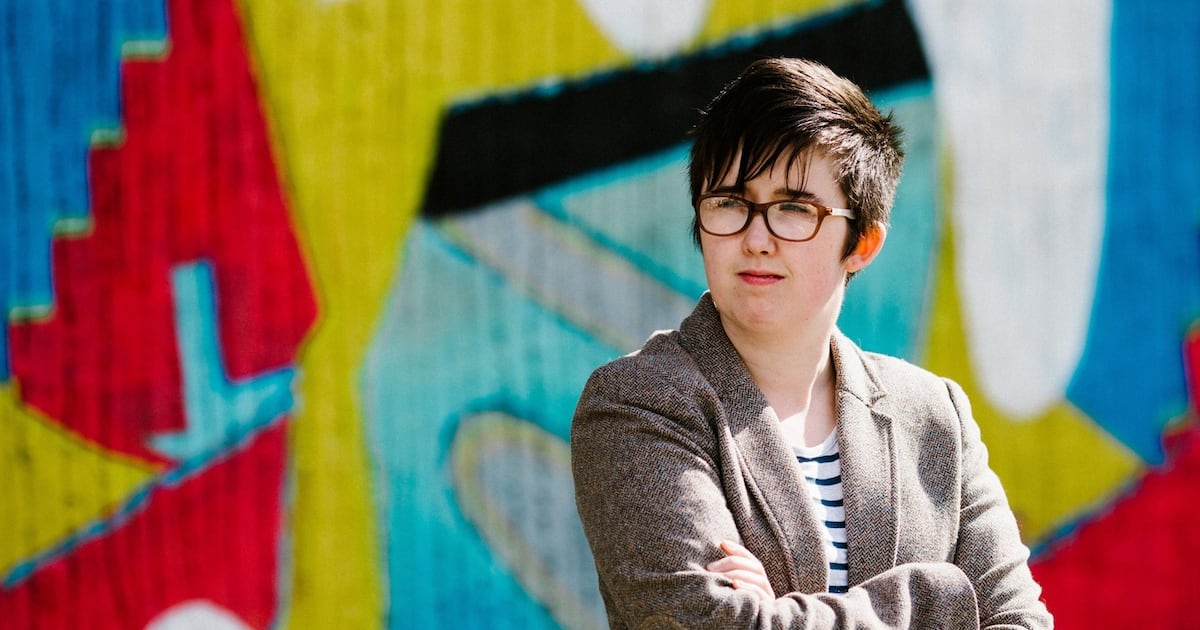
Three men from Derry have been found not guilty of murdering journalist Lyra McKee in 2019.
McKee’s family said the verdict at Belfast Crown Court meant the justice system had “completely failed” them and Lyra.
The 29-year-old, from Belfast, died after being hit by a bullet as she stood close to police vehicles while observing rioting in the Creggan area of Derry on April 18th, 2019. The New IRA claimed responsibility for the killing.
On Friday in a long-awaited verdict, Derry men Jordan Devine (25), of Bishop Street; Paul McIntyre (58), of Kells Walk; and Peter Cavanagh (38), of Mary Street, were all cleared of the journalist’s murder. The trial, which opened in May 2024, was held before Judge Smyth, who sat without a jury.
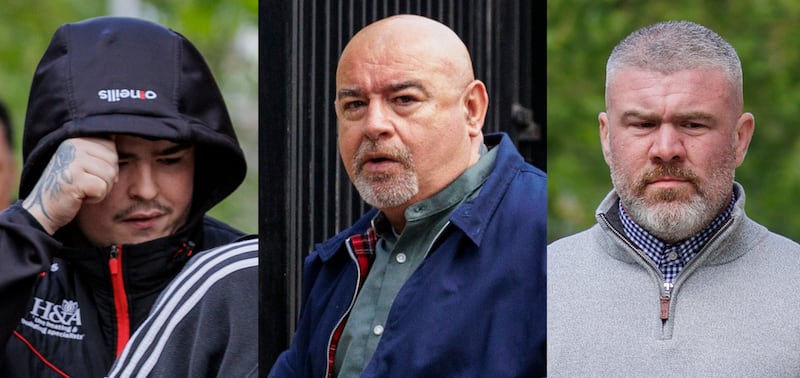 Left to right: Jordan Devine, Paul McIntyre and Peter Gearoid Cavanagh.
McKee’s family and friends described the verdict as “heartbreaking”. Her sister Nichola Corner said it had come as a “complete and utter shock”.
Speaking outside the court, she said: “Previously, the judge has said that each of these defendants had a case to answer, and on numerous occasions today she has said that they probably were the people who were identified.
“However, the evidence did not stand up to the level of scrutiny that she expected to take the case over the line, which means that that system has completely failed Lyra and has failed our family and has failed Northern Ireland.”
Corner called for an end to the “culture of silence” in Northern Ireland.
“People are afraid to speak out, they are afraid to tell the truth, they are afraid to share information that they have that could convict guilty people,” she said. “Over 150 people witnessed this event on April 18th, 2019; not one of those 150 people came forward with evidence which could have supported the police case and the prosecution’s case. That culture of silence needs to stop in Northern Ireland.”
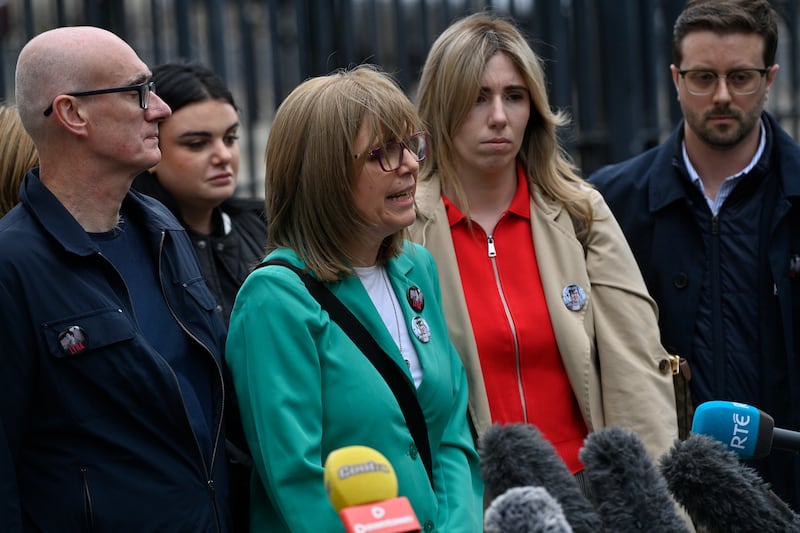 Lyra McKee’s sister Nichola Corner (centre) speaking to the media outside Belfast Crown Court on Friday. Photograph: PA Wire
She added: “We will not go down with this. This is not over. Lyra said: ‘If you’re going to go down, go down fighting.’ And I can tell you right now that every one of my family will, because we do this for Lyra. She deserves justice.”
At the end of her judgment, the judge described McKee’s murder as “an act of senseless violence”.
“The gunman has never been brought to the court and the evidence against those accused of assisting or encouraging has fallen short of that required for conviction,” she said.
“I wish to acknowledge the family and friends of Lyra McKee who have endured a protracted trial which has brought them little if any comfort or relief, and I regret that.”
In a statement, the press freedom campaign group Reporters Without Borders said: “The authorities must continue to pursue all legal avenues to establish accountability and ensure that those responsible for Lyra’s death are brought to justice. Journalists cannot work freely and safely if those who kill members of the press can do so with impunity.”
[ Lyra McKee: The search for a lost body on Cave HillOpens in new window ]
The shooting happened while an MTV crew was filming in the Creggan area for a documentary that included interviews with members of the dissident republican party Saoradh.
Several petrol bombs were thrown at police and a car was set on fire during rioting that culminated in four shots being fired towards officers. The prosecution said the shooting was termed a “culmination of orchestrated violence” on a suburban street in Derry.
McKee’s killing prompted an outpouring of condemnation and grief that quickly spread beyond Northern Ireland.
It led to pressure being exerted on politicians to resume stalled talks to restore the then suspended powersharing institutions at Stormont.
Among those who attended McKee’s funeral were Michael D Higgins, Leo Varadkar and Theresa May.
Originally from Belfast, McKee had moved to Derry to live with her partner, Sara Canning. Her book Angels with Blue Faces, about a Troubles-era murder, was published soon after her death.
She rose to prominence in 2014 after a blog post titled “Letter to my 14-year-old self” in which she spoke about the struggle of growing up gay in Belfast. The letter was later turned into a short film.
The National Union of Journalists described McKee as one of the most promising journalists in Northern Ireland. – Guardian