
Fashion historian Laura Fitzachary delves into the Irish menswear brands who are both channelling their history and evolving how we see gender.
What can be learned from the Irish menswear currently being presented within womenswear collections?
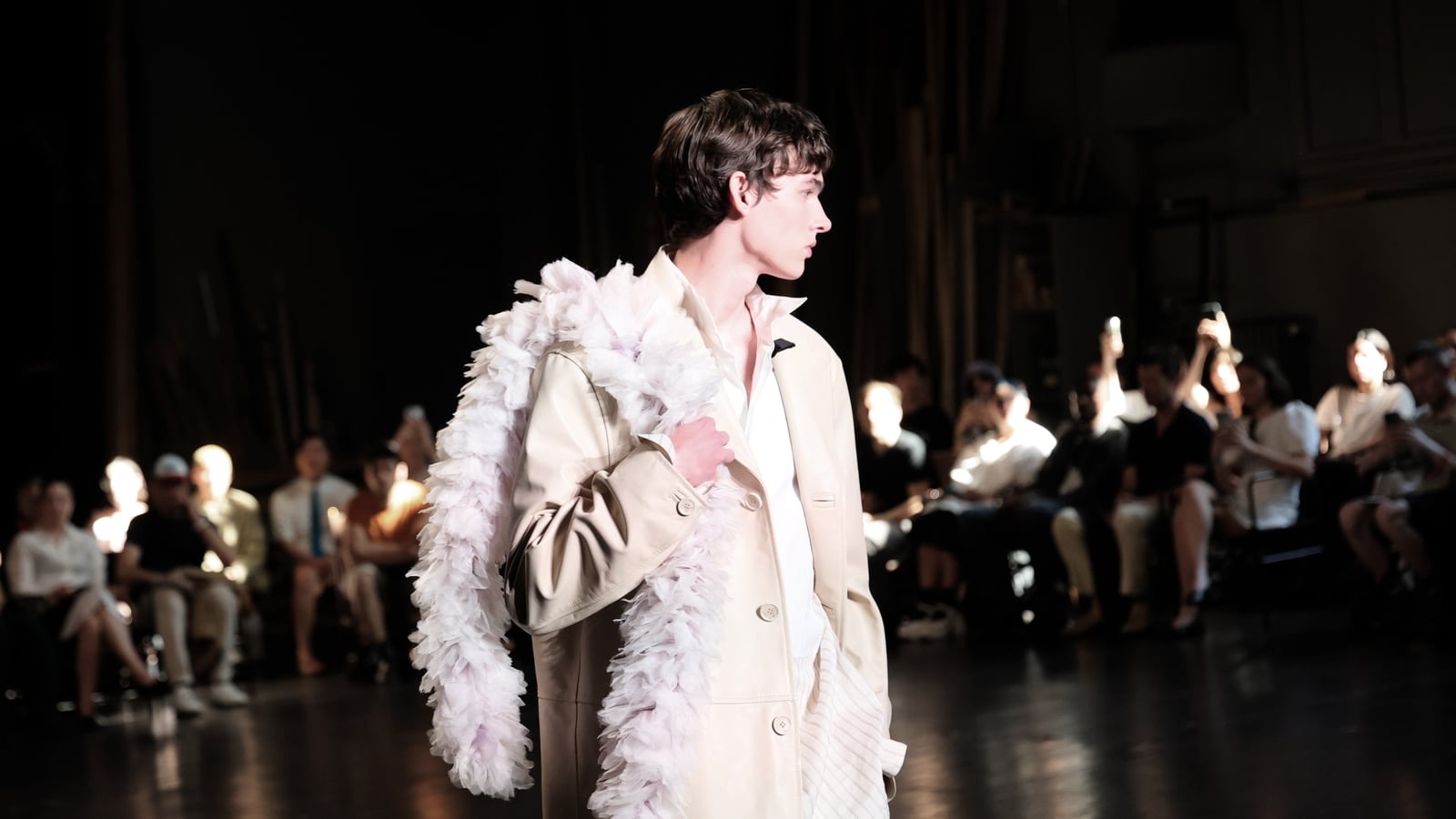
We typically understand gender in clothing by how it plays with silhouette, lighter materials and embellishment. To see how menswear has shifted, we need only look to Irish designer Simone Rocha, who was the guest designer for the 110th edition of Pitti Immagine Uomo trade fair in June 2026 in Florence, Italy.
There she showed her first dedicated menswear collection (SS ’27) after previously presenting menswear as part of her womenswear collections. The reaction to the central character – an ‘Irish man arriving in Florence’ – saw her work present a deliberate softness, romantic subversion and a journey of beauty and self-discovery.
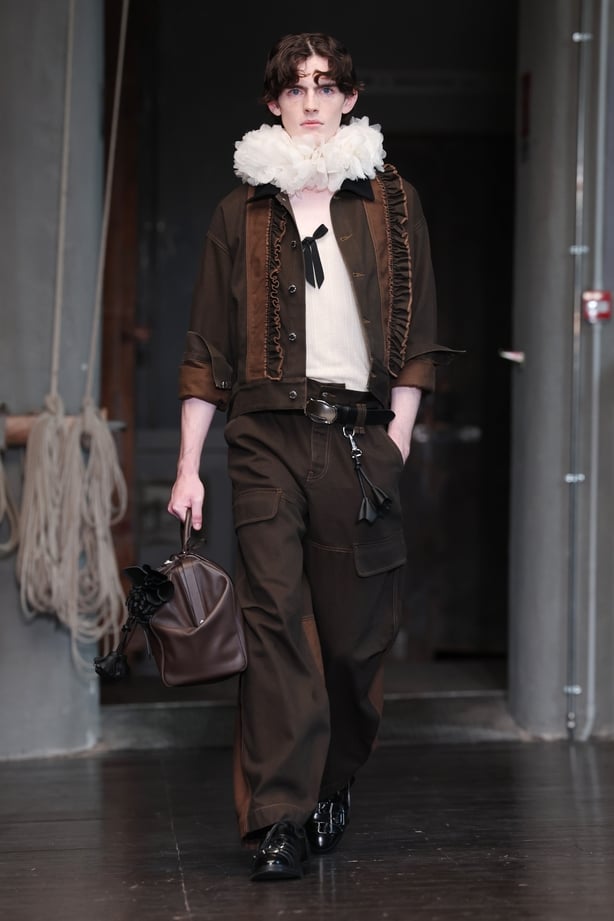
Boas, garlands and ruffles were intentional details and offered a vision of menswear that was “deeply
human.”
In the lead up to the show, the special events co-ordinator at Pitti Immagine, Francesca Tacconi, spoke on Rocha’s guest designer spot noting that, “At a time when parts of menswear are practising restraint, Simone Rocha remains true to her own vision. Her work is a reflection of her personal roots – Ireland, Hong Kong, art, and family.”
It can be argued that this is what heritage is: human creativity, memory and sharing it with each other for us to create, consume and even wear.
Rocha is just one of a number of Irish menswear designers plumbing Irish heritage and childhood, such as Robyn Lynch, who like Rocha, is also based in London. Lynch’s A/W ’24 show saw Irish dancing costumes
woven into an athletic range alongside reworked outerwear by Italian sportswear brand CP Company.
Integrated knitwear panels on puffers appeared on the runway next to athletic wear featuring Irish dancing skirts with embroidery crafted by John Carey designs and pieces embellished with the word ‘Féis’ – a personal nod to her sister Adrianna who competed and a greater nod to growing up in Ireland.
On Irish shores, menswear designers are also looking to their childhood and even ancestry.
Mastiff, the Dublin-based menswear house founded by sisters Lauren and Sadhbh Jackman in 2024, create limited-run garments using colour and architecturally inspired silhouettes with a focus on craftsmanship, structure and narrative. It is that narrative that has brought them to starting a brand, a continuation of Dublin women working as tailors and dressmakers as far back as the early 1900s in The Liberties.
“Sewing has always been part of my family, so I grew up understanding clothing through the process of making”, Lauren told RTÉ Lifestyle. “Watching garments come together taught me to value construction, craftsmanship and thoughtful design from the very beginning.”
Speaking with the sisters, they relayed their family history, starting with Rosanna Mooney Leonard (1878-1927) as the earliest known figure in the Mastiff sewing lineage. At the turn of the 20th century, Rosanna operated as a landlady of No. 54 Thomas Street sewing garments such as bustles and providing tailoring to upper-class clients.
Their history begins at an inflection point for Dublin. The Iveagh Markets were newly built, Frawley’s department store had been established by 1892 and Thomas Street itself had seen industry worker housing schemes implemented in the 1910s and 1920s.
By the time both world wars and the revolutionary period had taken place, Dublin as a city had changed but the Mooney family line had continued in The Liberties with Elizabeth “Lily” Mooney (1945-2021), Sadhbh and Lauren’s grandmother.
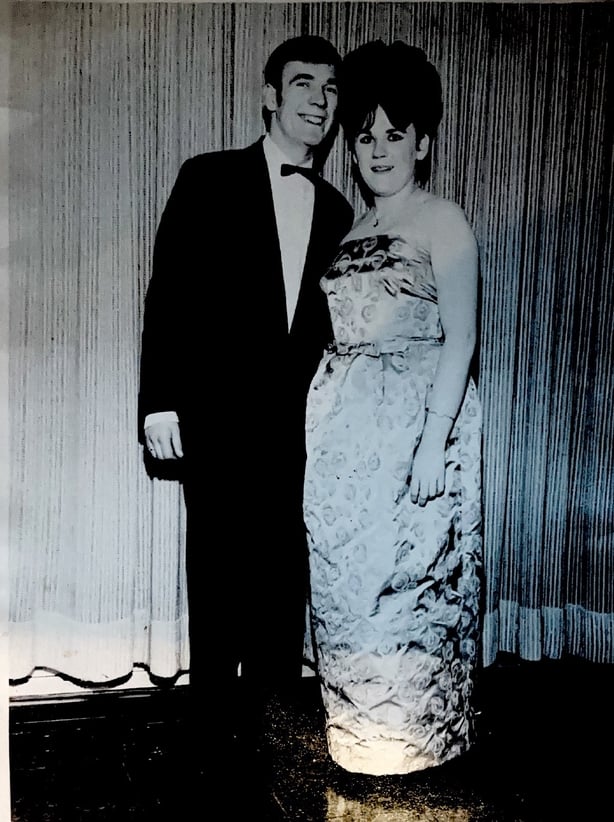
Elizabeth (Lily) Mooney with husband Timothy Connolly
Lily Mooney was taught to sew by the nuns at school before becoming an apprentice to a Jewish tailor in Tailor’s Hall, Dublin. She later worked in a factory sewing (like my own mother and many other women across the country throughout the 1960s, 70s and 80s) before returning to sewing work for the local convent and earning money for her family.
The importance of dressmaking and tailoring as a way to keep a household afloat is not lost on the sisters of Mastiff, who noted “that connection to making, labour, construction and tailoring continues to inform Mastiff’s approach to menswear today”.
“That perspective naturally shaped how I design today”, Lauren says. “Every decision, from the silhouette to the fabric, is considered through the experience of the person who will wear it. At Mastiff, clothing is a medium for self-expression. It’s about creating pieces that give men the confidence and freedom to explore who they are and express the different facets of their identity. That’s the story woven throughout every collection. The garments are only one part of it. The real story belongs to the man who wears them and the life he builds in them.”
By creating limited-run garments “shaped by structure, craftsmanship, and narrative,” they approach menswear through construction and identity, “treating clothing as something deliberate, lasting and deeply personal” after their debut collection, Exordium launched in 2025.
“Exordium, meaning ‘the beginning’, marks the opening chapter of Mastiff”, Lauren explains. “It introduces the principles that continue to shape every collection: a continuous narrative, meticulous craftsmanship, and clothing as a medium for self-expression.”
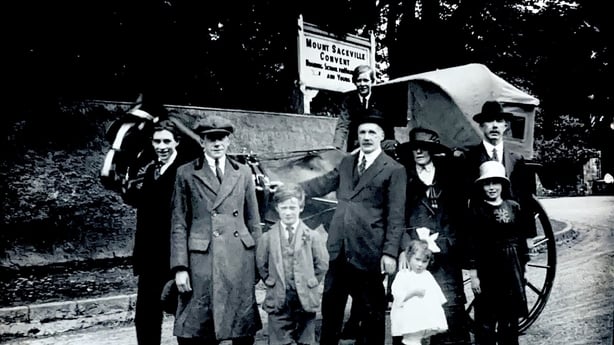
Rosanna Mooney (Leonard) with husband and family. Photo courtesy of Lauren and Sadhbh Jackman
When asked which piece best captures that mission statement, they noted that it was their outerwear, which certainly has a function in a country like Ireland.
“The Parka is probably the clearest expression of that philosophy”, Lauren says. “It’s made from British Millerain waxed cotton, a fabric with a rich history of craftsmanship, interpreted through a contemporary silhouette that reflects the way Mastiff approaches modern menswear. As it’s worn, the fabric develops its own character, shaped by the experiences of the person wearing it. The Parka embodies that philosophy by bringing together heritage fabrication and contemporary design in a piece that evolves alongside the
individual, carrying the imprint of the life lived within it.”
Bespoke pieces and the renewed important role of the tailor is also evident with labels such as Monto & Perri, launched by the tailor and designer Steve Blake back in 2023. His work has also referenced his childhood and it reminds us that tailoring is not defined by gender norms but the expression of one’s fashion sense with a made-to-measure finished garment.
Speaking of one-off pieces, Tom Stapleton has emerged as a menswear designer having had his work featured in Grazia Italy back in July 2025 shot in Dublin and directed by Zeda the Architect. Having previously shown his work during Irish Design Week in November 2025, his collections will also feature in Ireland Fashion Week in 2026, the one-of-a-kind works consisting of wool crepe paired with silk chiffon panelling and skirt suits.
Both Stapleton and Blake are graduates of the Grafton Fashion Academy where the principal, Colin Atkinson, also designs one-off pieces of menswear. His linen kimonos and trousers also appeared during Irish Design Week in 2025 while he also previously created leatherette coats and sequinned suits consisting of a looser silhouette that marry structure with ease.
A well-tailored garment endures as a element of Irish menswear, but that does not mean expression must be sacrificed. To echo the words of Tacconi, menswear has recently been quite restrained, yet Irish menswear tells a different story.
Storytelling and one’s personal reflections of their own narrative and the wider story of growing up in Ireland is now defining the future of menswear, rather than being told what to wear and how to present as a man. In the right piece, exploring every facet of one’s identity – regardless of gender – can become second nature.