
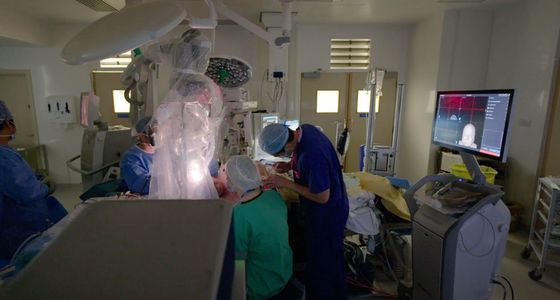
For Nicola Smedley, director of marketing and digital at Cancer Research UK, the move into advertiser-funded programming was a way of tackling one of the charity’s hardest communications challenges: how to explain the complexity of cancer, and the progress being made against it, in a way that people can properly understand.
“Explaining cancer is complex,” she says. “Cancer Research UK works across more than 200 forms of cancer and explaining why cancer has not yet been solved is complicated. Being able to do that in a longer-form way — talking about research innovation, how it is affecting people, and the scientists behind the work — felt really powerful.”
The thinking emerged from a brand refresh a couple of years ago, Smedley says, as the charity considered how it could evolve the way it talks about its work. “We were working on a brand refresh and thinking about how to evolve the way we talk about our work: how we have more impact with the public, bring more of our work to them, and give people more hope around the advances we’re making in research” she says.
At the same time, Smedley says, after Covid-19 there was a greater public appetite to understand science and engage with science content. That created an opportunity for Cancer Research UK to go deeper than a traditional campaign would allow.
“We started by asking: what are the opportunities to tell stories in a different, more engaging way? What would allow us to combine scientific breakthrough, the impact on people with cancer, and the hope that creates?” she says.
Cancer Research UK already had experience of longer-form storytelling through its relationship with Channel 4 around Stand Up To Cancer. But Cancer Detectives was different. It was the charity’s first fully-funded programming project of this kind.
For Daniel Wood, SVP, Sports and Entertainment at WPP Media, the idea was rooted in a simple tension. Those close to Cancer Research UK understand the scale and significance of the work it funds. But the wider public does not necessarily see that work or understand the stories behind it.
“When you work on Cancer Research UK, you know the incredible stories and the work the organisation is doing,” he says. “But we were very conscious that those stories are not necessarily understood by everyone in the UK.”
That made Channel 4 an obvious target. The broadcaster had an existing relationship with the charity, but more importantly it had a reputation for human-led, emotionally intelligent storytelling — the kind that could handle scientific accuracy without losing the audience.
Cancer Research UK needed to make clear the story they wanted to tell: not just a story about cancer, but a story about the scientists working to change its future. Wood says Channel 4 quickly saw the storytelling potential.
“They felt it was a message their audience needed to hear,” he says.
From there, the partners worked to find the right production company. Several proposals were considered before Dragonfly North was selected for its ability to handle both the science and the human stories with care.
The result was a close partnership between Cancer Research UK, WPP Media, Channel 4 and Dragonfly. Smedley’s team brought deep knowledge of the charity’s research, scientists and patient stories, while Channel 4 and Dragonfly shaped that material into a broadcast proposition and the WPP Media team brokered and strategically developed the partnership.
The challenge was to make the programme feel unmistakably connected to Cancer Research UK without turning it into an awkward brand vehicle. That balance was critical.
“We proposed stories we felt had real interest, either because of the cancer type or their current-day impact. For example, one story was around a lung vaccine, which is about stopping cancer before it starts,” Smedley says. “The scientists tell the stories around the work they are doing, but the people going through treatment were chosen because they were in the system at that moment. They were not chosen by us because they said something specific about Cancer Research UK.”
Smedley says Cancer Research UK’s role was to show Channel 4 and Dragonfly the science stories it had available, including the lung vaccine work, and help narrow those down to the three that would sit at the heart of the one-hour programmes for maximum engagement.
Once the programmes were complete, the charity reviewed them for factual accuracy. But the storytelling itself belonged to the broadcaster and producer.
“Editorial control sat totally with Channel 4,” says Smedley. “This was an AFP, so the process was theirs rather than ours.”
The process was also relatively fast. Early conversations began around 14 months before the series went on air, but from a fully fledged brief to broadcast took around 10 months.
Wood says that is quick for a project of this kind. Many AFP projects take about a year, and this one carried additional complexity because of the sensitivity and factual precision required.
The other important factor was that Channel 4 was not treated simply as a media platform. It was a full partner in the project.
For Wood, that matters. In an era when any brand can publish content into digital channels, there is still a particular value in creating work for the linear television schedule — especially when the subject carries the weight and importance of cancer research.
“Producing work of this quality and importance with a national broadcaster elevates the impact,” he says.
But the programme was only one part of the wider campaign. Cancer Research UK built a broader activation around Cancer Detectives, using the three programmes as the centrepiece for a wider breakthroughs campaign across its website, social channels and other media.