
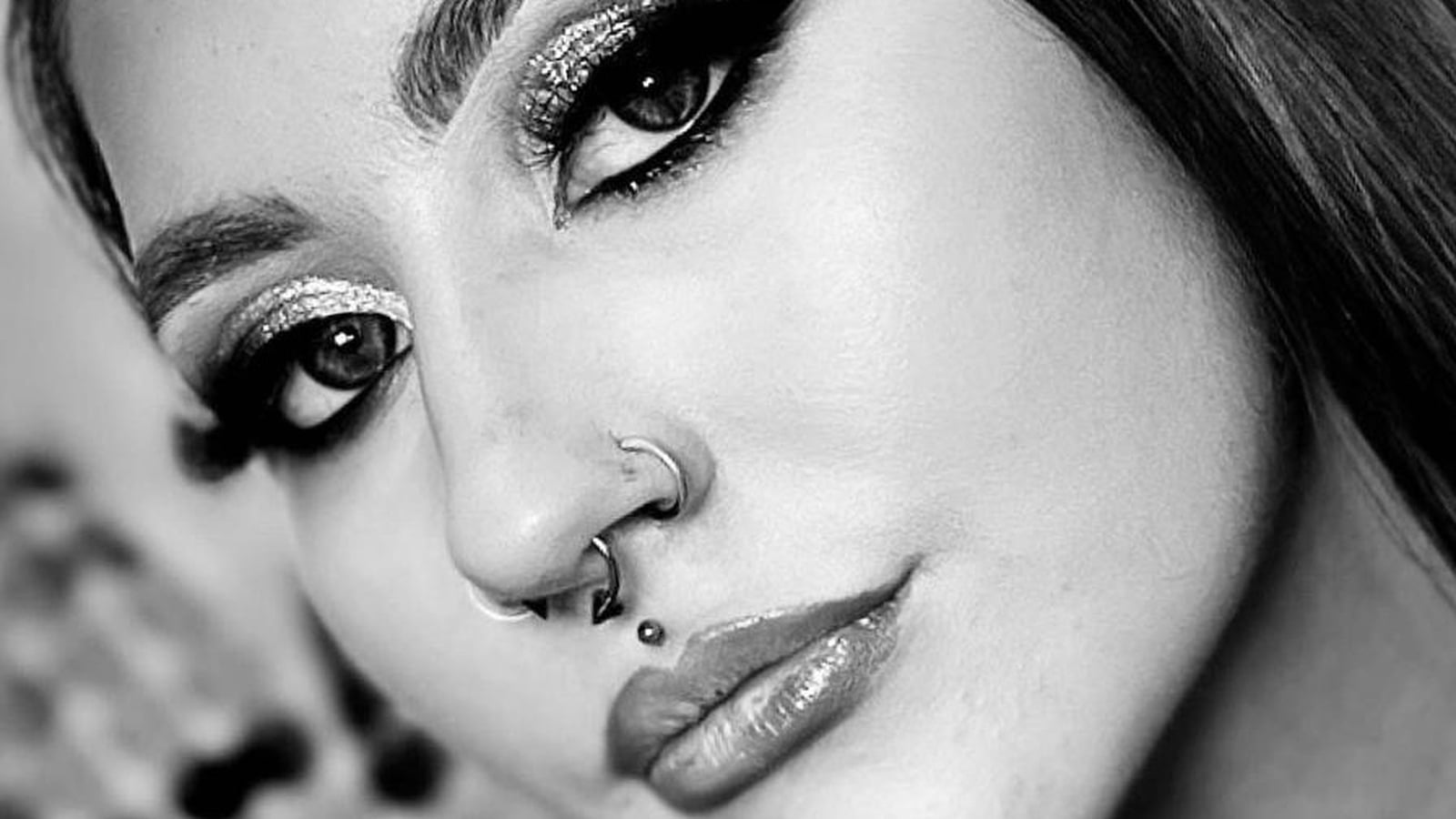
Producer Alan Bradley introduces his new documentary The Girl in the Water, premiering on RTÉ One on Wednesday, 8 July.
The Girl in the Water tells the story of 23-year-old Kelly Marie Lynch whose body was discovered near Horseshoe Bridge in County Monaghan on St Patrick’s Day 2024. That day marked the beginning of her family’s search for answers about the circumstances surrounding her final hours and their mission to raise awareness of Kelly’s death, which received little public attention at the time.
I’m from Cavan, just down the road from Monaghan, so stories from that part of the country don’t feel distant to me. They feel close. Familiar. That’s why when I first came across a video of Julieanne Lynch on TikTok, speaking about her daughter Kelly Marie, I stopped scrolling. There was something in her voice that cut through everything else.
I couldn’t believe what I was hearing.
A 23-year-old woman had died on St Patrick’s Day 2024. Found under a bridge in Monaghan after being missing for hours. And I hadn’t heard a thing about it. No headlines. No breaking news. No public outcry. Nothing.
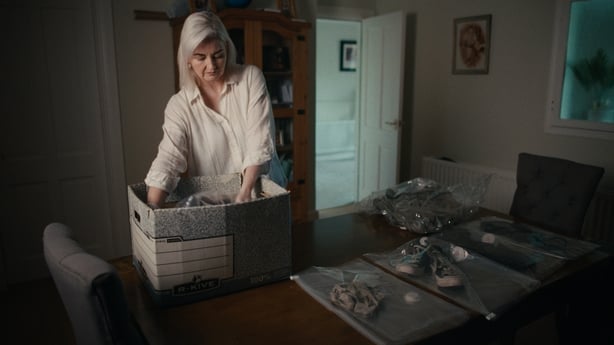
Kelly’s mother Julieanne Lynch, with Kelly’s Clothes
I remember thinking: how is that possible? How, in modern Ireland, does a young woman die in those circumstances and it doesn’t even register in the national conversation? It didn’t sit right with me. It still doesn’t.
The more I looked into Kelly’s case, the more questions began to emerge. Not just about the circumstances of her death, but about how it was handled from the very beginning. Despite being found under the Horseshoe Bridge after being missing for around thirty hours, the State Pathologist did not attend the scene. The Garda Technical Bureau did not attend either. Gardaí told the family they believed Kelly’s death was non-suspicious, a tragic accident.
But for her family, that explanation didn’t bring peace. It only deepened the sense that something possibly wasn’t right.
The more I looked into Kelly’s case, the more questions began to emerge.
When I spoke to Julieanne for the first time, it was clear this wasn’t just a mother grieving. This was a mother searching. Searching for answers, for clarity, for something solid she could hold onto in the middle of unimaginable loss. She spoke with a strength that was impossible to ignore, but underneath it was a pain that hadn’t been given space to settle because there were still too many unanswered questions. It was a story I felt compelled to follow.
The Girl in the Water: Kelly Marie Lynch became, for me, a way of documenting that search. Not just for answers as to what happened to Kelly, but what happens to a family when certainty is out of reach. When grief is suspended in a kind of limbo because there isn’t enough clarity to begin making sense of it.
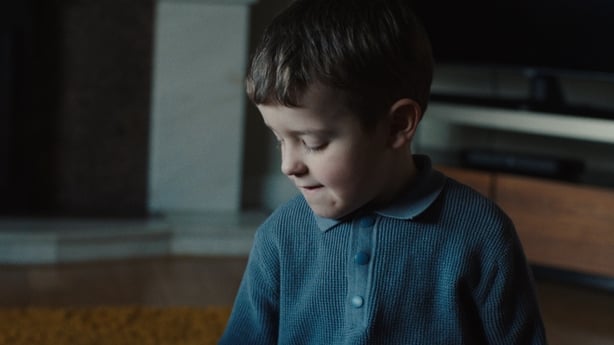
Kelly’s brother Finn
Spending time with the Lynch family, you feel the absence of Kelly in everything. It’s in the silences, in the way her name is spoken, in the spaces she should still occupy.
There’s a hole in their lives that hasn’t just been left by her loss, but by the lack of answers surrounding it.
And yet, what struck me just as deeply as that loss was the strength of the women around her.
Julieanne. Her mother. Kelly’s grannies, Bernie and Patsy. Generations of women bound together not only by grief, but by determination. There’s a resilience there that feels both powerful and heartbreaking. They refuse to let Kelly’s story fade. They refuse to let her death be quietly accepted without the scrutiny they believe it deserves.
Surely every young woman, every person, deserves to be seen, to be heard, to matter.
One of the most powerful moments we filmed was in Monaghan town square. Julieanne stood there with a megaphone in her hand, calling out her daughter’s name, demanding answers. It wasn’t staged. It wasn’t performative. It was raw and real and impossible to ignore.
Watching her in that moment, I thought: this is what love looks like when it has nowhere else to go. It becomes a voice. It becomes a fight.
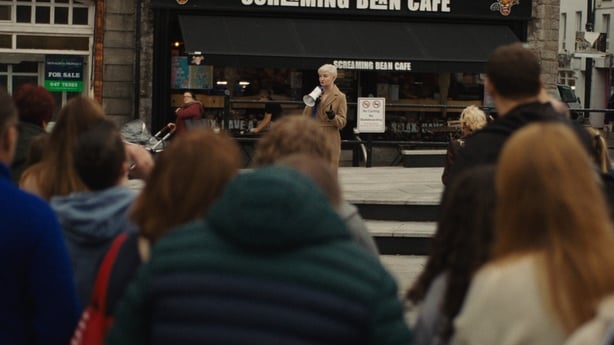
Julieanne Lynch in Monaghan town
This film doesn’t claim to have all the answers. It doesn’t attempt to solve Kelly’s death. What it does is create space for the questions. It lays out the differing interpretations of the evidence, the multiple conflicting post-mortem findings, and the perspectives of those closest to Kelly. It allows the audience to sit with the uncertainty that the Lynch family live with every day.
Because at its core, this documentary is about more than one case. It’s about accountability. It’s about visibility. It’s about whose stories get told, and whose don’t.
I keep coming back to that first thought I had when I realised Kelly’s death hadn’t been widely reported. Surely every life is worth more than that. Surely every young woman, every person, deserves to be seen, to be heard, to matter.
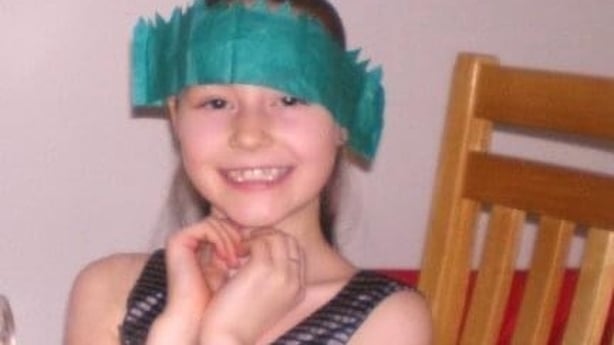
Kelly in her younger years
Kelly mattered. She still matters.
And as long as Julieanne and the women in her life continue to stand up and speak out, she will not be forgotten. That much is certain.
At one point, Julieanne said something to me that has stayed with me ever since. She said, “That’s all I can do for Kelly now.”
This film is, in some small way, my attempt to do the same.
The Girl in the Water, RTÉ One, Wednesday, 8 July at 9.35pm – catch up via RTÉ Player