
Main Points US forces fired at 90 Iranian military targets in a second day of attacks along Iran’s coastline, US Central Command saidUS Central Command said the strikes were in response to Iranian attacks on commercial ships in the Strait of HormuzIran on Wednesday said it attacked US military sites in Bahrain and Kuwait in response to earlier US strikes on infrastructureOn Wednesday US president Donald Trump said the US “hit them very hard last night, very, very hard”, adding the US would “probably hit them hard again tonight”In a post on Truth Social Trump said if Iran continued to attack ships in the strait US attacks on Iran “will get much worse”Several nations in the Gulf have reported apparent Iranian attacks – including explosions in Bahrain’s capital ManamaOil prices appeared largely stable following the overnight US strikes on Iran, rising 1 per cent to $79 a barrel, bringing the rise this week to 9 per centBest Reads
Sarah Burns – 37 minutes ago
EU ministers will meet with Gulf counterparts to discuss situation, says Helen McEntee
Minister for Foreign Affairs and Defence Helen McEntee has said the events of the past 48 hours underline the “fragility of the truce” in the Gulf.
McEntee said the exchange of fire between Iran and the US risks undermining the agreement on a ceasefire and a process of talks to address the issues that led to this conflict.
“Iran’s latest attacks on Kuwait and Bahrain are unacceptable, as are its attacks on commercial shipping in the Strait of Hormuz,” she said in a statement on Thursday.
“Freedom of navigation must be upheld, in accordance with international law. I urge parties to uphold the ceasefire and to meet their commitments under the Memorandum of Understanding agreed between Iran and the US.”
The Fine Gael TD added that EU Ministers will meet with Gulf counterparts in Brussels on Monday to discuss the situation.
“As I emphasised in my visit to the Gulf, only dialogue and diplomacy can bring lasting stability and security to the region,” she said.
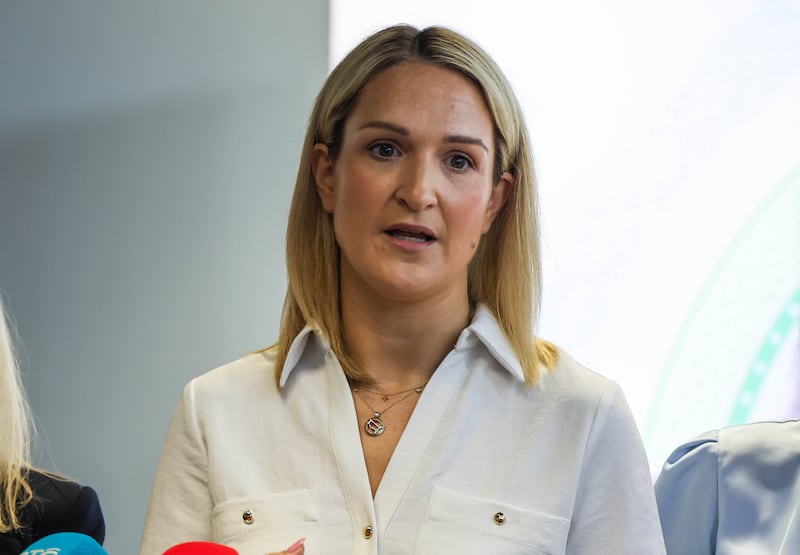 Minister for Foreign Affairs Helen McEntee said EU ministers will meet with Gulf counterparts on Monday to discuss situation. Photograph: Colin Keegan/Collins At least 14 people killed in latest US airstrike
The US launched airstrikes against Iran overnight on Thursday, killing at least 14 people, while Tehran responded by hitting Gulf countries in the most intense exchange of fire since a shaky ceasefire was extended last month.
The tit-for-tat strikes on Thursday were the largest since Tehran and Washington signed a memorandum of understanding on June 17th aimed at extending the ceasefire and giving space for negotiations for a permanent truce.
Sirens sounded at least three times in Bahrain, where the US navy’s fifth fleet is headquartered, while Iranian missiles also targeted Kuwait and Qatar. There were no immediate reports of any damage.
The attacks came hours after Donald Trump said the memorandum of understanding was “over” because of Iranian attacks on ships in the strait of Hormuz.
After the strikes, the US president posted videos of explosions in Iran and threatened the country once again.
“This is in retribution for yesterday’s bombing of ships by Iran. If it happens again, it will get much worse!” Trump wrote on Truth Social. Hours before, he had promised that strikes would not lead to long term fighting but would be “very-fast”.
His comments and the exchange of fire prompted worries that the ceasefire could break down and raised concerns about the long-term prospects of negotiations. Significant gaps remain between the two countries over issues such as Iran’s control over the strait of Hormuz, as well as inspections of nuclear facilities.
Back-and-forth attacks have happened since the MOU was signed, but Thursday’s strikes were the most intense in weeks.
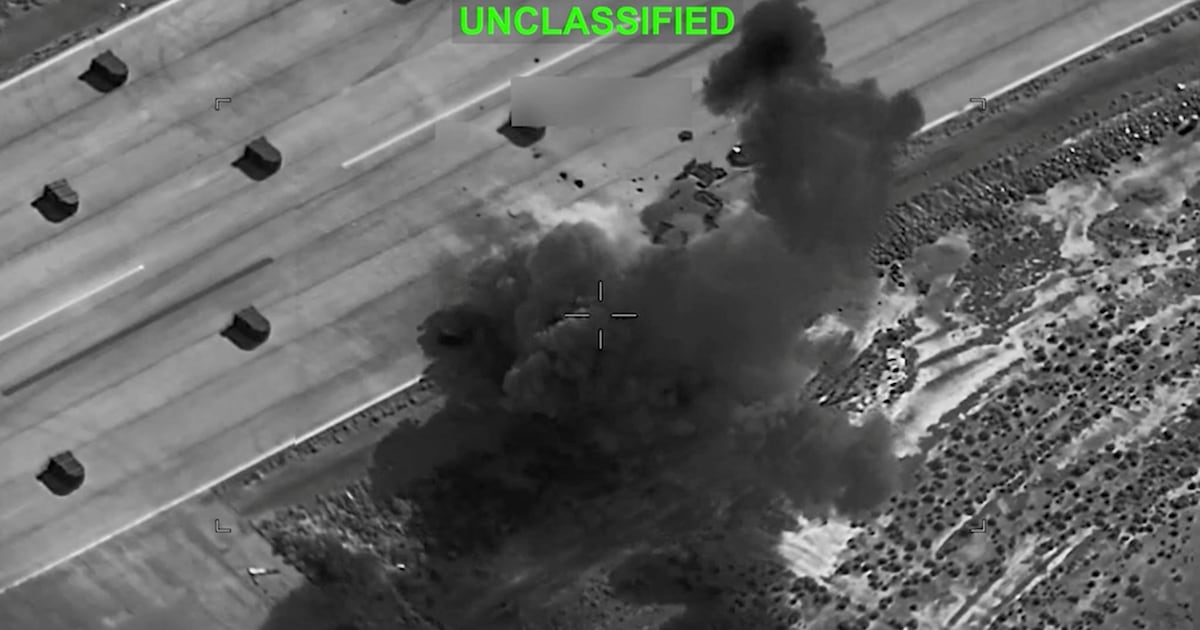
The US military said it hit about 90 targets in Iran, showing footage of strikes on missile launchers and a runway. It said the strikes were meant to degrade Iran’s capacity to “threaten freedom of navigation” in the strait of Hormuz, a critical choke point for about 20 per cent of the world’s oil and gas.
Iran accused the US of war crimes after it said two bridges in the eastern provinces leading to the city of Mashhad were targeted, the city where the late Ayatollah Ali Khamenei was slated to be buried on Thursday. The bridges constitute key infrastructure for Iran’s cross-border trade with China, which has dramatically increased since the US war with Iran started.
Iran’s slain supreme leader Ayatollah Ali Khamenei will be buried on Thursday in the Iranian holy city Mashhad, his birthplace, in a ceremony that will mark more than just the culmination of his days-long funeral.
It will also signal the symbolic end of a nearly 37-year era in which Khamenei was the towering figure who shaped and held together the Islamic republic.
But what next for Iran after Ali Khamenei? You can read more here.
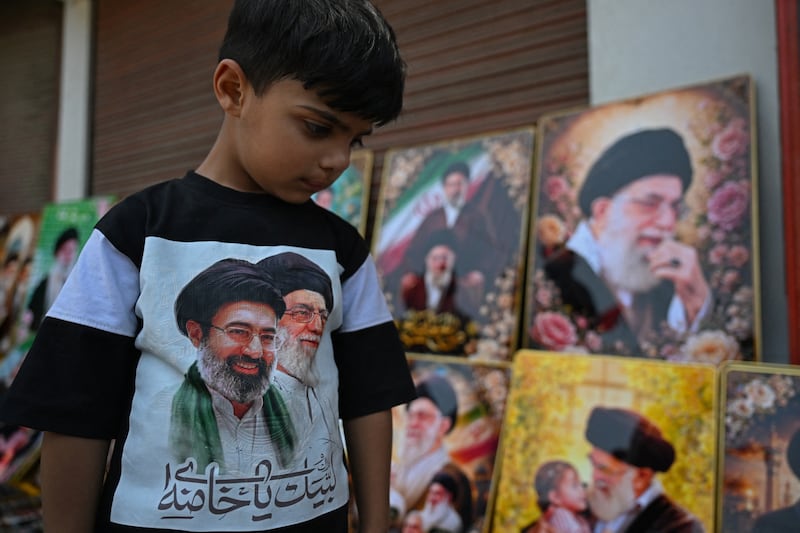 A Shiite Muslim boy mourns Iran’s slain supreme leader Ayatollah Ali Khamenei, near Imambara in Budgam on Thursday. Photograph: Tauseef Mustafa/ AFP via Getty Images
 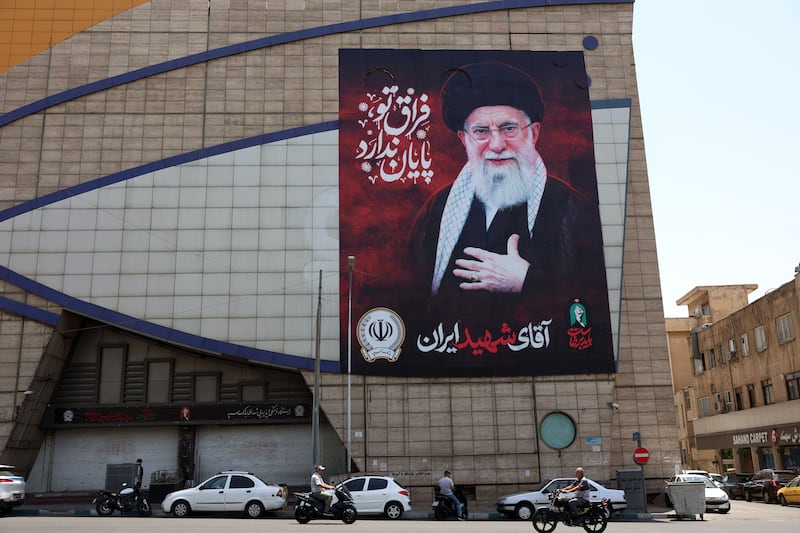 Iranians drive past a billboard of late Iranian supreme leader Ayatollah Ali Khamenei in a street in Tehran, Iran on Thursday. Photograph: Abedin Taherkenareh/EPA
 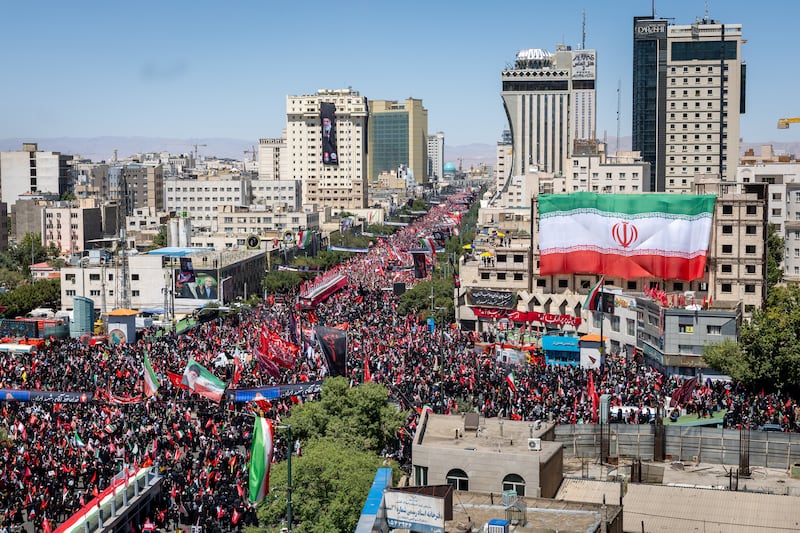 Thousands of mourners await the arrival of the body of Iran’s slain supreme leader Ayatollah Ali Khamenei on Thursday in Mashhad, Iran. Photograph: John Moore/Getty Images
Sarah Burns – 4 hours ago
Iran’s slain supreme leader to be buried on Thursday
Iran buries its slain Supreme Leader Ayatollah Ali Khamenei on Thursday at the country’s holiest shrine, with his son and successor Mojtaba Khamenei still hidden from public view after being disfigured in the strike that killed his father.
The burial in Mashhad in northeast Iran follows a week of mass funeral processions, rallies and mourning ceremonies that has coincided with a renewed burst of conflict with the United States following weeks of truce.
Crowds marched through Mashhad on Thursday morning, the golden onion dome and minarets of the Shrine of Imam Reza glinting in the morning sun, as they waved Iranian flags, photographs of the late Khamenei and placards with revolutionary slogans.
As Khamenei’s body was transported around Iran and Iraq over the past week, the Islamic Republic’s clerical leaders encouraged huge crowds to attend in an effort to vaunt the might and ideological fire of their theocratic state.
However, despite it having survived a months-long blitz by its strongest enemies, the United States and Israel, Iran faces huge internal challenges and the legacy of Khamenei’s 37-year rule is bitterly disputed.
The whereabouts of Mojtaba Khamenei, proclaimed Supreme Leader by a clerical assembly a week after his father’s death, has remained a mystery to Iranians. He has not appeared in public since the war began with the strike that killed Ali Khamenei on February 28th, and while he has issued written statements, no image or video or voice recording of him has been issued.
He suffered debilitating injuries in that same strike, his face disfigured and limbs badly wounded.
Senior sources in Tehran have said he is recovering but that he has not yet been well enough to manage public appearances and state security services are also trying to limit his exposure in case of more US attacks.
As crowds jostled in Mashhad awaiting Khamenei’s funeral cortege, the crowd chanted slogans demanding revenge on US President Donald Trump for his killing.
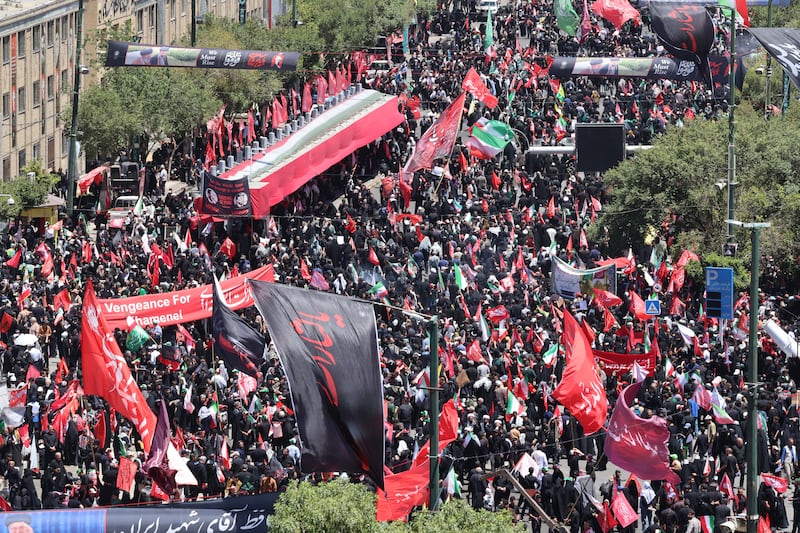 Mourners gather in the street ahead of the funeral of Iran’s slain supreme leader Ali Khamenei and members of his family at the Shrine of Imam Reza, Iran’s most revered place of worship, in Mashhad on Thursday. Photograph: Atta Kenare/AFP via Getty Images
 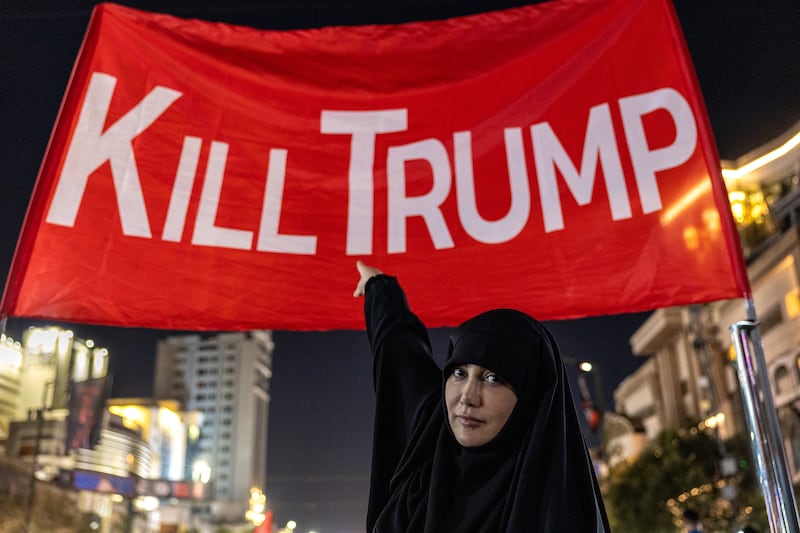 Mourners pose for photos under a banner set up in a main thoroughfare near the Imam Reza Shrine on Thursday in Mashhad, Iran. Photograph: John Moore/Getty Images
Sarah Burns – 5 hours ago
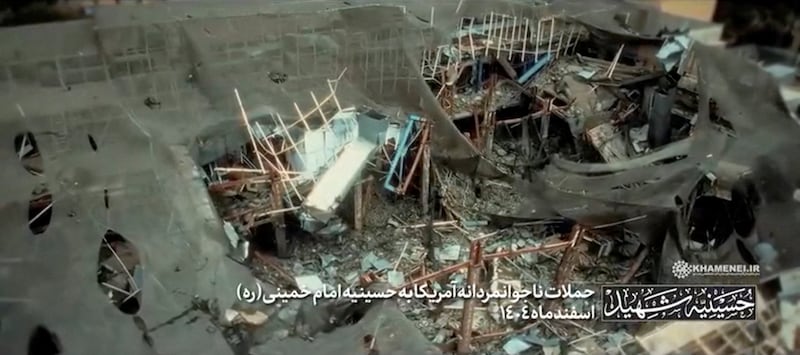 Damage to a portion of a building, which the Office of the Iranian Supreme Leader said was Iran’s late Supreme Leader Ayatollah Ali Khamenei’s compound in the aftermath of Israeli and US airstrikes, in Tehran, Iran in this screen grab from video released on Wednesday. Photograph: Office of the Iranian Supreme Leader/Handout via Reuters
 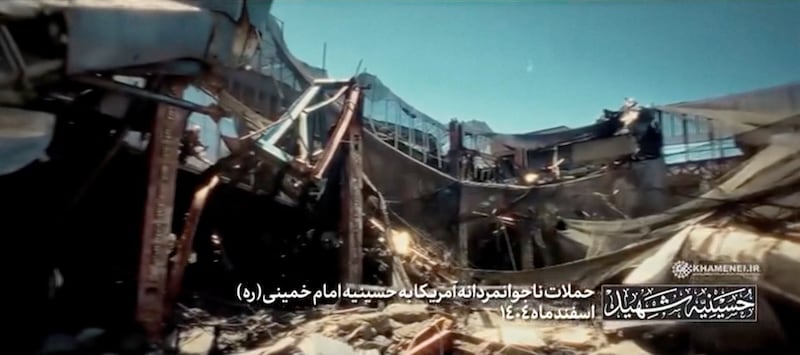 Damage to a portion of a building, which the Office of the Iranian Supreme Leader said was Iran’s late Supreme Leader Ayatollah Ali Khamenei’s compound in the aftermath of Israeli and US airstrikes, in Tehran, Iran in this screen grab from video released on Wednesday. Photograph: Office of the Iranian Supreme Leader/Handout via Reuters
 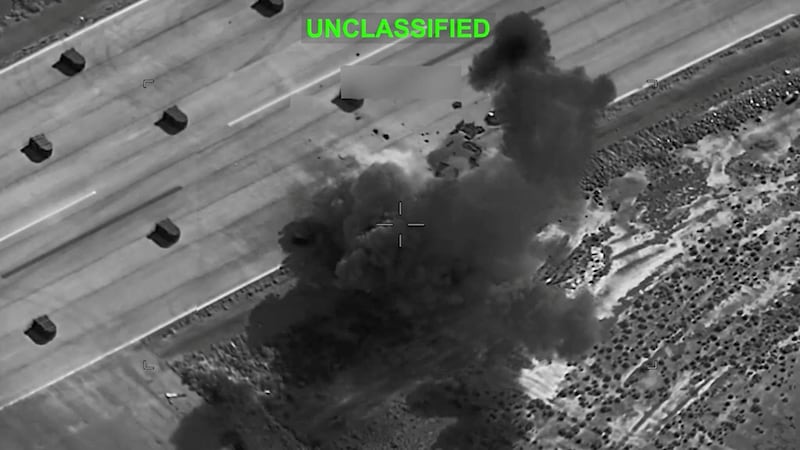 Smoke rises from explosions at an unknown location, following what US Central Command said were strikes on Iranian military targets, in this screen grab from a video released on Wednesday. Photograph: US Central Command/Handout via Reuters
Sarah Burns – 5 hours ago
Qatar tells Iran all parties should commit to diplomacy
Qatari prime minister Sheikh Mohammed bin Abdulrahman al-Thani told Iranian foreign minister Abbas Araqchi in a phone call on Thursday that Iran and the United States should commit to diplomacy.
Al-Thani added that Washington and Tehran should implement the signed memorandum of understanding aimed at ending the war, the Qatari foreign minister said.
Iran launched drones towards a site in Qatar earlier on Thursday and a Qatari tanker was attacked in the Strait of Hormuz earlier the week. Al-Thani condemned the attack in the call, the foreign ministry said.
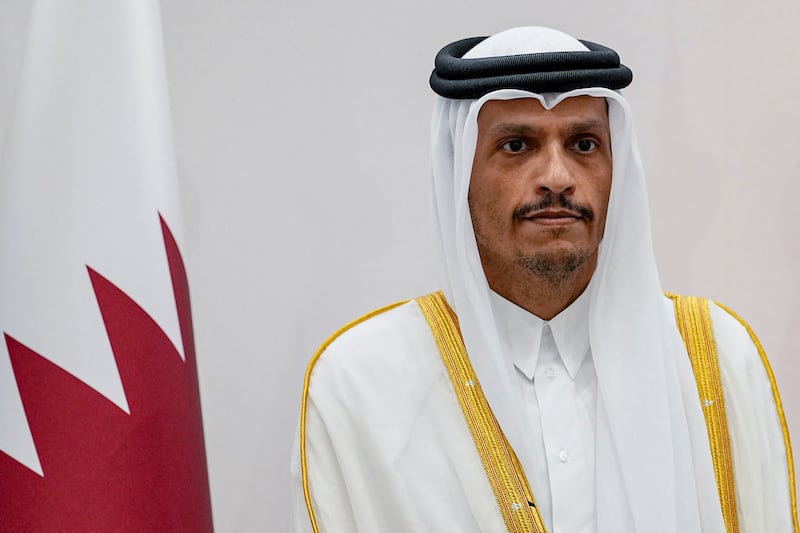 Qatar’s prime minister Sheikh Mohammed bin Abdulrahman al-Thani. Photograph: Eric Lee/AFP via Getty Images
Sarah Burns – 5 hours ago
US military claims to have struck 170 Iranian targets in last 48 hours
Iran was pummelled with a volley of missiles for a second consecutive night, with the US military claiming to have struck 170 Iranian targets in the last 48 hours.
US Central Command (Centcom) said the intense bombing aimed to “further degrade Iran’s ability to attack commercial shipping and innocent civilian mariners in the strait of Hormuz”.
Iranian state media reported explosions in several cities, most of them concentrated in the south of the country, as its army responded with retaliatory strikes on US bases in Bahrain, Kuwait and Qatar.
The regional crossfire sparked by a battle to control movement in the narrow and strategic shipping channel threatens to unravel an interim truce between the US and Iran.
Both sides have vowed to escalate retaliations should provocations continue, with US president Donald Trump warning that worse could come, while Iran has threatened to expand its attacks against US bases in the region.
During the Nato summit in Turkey, Trump said he considers the memorandum of understanding with Iran to be “over”, adding: “I don’t want to deal with them.” Iran’s top negotiator, Mohammad Baqer Qalibaf, vowed that the strait of Hormuz would remain under Iranian management.
“The strait of Hormuz will be reopened only under Iranian arrangements, not through US threats,” he wrote on X.
The fresh strikes came as Iranians prepare to bury their late supreme leader Ali Khamenei in his hometown of Mashhad in north-east Iran. The burial follows a multi-day funeral ceremony that attracted millions of mourners across various cities in both Iran and Iraq.
Sarah Burns – 6 hours ago
The US military said on Wednesday it launched fresh strikes on Iran to keep the Strait of Hormuz open to shipping, triggering Iranian attacks on Kuwait and Bahrain in the latest escalation to derail efforts to end the war.
The latest round of attacks, which the US said was carried out in response to Tuesday’s assault on three cargo ships transiting the strait, came hours after Donald Trump said he believed an interim ceasefire with Iran to be “over.”
“US Central Command forces have started conducting additional strikes against Iran to further degrade their ability to threaten freedom of navigation in the Strait of Hormuz,” Centcom, the US military’s Middle East command, wrote on X.
“The United States is holding Iran accountable for recent unjustified aggression against commercial shipping and civilian crews freely navigating a vital international waterway.”
The US strikes rattled several cities along Iran’s southern coast and left some areas without power. Iran responded with a second day of attacks on Kuwait and Bahrain, both home to US military bases.
Kuwait’s Defence Ministry said it was intercepting missiles and drones, while Qatar briefly issued an “elevated security threat” alert before later giving the all-clear.
Control of the strait, through which a fifth of global oil supplies passed before the war, has given Tehran immense leverage, effectively allowing it to force a stalemate with the world’s most powerful military. While Iran has not claimed responsibility for the ship attacks, analysts say Tehran uses such actions to gain leverage in negotiations.
The latest exchange of strikes appeared to dim hopes of turning a memorandum of understanding signed on June 17th into a permanent deal to end the war, which began with US-Israeli attacks on Iran on February 28th.
Asked before a NATO summit in Turkey on Wednesday whether the memorandum of understanding was over, Trump said: “It’s a very interesting question. To me, I think it’s over. I don’t want to deal with them.”
“If we make a deal with Iran I’m not sure that will stick,” Trump later said. “I found them to be very dishonourable people.”
But Trump, who has repeatedly threatened to escalate military action before backing off, said he did not expect a return to full-fledged war, and that it was not clear whether the negotiations on reaching a permanent deal would continue.
Also on Wednesday, the US president said he did not think the war would restart: “Anything that happens is going to be over very quickly…and will only make it safer, including for oil.”
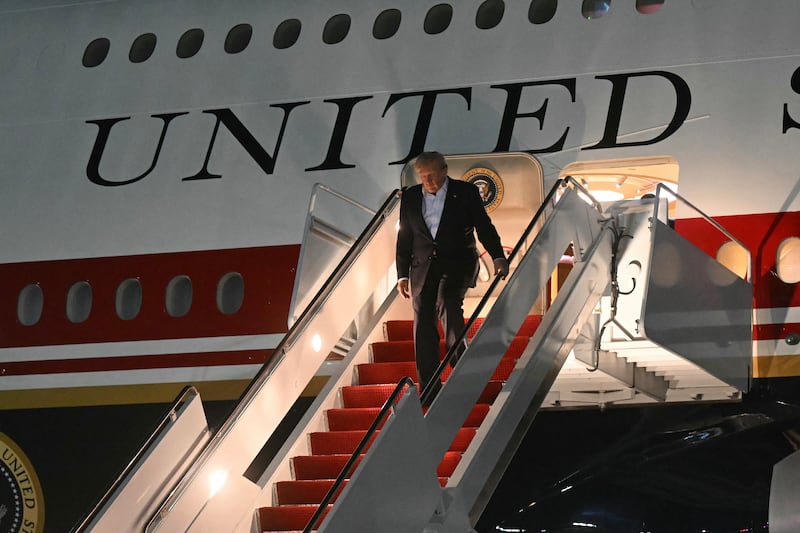 US president Donald Trump disembarks from Air Force One upon arrival at Joint Base Andrews, Maryland on Thursday. Photograph: Saul Loeb/AFP via Getty Images
Sarah Burns – 7 hours ago
Trump denies security concerns behind plane swap 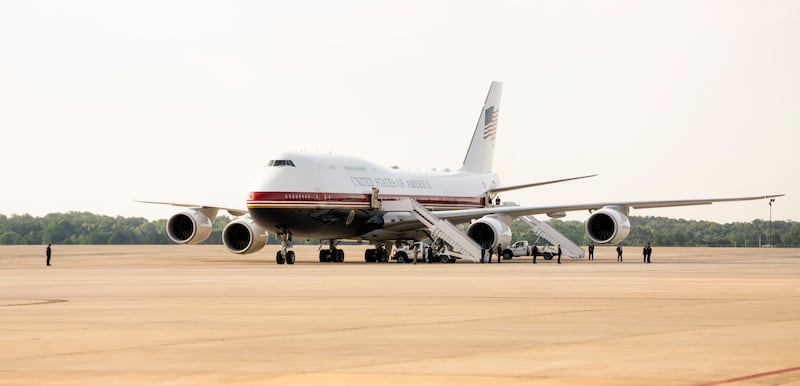 The new Air Force One, which was donated to the US by Qatar. Photograph: Doug Mills/The New York Times
Donald Trump flew out of Turkey on Wednesday night on the old Air Force One instead of his new Qatari-donated Boeing 747-8 as a security precaution related to the resumption of hostilities with Iran, according to people briefed on the plans, who said the change came at the urging of the Secret Service.
Trump denied security fears were behind a brief stop at RAF Mildenhall in the UK on his way home from the Nato summit in Turkey.
The swap deepens questions about whether the new plane, which the president had pressed to be ready as soon as possible, was retrofitted with sufficient security measures over the last year. Some politicians and officials have raised concerns about whether the expedited timeline allowed for the addition of an advanced missile defence system and other modifications used to protect the president.
Asked by reporters at Mildenhall if he was aware of credible threats to the plane, Trump said: “I have a threat all the time. I’m number one of their list.”
He repeated his earlier comments on social media that the new plane was sent to RAF Mildenhall to allow US service members to see it.
He earlier posted on Truth Social: “To honor our brave men and women of the Military, we are sending the brand new, and truly spectacular, Air Force One to Mildenhall Air Force Base, in the United Kingdom, to give them a chance to tour the Aircraft…”
The trip to Ankara was the first international trip for the new plane.
He later posted a picture of service members in front of the plane and described them as “very excited”.
Trump earlier said he flew from Turkey to the UK on board the previous Air Force One “for old time’s sake” with reporters asked to keep window blinds drawn during the flight.
The president, who said he was not asked to keep blinds closed in his compartment, said the request was probably because of “sleazebags over here” in an apparent reference to Iran.
Sarah Burns – 7 hours ago
Iraqis turn out on droves to mourn Iran’s Khamenei
Hundreds of thousands of mourners filled the streets of the Iraqi cities of Najaf and Karbala on Wednesday, chanting, praying and weeping for Iran’s supreme leader, Ayatollah Ali Khamenei, as they pushed their way to the convoy carrying his coffin.
It was a frenzied outpouring of grief for another nation’s ruler — one who, as a preeminent Shia Muslim cleric and political strategist, spent decades extending Iran’s influence deep into Iraq, and across the Middle East.
“He was our guardian and protector, and we are here today to return the favor,” said Rabab Jassim (45), who arrived in Najaf at 3am from Baghdad to join the ceremony.
“My heart is on fire,” she said, bursting into tears.
The procession followed five days of funeral services and mass mourning inside Iran for Khamenei, who was killed in the first US-Israeli strikes that launched the war on Iran in February. His body was set to be flown back to Iran after the commemorations, and he was expected to be buried Thursday in his hometown, the northeastern city of Mashhad.
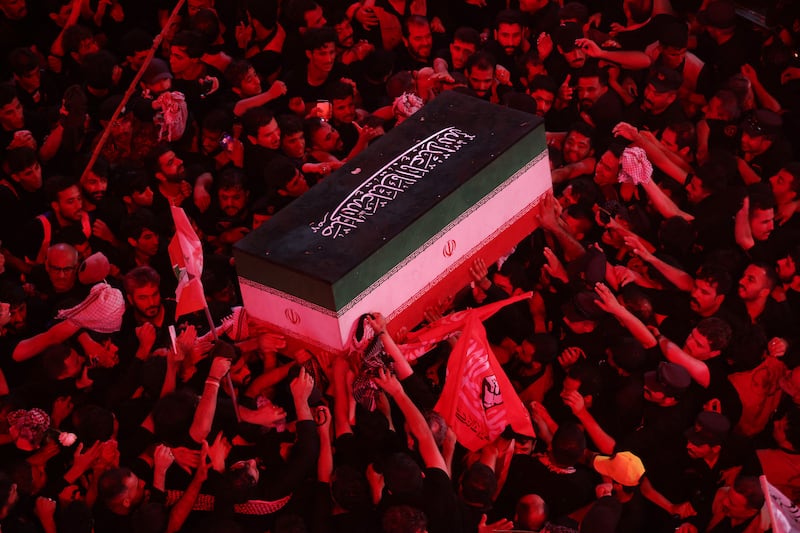 Mourners take part in the funeral procession of Iran’s late supreme leader Ayatollah Ali Khamenei at Imam Hussein Shrine in Karbala, Iraq. Photograph: Ahmad Al-Rubaye/AFP via Getty Images
As supreme leader, Khamenei oversaw brutal crackdowns of opposition to his clerical rule at home, and he also leaves behind a divisive legacy in Iraq.
The country is home to the Middle East’s second-largest Shia Muslim population, after Iran. Some Iraqis praise Khamenei for providing Iranian support to Iraq’s Shia militias, who fought against the eight-year US occupation. Others blame Iran’s intervention for stoking two decades of sectarian bloodshed with Iraq’s Sunni minority that has only recently ebbed.
Sarah Burns – 7 hours ago
‘I don’t want to deal with them any more. They’re scum’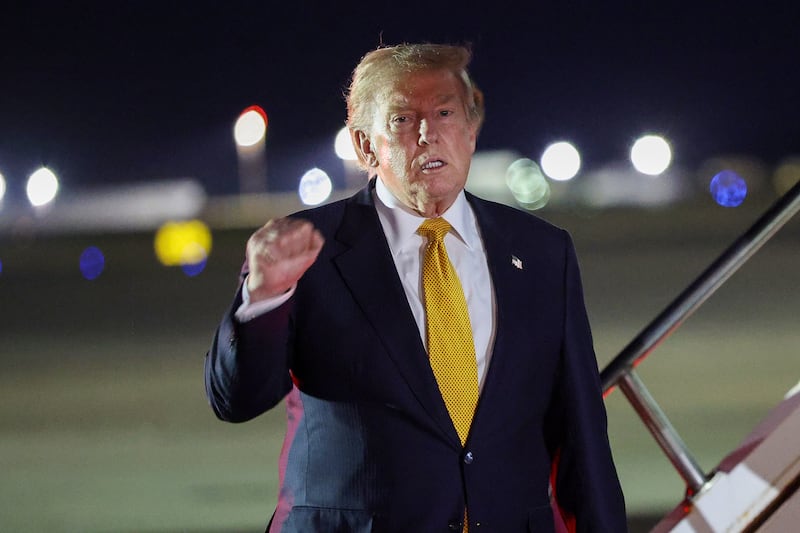 US president Donald Trump at Royal Air Force Mildenhall in England where he boarded a flight back to Washington after attending the Nato summit in Turkey. Photograph: Win McNamee/Getty Images
Donald Trump has again claimed the US has won the war with Iran, launched by the US and Israel on February 28th.
Asked about the status of the interim ceasefire deal, Trump said: “I think it’s over. I don’t want to deal with them any more. They’re scum.
“They’re sick people. They’re led by sick people and they’re vicious, violent people. And if they had a nuclear weapon, they’d use it.”
He said he would allow negotiations to continue.
Speaking on Air Force One, after a brief stop to change planes at RAF Mildenhall in Suffolk on his return flight from the Nato summit in Turkey, Trump said the US had “won militarily” and that Iran wanted to make a deal.
“They want to make a deal so badly – I just don’t know if they’re worthy of making a deal,” he said.
“I don’t know that they’re going to honour the deal. That’s the problem.”
Iranian deputy foreign minister Kazem Gharibabadi said on X that Trump’s remarks “are not a sign of power but an admission of the failure”.
In a post on X, Iranian parliament speaker Mohammad Bagher Qalibaf said: “The era of bullying and extortion is over. It leads nowhere. We don’t fold.”
Sarah Burns – 8 hours ago
Trump says situation ‘will get much worse’ for IranMourners pose for photos under a banner set up in a main thoroughfare near the Imam Reza Shrine on Thursday in Mashhad, Iran. Photograph: John Moore/Getty Images
US forces said they hit about 90 targets across Iran on Wednesday with Donald Trump warning the conflict could “get much worse”.
Iran responded to a second day of renewed attacks by targeting Bahrain, Kuwait and Qatar early on Thursday.
US Central Command said the strikes were aimed at hitting Iran’s ability “to threaten freedom of navigation” through the Strait of Hormuz.
Renewed hostilities broke out on Tuesday after Iran targeted three tankers in the vital waterway, which remains a flashpoint in the fragile truce.
“US forces remain vigilant, lethal, and prepared to execute operations directed by the Commander in Chief,” the statement from Central Command said.
They said the targets included more than 60 Islamic Revolutionary Guard small boats.
Iranian state media reported explosions in Bushehr, home to the country’s nuclear power plant complex, and the southern ports of Chabahar, Konarak, Bandar Abbas and Sirik.
Bahrain – home to the US Navy’s 5th Fleet – Kuwait and Qatar all sounded sirens early on Thursday amid retaliatory Iranian fire. Kuwait said it was intercepting drones and missiles.
Trump also reposted on his Truth Social platform a picture of buildings in flames billowing thick black smoke, purportedly to be in Iran, with the message: “This is retribution for yesterday’s bombing of ships. If it happens again, it will get much worse.”
[ Oil extends gains as US strikes in Iran rattle marketsOpens in new window ]