
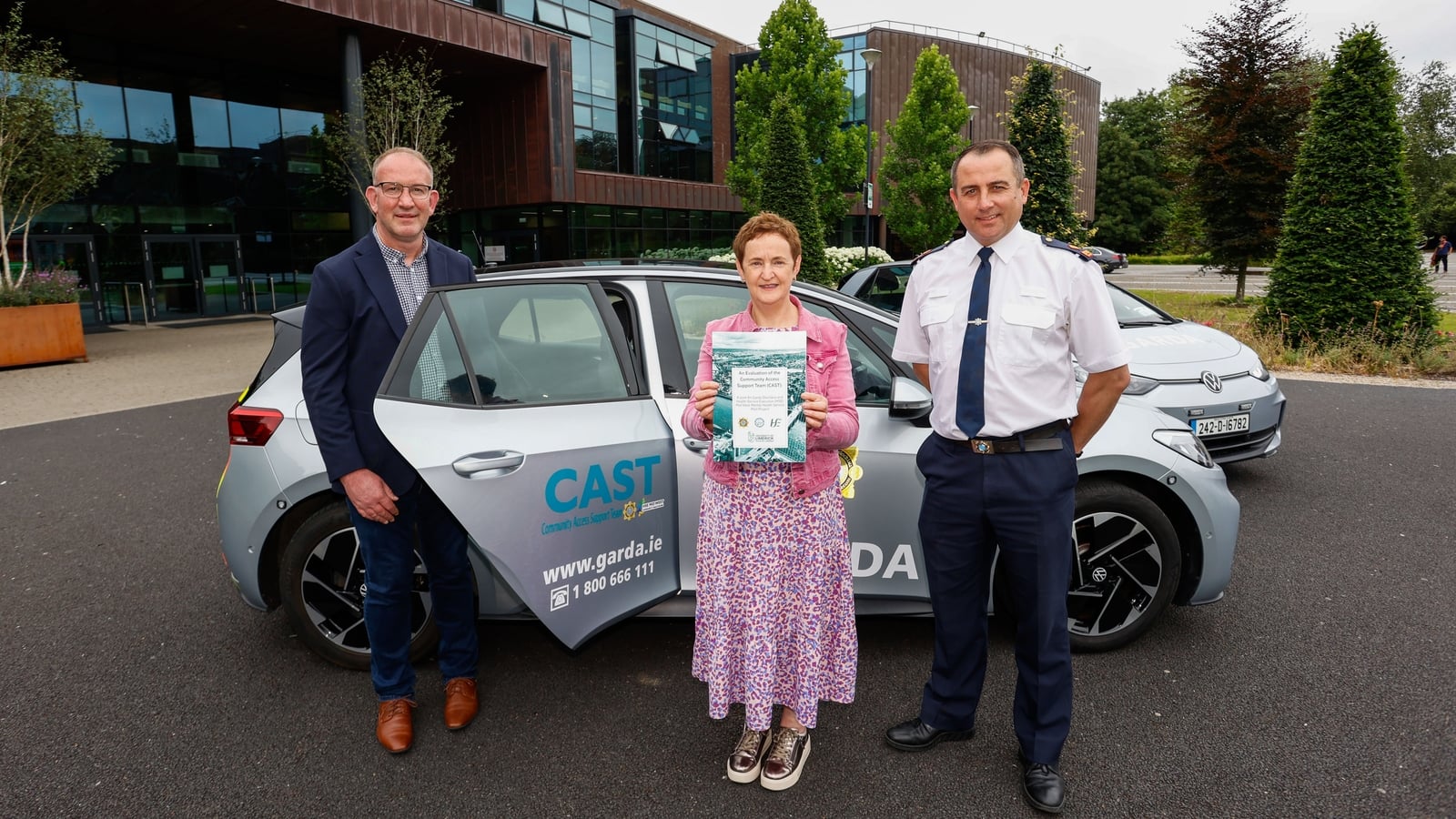
A new mental health crisis team prevented more than 130 people from being detained by gardaí over a 12-month period, according to a University of Limerick report.
The partnership between An Garda Síochána and the Health Service Executive (HSE) also prevented an estimated 61 emergency department presentations and five arrests while helping some of the region’s most vulnerable people access appropriate mental health care.
The report finds that the Community Access Support Team (CAST) is transforming how mental health crises are managed by diverting people away from the criminal justice system and acute hospital services.
It recommends that the pilot be developed into a permanent national service.
Established within the Limerick Garda Division, CAST brings together garda members and HSE Mid West Mental Health Services staff to provide coordinated, trauma-informed responses to people experiencing acute mental health crises, with an emphasis on early intervention and continuity of care.
Between January 2025 and January this year, the team responded to more than 1,000 incidents involving 477 people with complex mental health needs, substance misuse issues and homelessness.
Researchers estimated the service prevented 133 detentions under Section 12 of the Mental Health Act, 61 emergency department attendances and five arrests during that period.
The team also identified 19 cases suitable for diversion from prosecution.
Restoring hope
The report found that people who engaged with CAST experienced fewer suicide attempts, detentions and emergency department visits, while families described the service as restoring hope after previously feeling exhausted and powerless.
Rather than removing garda involvement, the report found the initiative had “rebalanced responsibility” by providing a more appropriate, non-criminalising response to people in mental health crisis.
Researchers also highlighted the importance of proactive follow-up, with the service completing more than 450 post-incident callbacks.
The continuity of care encouraged many people who had previously resisted engaging with services to seek support after experiencing consistent, non-judgemental contact.
Many service users with histories of trauma, repeated detentions or homelessness said CAST staff treated them as individuals rather than as “cases”, “frequent callers” or “problems”.
The UL research team was led by Professor Owen Doody and included Dr Ann-Marie Bright, Dr Steven Byrne, Dr John Lombard and Dr Louise Murphy.
Professor Doody said the evaluation provided “compelling evidence” that the service was transforming mental health crisis response through partnership, compassion and clinical expertise.
“The research team has produced an evaluation that demonstrates both the human and system-wide benefits of the model, while offering a strong foundation for future expansion,” he said.
Superintendent Andrew Lacey, CAST Project Implementation Lead at Henry Street Garda Station, said the findings demonstrated the value of combining policing and healthcare expertise.
“By combining policing and health expertise, CAST provides trauma-informed, community-based support and diverts individuals away from arrest or emergency departments,” he said.
He said the research would help inform future policy development and improve services, adding that community safety is “a shared responsibility in Ireland”.
Nuala Kelly, Head of Service with HSE Mid West Mental Health Services, described the evaluation as an important milestone for the programme and said it demonstrated that CAST delivers safe, compassionate responses through collaborative decision-making.
She praised the CAST team and An Garda Síochána for their partnership in delivering a more integrated, trauma-informed response to people experiencing mental health crises.