
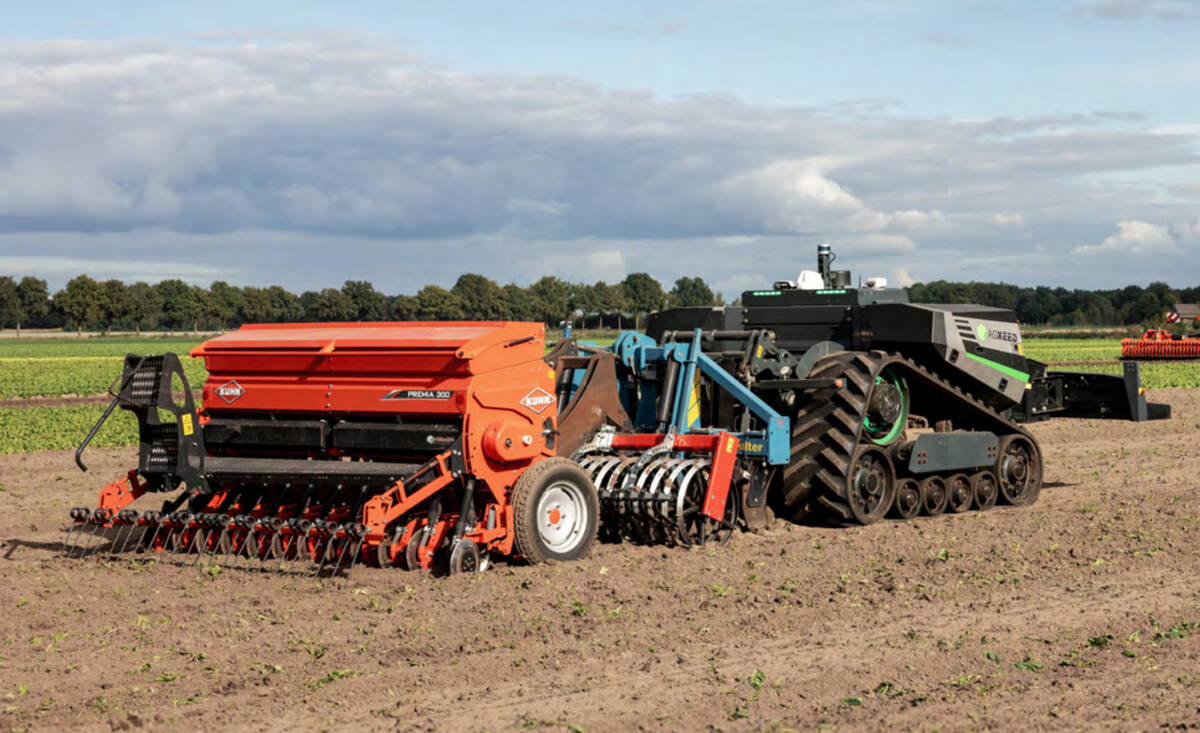
AgXeed says its autonomous farm machines are designed to do more than just remove the operator from the tractor cab.
The Netherlands-based company says its tracked AgBots are built around a different machinery philosophy: smaller, lighter machines that can run long hours while reducing soil compaction.
“Our main reason for developing the track machines is to prevent the problem of soil compaction,” said Arjan Mulder, chief commercial officer with AgXeed.
WHY IT MATTERS: Replacing larger tractors with lighter autonomous machines can extend working windows and ease labour challenges.
AgXeed’s T2 series is named for the two-track design. The line includes two autonomous machines. The T2-5 is rated at 156 horsepower, while the larger T2-7 is rated at 230 h.p.
The first T2-7 AgBot made its Canadian debut at the Taber, Alta., farm equipment dealership PGS this summer.
Dealership owner Frank Michielsen said PGS is always looking for innovative new products. He’d been following AgXeed for a while, and when it released the higher horsepower T2-7, he pulled the trigger.
Read Also

“The improvements they made brought the technology to a level where we are confident will fit the Canadian market,” he said.
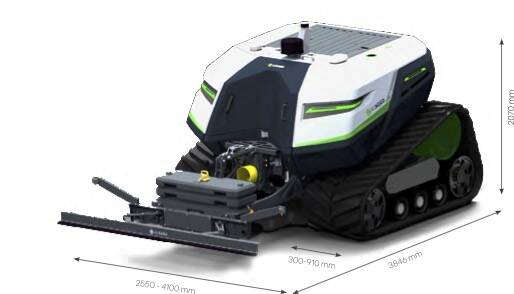
The T2 7-series can be equipped with tracks up to 900 millimetres wide. AgXeed says the design helps distribute weight and reduce soil pressure.
PGS plans to run field trials this season to see exactly where that fit lies. Michielsen said the dealership has been in contact with large row crop, dryland and grain operations, as well as potential industrial users.
“It might work perfectly in Western Europe but prove impractical here,” said Michielsen.
“That’s why we start by doing custom work this year to demonstrate its capabilities and limitations.”
Minimal moving parts
Both machines use a diesel-electric drivetrain. A diesel engine drives a generator, which sends electric power directly to motors in the tracks. With no gearbox, rear axle or differential, moving parts are kept to a minimum.
The electric drive system gives the machines strong torque, efficient power transfer and precise speed control.
The design also allows AgXeed to build the machine around the tracks, rather than adapting tracks to a conventional wheeled tractor. That matters because weight distribution is central to reducing soil pressure, Mulder said.
The T2-7 series can be equipped with tracks up to 900 millimetres wide, bringing ground pressure down to about 30 kilopascals (4.4 p.s.i.).
Mulder said that lower ground pressure has allowed some European customers to begin spring field work earlier and continue later in the fall compared to conventional tractors.
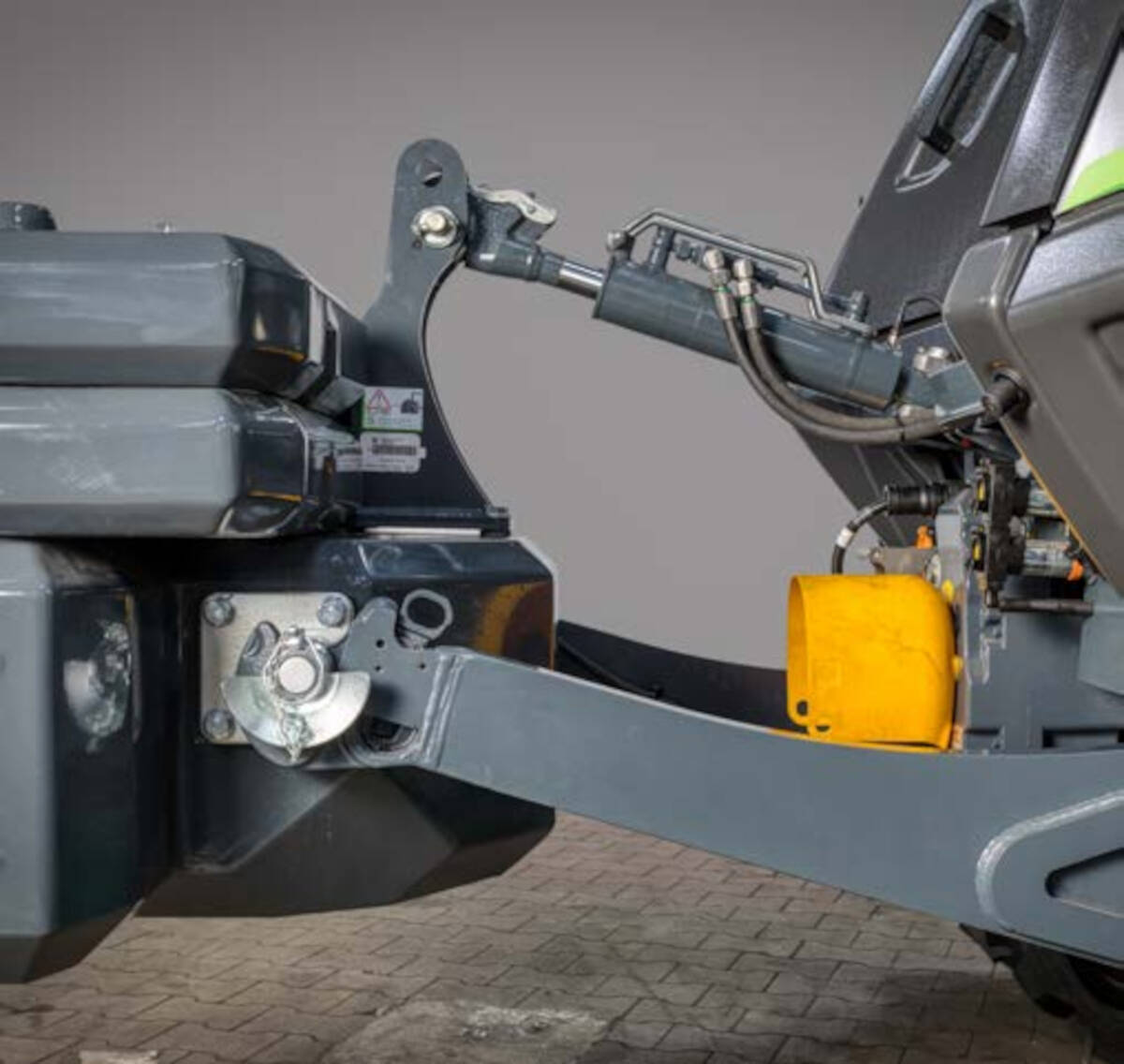
AgXeed designed the T2 series to work with conventional farm implements through standard hitch and hydraulic connections. The company says that allows farmers to use equipment they already own.
The T2 machines are equipped with standard three-point hitches, load-sensing hydraulics, and Isobus connections, all of which are familiar to most farmers.
“What I think is a major advantage for our machines is that the farmer can attach standard implements he has on the farm,” Mulder said.
Autonomous operation is managed through AgXeed’s TraXwise software system.
Farmers map the outside boundaries of the field and then enter the dimensions of the machine and attachment. They can then use the system to calculate routes and field operations.
Planning and monitoring
Mulder said farmers can use TraXwise to pre-plan field work ahead of the season. The system can estimate time required, area covered, fuel consumption, speed and power demand.
Machine data is streamed to the operator through a phone or computer, and live cameras allow the operator to monitor the machine remotely.
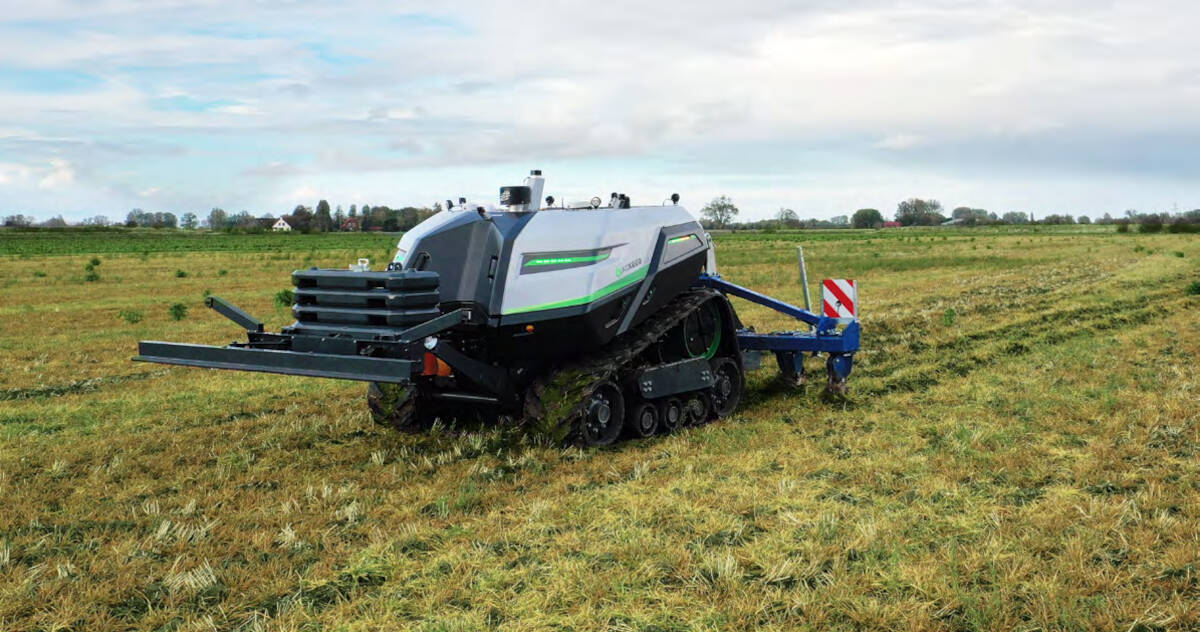
The T2 7-series is AgXeed’s larger autonomous tractor model. The machine uses a diesel-electric drivetrain and is rated at 230 horsepower.
Michielsen said the TraXwise planning system was one of the features that could help distinguish the AgBot from other autonomous products.
Safety systems include lidar and radar sensors that monitor the area around the machine.
The company’s longer-term vision is not necessarily one large tractor replacing another. Instead, Mulder said autonomy could allow farmers to use several smaller tracked machines that run more hours. One operator could eventually supervise four or five AgBots during a 12-hour shift.
“As long as fuel is in the tank, then the machine can run,” he said.
As for PGS, Michielsen said the compact design is drawing interest. Customers are already asking about the machine’s labour-saving potential and the field-planning capability of the TraXwise portal.
“I’m not sure where the first adopters will be, but there is serious interest,” he said