
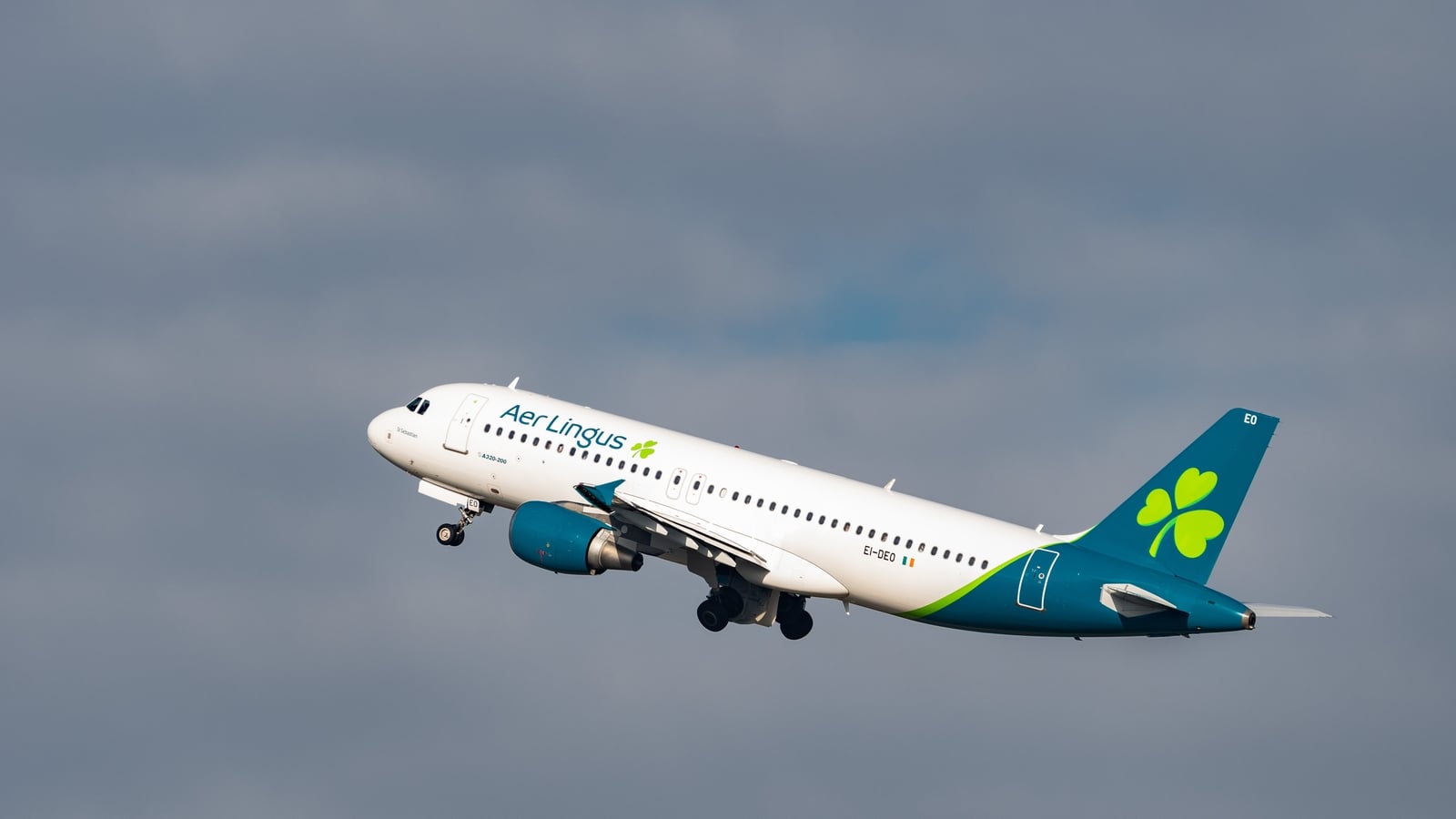
Analysis: The airline currently appears to be cutting jobs with one hand while pushing for Dublin Airport capacity growth with the other
Aer Lingus is currently doing two things at once that don’t appear to belong together. It’s cutting a quarter of its management jobs: 20 general managers and senior staff have taken voluntary redundancy. At the same time, the airline is warning the Government that it needs more room to grow at Dublin Airport. Shrinking the workforce and lobbying for capacity expansion are not usually arguments made in the same breath.
The financial picture explains why the axe fell where it did. First-quarter losses came to €103 million, more than double the €55 million lost over the same three months last year. The airline points to the closure of its Manchester transatlantic base, higher carbon costs, stiffer North Atlantic competition and rising fuel bills.
We need your consent to load this rte-player contentWe use rte-player to manage extra content that can set cookies on your device and collect data about your activity. Please review their details and accept them to load the content.Manage Preferences
From RTÉ Radio 1’s Drivetime, is scrapping the passenger cap at Dublin Airport a good idea?
None of this is a shock for the time of year as airlines rarely turn a profit in the first quarter. That said, passenger numbers did rise, up 1.1% to 2.165 million, helped by new routes from Cork to Geneva and Prague, and a new Dublin service taking in Cancún, Tromsø and Barbados. Aer Lingus isn’t shrinking as a business, but costs are simply growing faster than the routes are.
Where’s the pressure coming from?
Parent company IAG is looking for 12 to 15% returns across its group – Vueling, Iberia, British Airways and Aer Lingus – but that target looks set to be missed again this year, as it was in 2025. Aer Lingus may not repeat this year’s summer schedule in 2027, and crews have already been warned to expect less flying. Union agreements expire at year end, so pay talks with ground, cabin and flight crew are coming down the tracks.
So why push for more capacity now?
While trimming management and warning staff of fewer flights, Aer Lingus is also campaigning with Ryanair to scrap Dublin Airport’s 32-million-passenger cap. The lobbying push began early this year, with both carriers warning Minister for Transport Darragh O’Brien that next summer’s schedules were at risk without a change. On paper, that process is moving: Cabinet has approved a bill giving the minister power to lift the limit, though it still has to pass through the Oireachtas, which is never a quick job.
From RTÉ News, Taoiseach Micheál Martin says legislation being drafted to remove Dublin Airport passenger cap
The mismatch hasn’t gone unnoticed among staff. The pilots’ union IALPA has asked the airline how the airline actually intends to use any extra capacity, if and when it arrives. IALPA’s Daniel Langan has pointed to real demand growth out of Canada and South America (Brazil in particular). “Assuming the legislative process progresses as anticipated, it would be useful to understand how Aer Lingus intends to translate these opportunities into sustainable growth and market leadership.” That’s a fair question to ask an airline that’s cutting jobs with one hand while asking for growth room with the other.
What is Aer Lingus telling passengers and staff?
Aer Lingus’s own line is that hard times call for hard choices. CEO Lynne Embleton put it this way: “we are actively reviewing our cost base and our schedule beyond the summer to ensure that we operate as efficiently as possible and are positioned well for the future.” This summer’s flights are going ahead as planned, and there’s other innovations too. Starlink wifi is now on the first aircraft, with the long-haul fleet to follow by early 2027 and new Airbus A321XLR jets are already flying to Raleigh-Durham and Pittsburgh.
The fuel bill is the wildcard as oil prices have climbed because of the Iran-US conflict. While hedging is covering current operations, staff have been told further job cuts are possible this autumn if fuel costs don’t ease off. Aer Lingus insists the first-quarter loss wasn’t directly caused by the Middle East conflict, but it does expect the aftershocks to land later this year.
We need your consent to load this rte-player contentWe use rte-player to manage extra content that can set cookies on your device and collect data about your activity. Please review their details and accept them to load the content.Manage Preferences
From RTÉ Radio 1’s Morning Ireland in July 2024, Marke Tighe from IALPA and Clare Dunne from Irish Travel Agents Association on the Labour Court recommendations in the Aer Lingus pilots’ dispute
What does this mean for your next trip?
Anyone booked to fly next year should keep an eye on this. A schedule review could mean fewer options next winter and summer, with the newer Cork routes the obvious first candidates. That would come on top of the hundreds of flights already scrapped this summer, put down to scheduled aircraft maintenance. None of it makes forward planning easy for passengers left waiting to see what changes and when.
Reading between the lines indicates that Aer Lingus isn’t chasing instant growth by pushing to scrap the cap. Instead, it’s chasing flexibility, so market conditions rather than a fixed passenger ceiling decide how big the airline gets. The flip side holds just as well: keep the cap in place, and even a full recovery in demand won’t buy Aer Lingus much room to expand.
Where does this go from here?
Aer Lingus is being squeezed from several sides at once: its parent company wants better returns, competition has sharpened, fuel is expensive and management jobs are the first thing to give. The timing could hardly be worse as conventional wisdom and the airline’s own position says growth follows once the cap lifts. Whether that actually happens is still an open question.
Lifting the cap isn’t a single step either. It needs legislation through the Oireachtas, a slow process at the best of times, plus a resolution in the courts – a case is already before the High Court, brought by North American carriers alongside Ryanair and Aer Lingus, which will slow the timeline further. When the cap eventually comes goes, the question will be if Aer Lingus are in a position to make use of it.
Follow RTÉ Brainstorm on WhatsApp and Instagram for more stories and updates
The views expressed here are those of the author and do not represent or reflect the views of RTÉ