
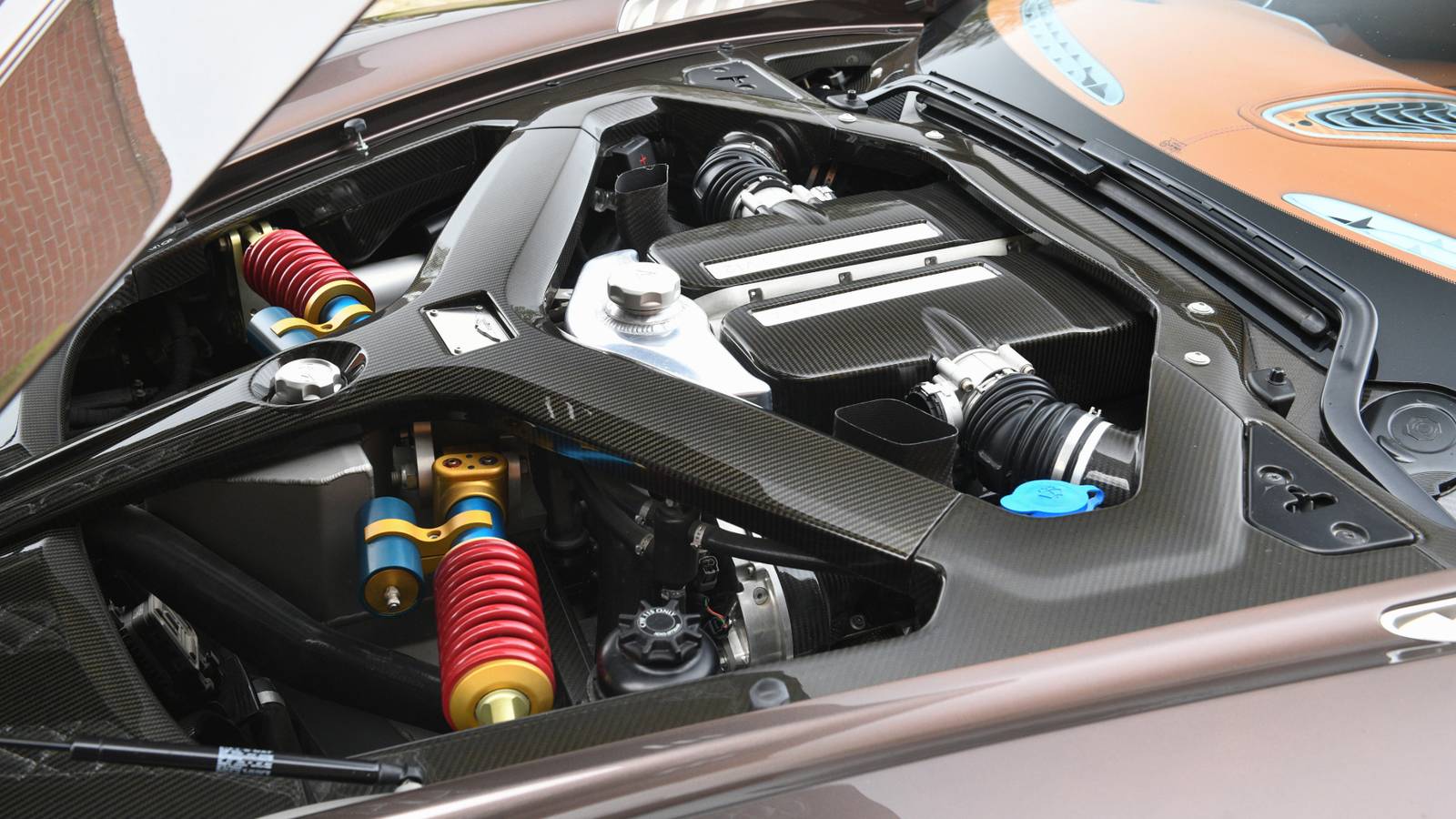
In the late 2000s, famed British automaker Aston Martin, went off the rails during the planning phase of a car the company later described as the brand’s definitive sports car. Aston Martin, maker of some of the world’s finest sports cars since 1913, completely lost the plot, and decided to no longer use its famed six-liter V12 engine.
Instead, it would task famous English engine building company Cosworth to modify its V12, and create a bespoke mill that not only produced at least 700 hp, but also weighed 10% less than the six-liter version. This is the story of the mad Aston Martin One-77, arguably the greatest Aston ever made. And the tale of a V12 engine that would become the biggest capacity V12 engine ever used in a production car.
Aston Martin Goes Big. Very Big.
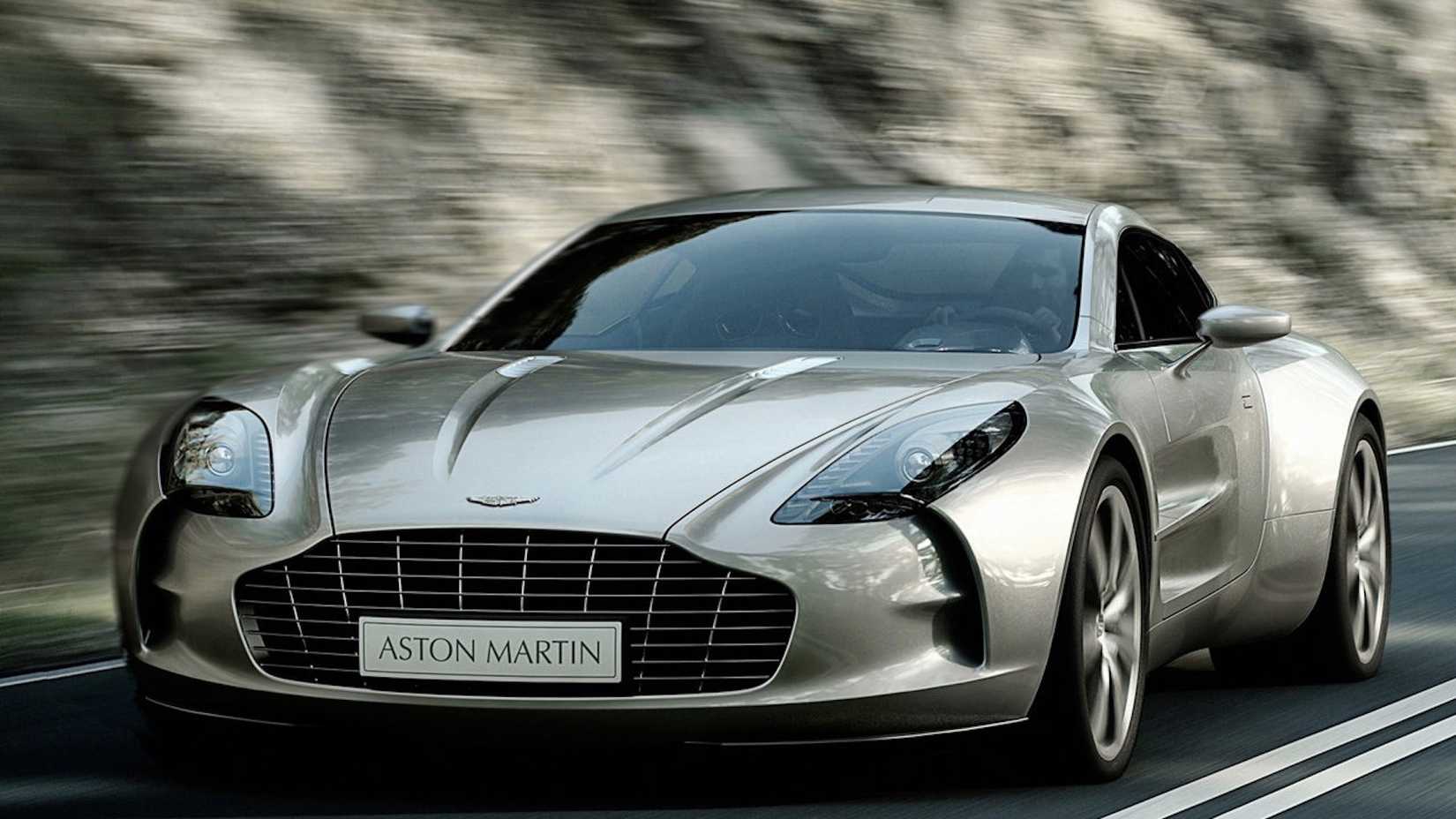
Aston Martin’s One-77 was revealed in 2009.Aston Martin
It was 3 March 2009. Aston Martin pulled the wrap sheet off its One-77 concept car at the Geneva Auto Show. The crowd gasped. The competitors tried to sneak a peek in between the chaos, trying to understand what Aston Martin had come up with in its quest to create the definitive sports car in its already comprehensive and spectacular line-up of sports cars.
It was soon clear that Aston Martin had cut not a single corner in developing its ultimate sports car, combining the latest technology at the time with the expertise of its artisans, who hand-rolled the car’s aluminum body panels. Aston Martin looked to the German Touring Car (DTM) Championship, which featured front-engined, rear-wheel drive racing cars, as a blueprint for its carbon fiber monocoque chassis.
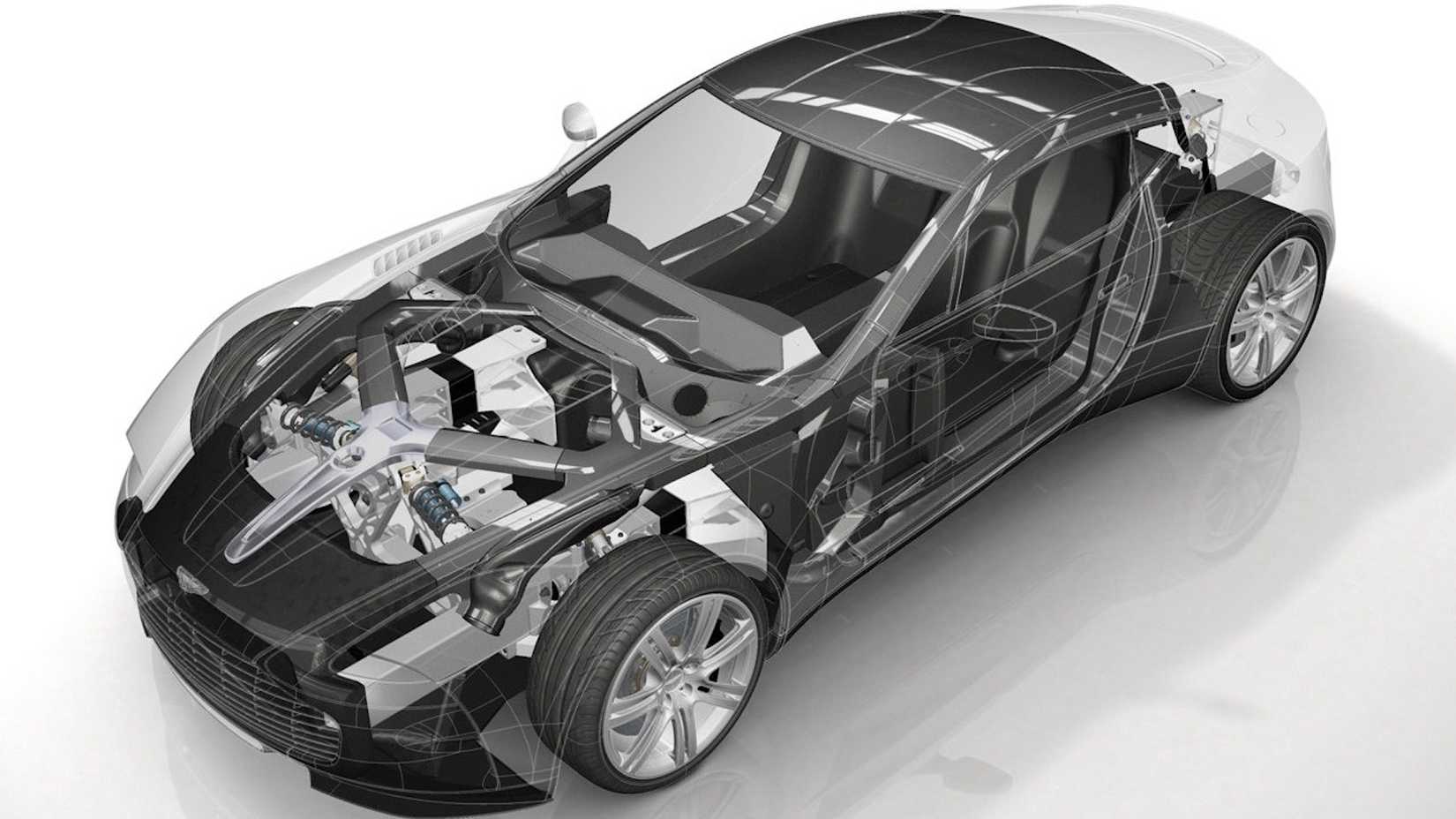
The Aston Martin One-77, a racing car for the road.Aston Martin
Taking another leaf out of the DTM book, the Aston Martin also came with a pukka racing car suspension set-up, featuring a double wishbones set-up at each corner. The One-77’s engine proved to be the cherry on top. Aston Martin developed an enlarged, 7.3-liter version of its renowned V12 engine, in partnership with the legendary engine builders at the Cosworth firm. Aston Martin aimed for at least 700 hp, combined with a 10% reduction in weight over the six-liter V12.
Little did Aston Martin’s engineers know just how far Cosworth would be able to stretch the six-liter V12.
Roar!
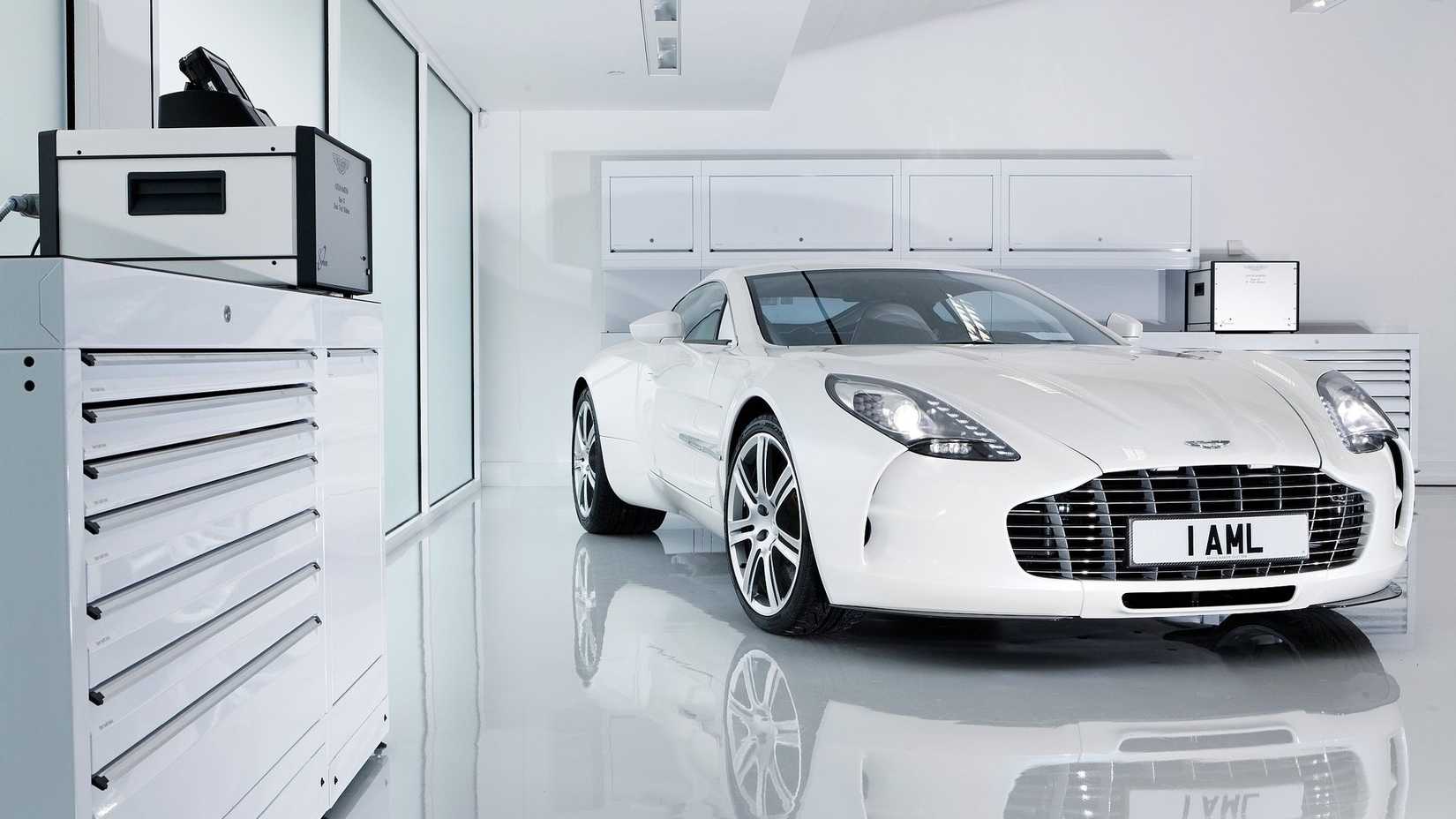
2010 Aston Martin One-77 White Front Angle Parked In White GarageAston Martin
In the business of custom high-performance engine building, British firm Cosworth is like royalty. The company, established in 1958, has provided gearheads with some of the greatest engines known to humankind. Think the Ford BDA engine, a range of Formula One engines, including some V10 ones, IndyCar and Champ Car engines, the iconic Mercedes-Benz 190E 2.3-16… the list is long and mighty impressive.
So no wonder that Aston Martin knocked on Cosworth’s door to create an engine to power the brand’s definitive sports car. To be sure, Aston Martin’s six-liter V12 was already an icon in its own right. The engine started its life in 1994, at a time when Ford owned the Aston Martin marque. With Aston engineers able to dip into Ford’s vast resources, the aim of the all-new V12 engine was ultimately to compete in the Le Mans 24 Hour race. Part of the design brief was copious amounts of torque at low revs.
The all-aluminum AML V12 engine ran for the first time in 1995, and soon landed up under the hood of an Aston Martin DB7. The AML received some upgrades over the years, and served the brand for multiple decades, a testament of how great the engine actually is. Aston Martin partnered with Cosworth to build the bespoke V12 engine for its cars, and in the late 2010s, this led to the collaboration of building the One-77 engine.
With a target of at least 700 hp from the naturally aspirated V12, as well as a weight reduction of 10%, Cosworth set to work on the AML. It increased the capacity to 7,312 cc… about 1.3-liter more than the original mill. A dry-sump oil system was added, which allowed the engine to be mounted around four inches lower than any other Aston Martin V12 engine, reducing the center of gravity. Additionally, the engine was relocated about 10 inches further away from the front wheel centerline, and closer to the cabin, turning the platform into a front-mid engine layout.
But the big news was in the numbers. The new 7.3-liter engine, the biggest capacity V12 in a production car, made 750 hp. It also had 553 lb-ft of torque. And it revved to a mind-boggling 11,000 rpm.
A Legend Is Made
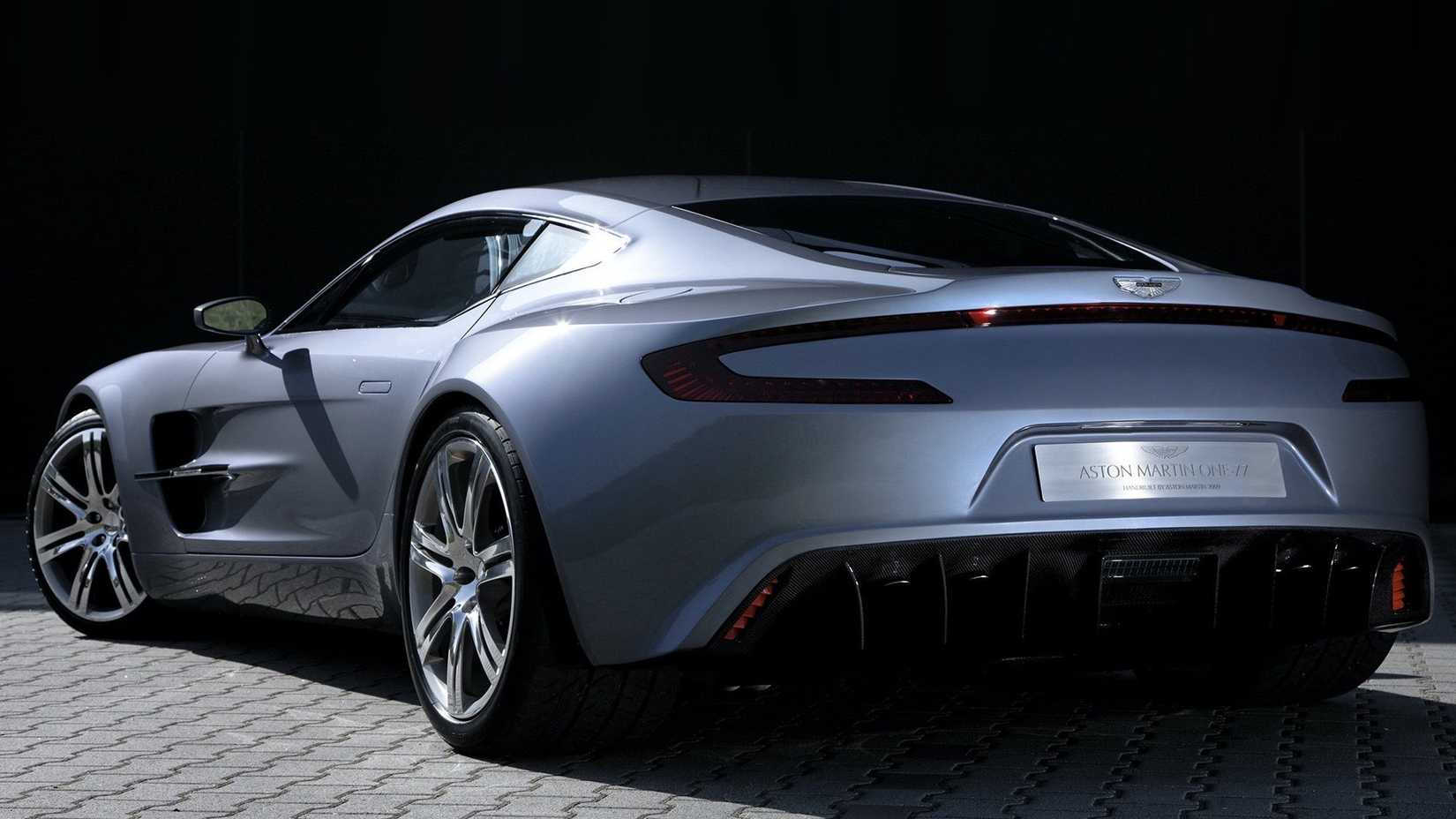
The magnificent Aston Martin One-77.Aston Martin
Aston-Martin’s definitive sports car turned out to be just that… a definitive machine that can top 220 mph and sprint to 60 mph in 3.5 seconds. But even more significantly than those impressive numbers is the tractability of the engine. With a six-speed automated manual gearbox (AMT) sending the power to the rear wheels, the merest prod of the accelerator would see the One-77 blast towards the horizon like an F-35 Lightning takes off from the deck of an aircraft carrier.
The bespoke suspension system is another arrow in the One-77’s quiver. It gets fully adjustable dampers and the Aston Martin was the first road car to be equipped with advanced Dynamic Spool Valve (DSSV) technology normally used in motorsport. For reference, the new Ford Mustang GTD uses the same technology, 15 years down the line. And here’s another special One-77 touch: When a customer’s car is delivered, the Aston Martin engineers will set up the car’s suspension exactly according to that customer’s requirements. Want to use it for Nürburgring track days? No problem, there’s a set-up for that. Just want to use it as a 750 hp GT to hit the open road in comfort? Done.
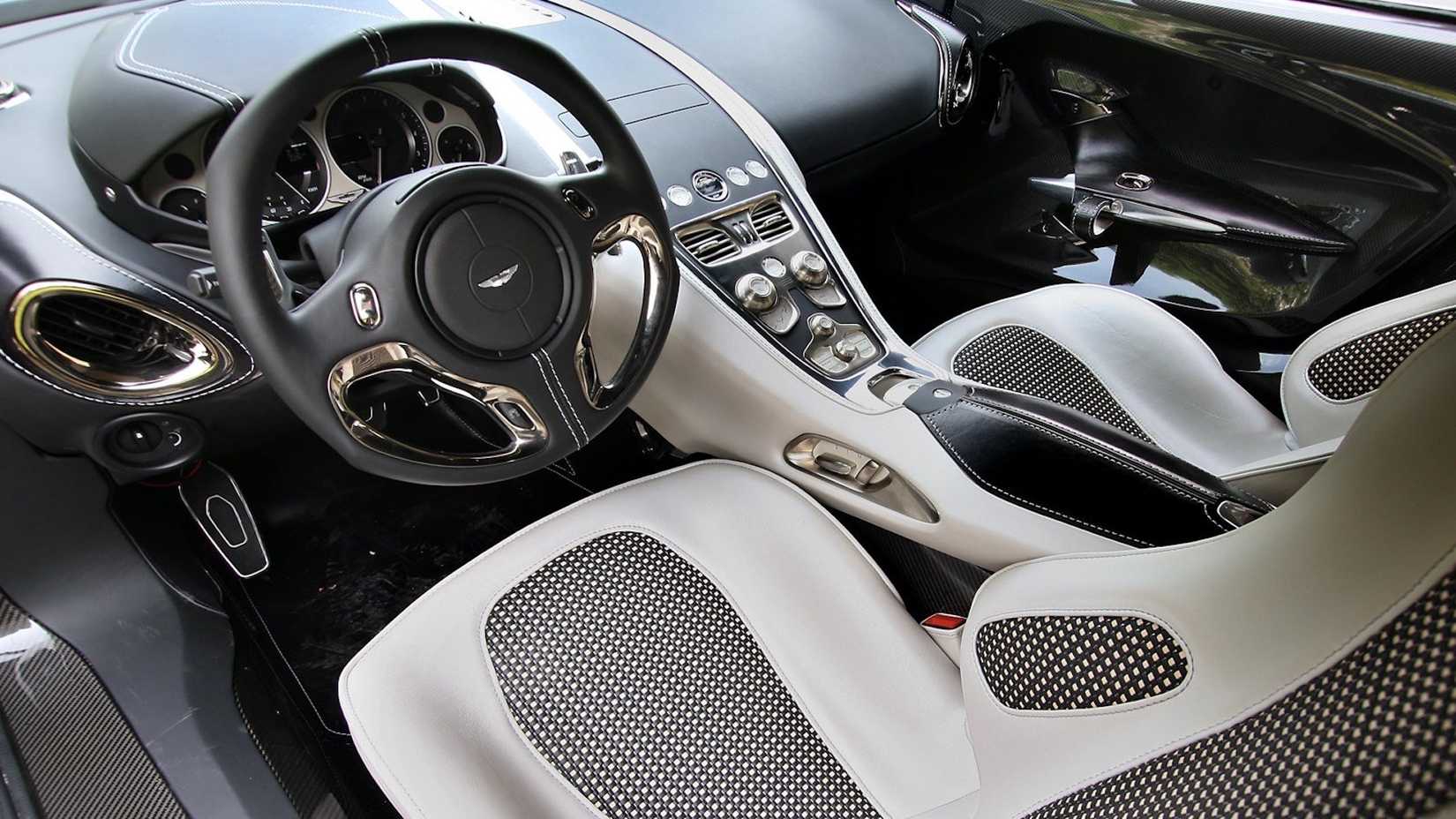
The Aston Martin One-77’s plush interior.Aston Martin
It is not perfect, no. The automated manual transaxle transmission with a single clutch is apparently an awful thing just about all the time. A more modern dual-clutch set-up would probably have served the Aston Martin better, and chopped that sprint to 60 mph down to around three-seconds. For the rest, it is pretty much, well, perfect.
Only 77 cars were made, meaning it is as scarce as hen’s teeth. Very few go up for sale. Expect to pay up to $4 million for an example in great condition. That’s not great news for normal folks, who would require some affirmative money-raising efforts at a local bank that may include a balaclava to raise enough funds to acquire a One-77. Right, so where’s that balaclava shop at?
More Great (Big) V12 Engines
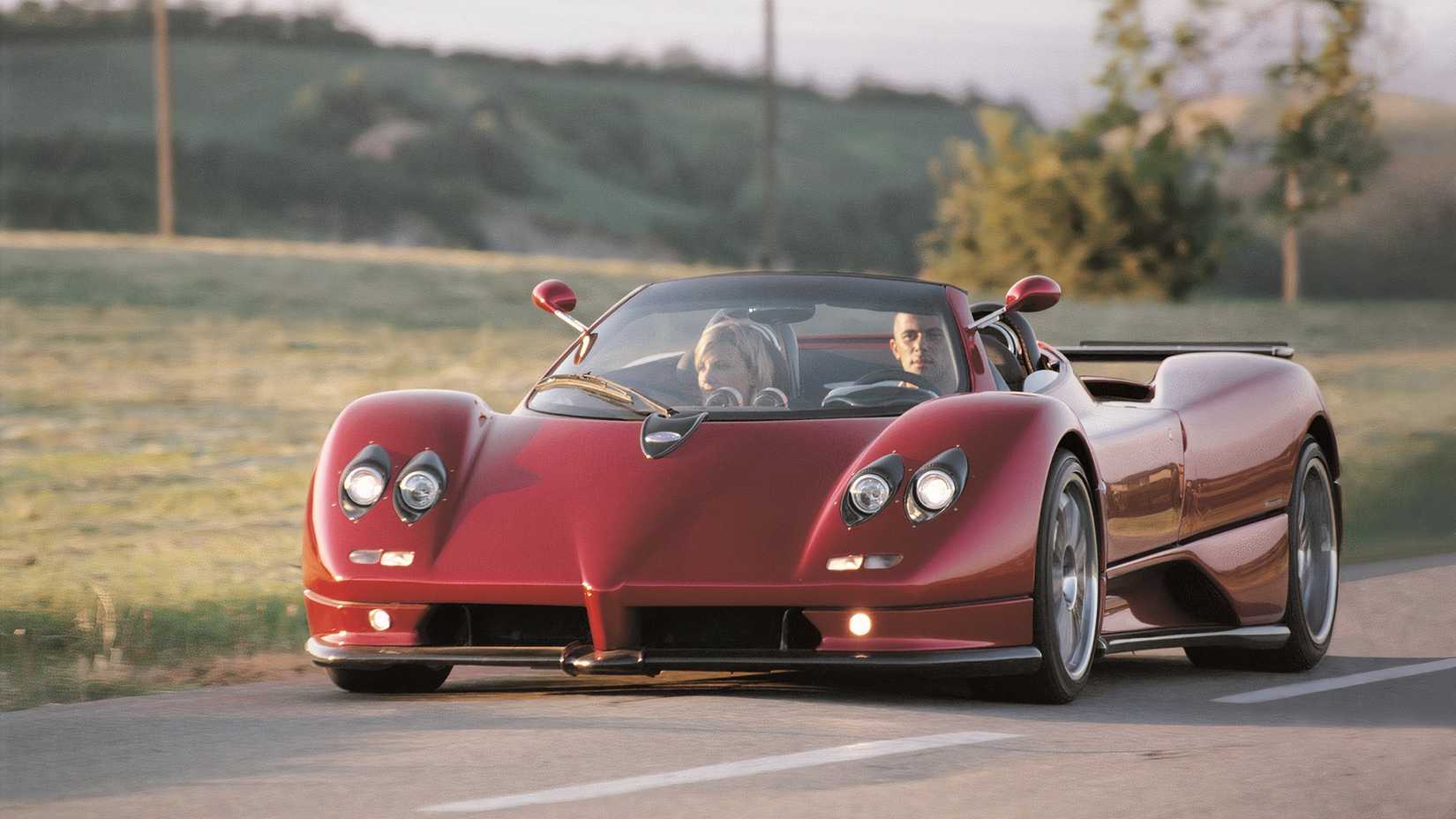
Exterior view of the Pagani Zonda RoadsterPagani
The Pagani Zonda S Roadster was revealed in 2002, and came with a Mercedes-AMG 7.3-liter V12 engine producing 547 hp. Like the One-77, it is also based on a carbon fiber monocoque tub. In the Pagani, all the body panels are crafted from carbon fiber, so it is also around 660 pounds lighter than the Aston. And so, despite a power deficit of more than 200 hp, the Pagani can, on paper at least, stick with the Aston Martin when the hammer is down.
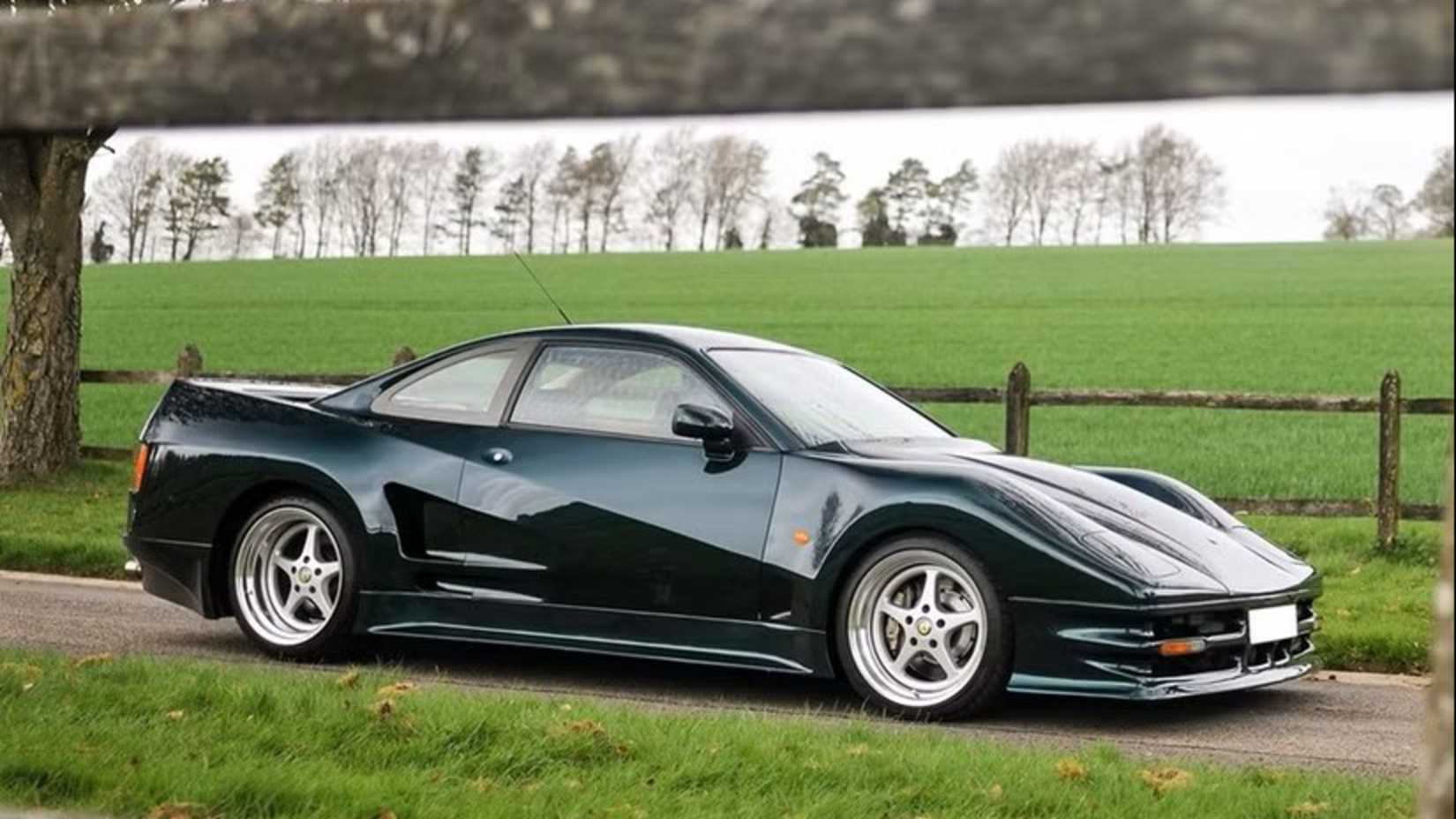
1994 Lister Storm Green Front Angled ViewBring a Trailer
The Lister Storm, hailing from the famed British racing car company Lister Cars, is essentially a Le Mans specification racing car dressed up for the road. The Storm features an aluminum honeycomb monocoque tub, wrapped in Kevlar and aluminum panels. The seven-liter V12 engine hails from Jaguar, and was a version of an engine that was used in the Jaguar XJR-9 sports prototype Le Mans racing car.
In the Storm, the big V12 engine is located directly in front of the driver, in a mid-front layout. This allowed for a 2+2 seating arrangement. Sounds wonderful, right? Unfortunately, only four road-legal Lister Storms were ever made. That’s mostly because it retailed for around $350,000 in 1993. At the time, you could pick up a Ferrari Testarossa 512 TR for around half the price.
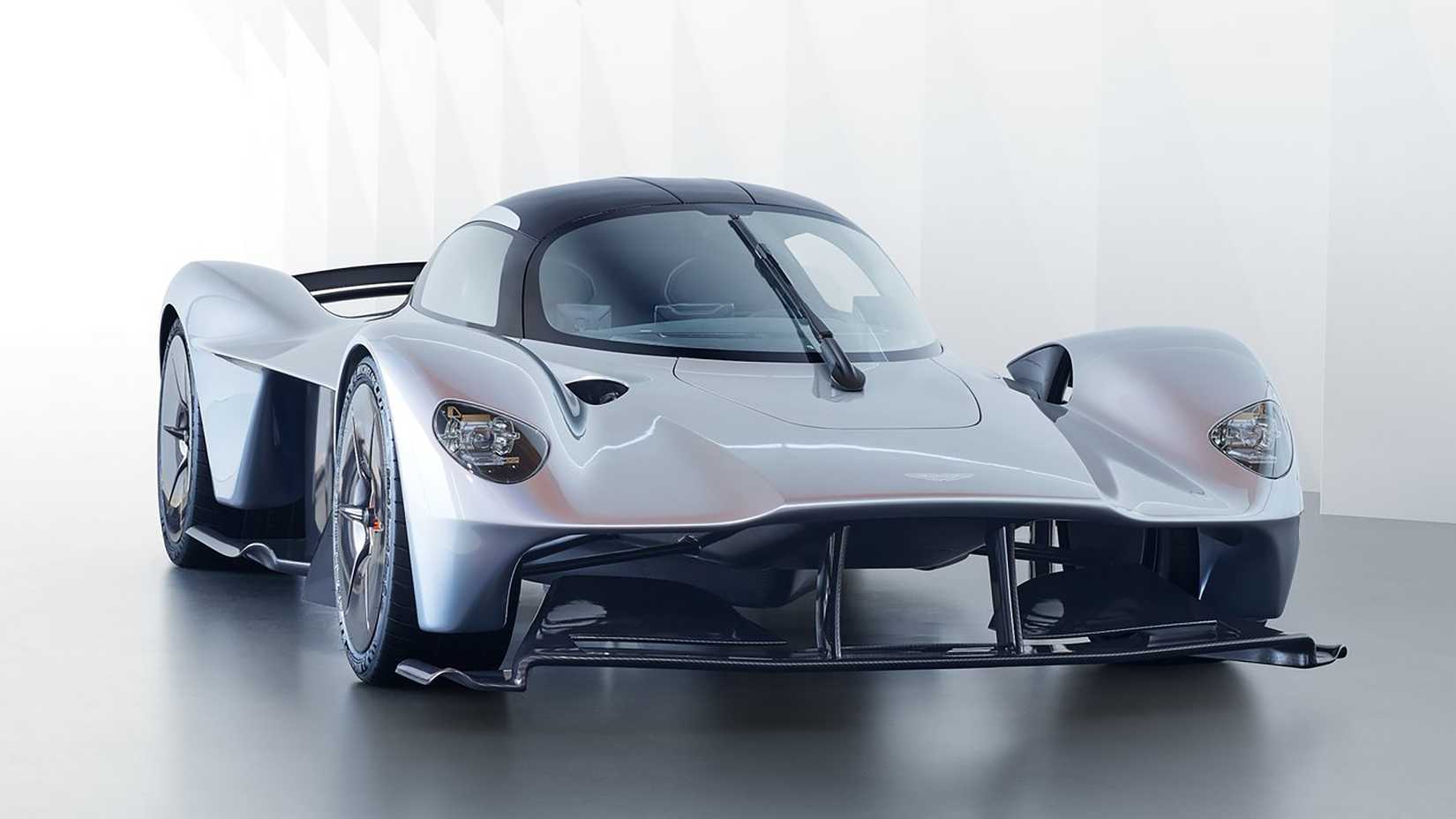
The Aston Martin Valkyrie is powered by a bespoke Cosworth engine, revving to just over 11,000 rpm.Aston Martin
In 2021, the Aston Martin and Cosworth collaboration culminated in the spectacular Valkyrie. Designed by Formula One guru Adrian Newey, the Valkyrie is his version of a Formula One racing car for the road. Newey commissioned the creation of a brand-new V12 engine for the project.
The Cosworth engine would become known as the ‘RA’. The 6.5-liter V12 engine delivers 1,001 hp at 10,500 rpm and 546 lb-ft of torque, making it the most powerful naturally aspirated engine ever fitted to a road-legal car. As if that is not enough, Aston Martin added an electric motor to the front differential, resulting in a combined output of 1,160 hp.
Sources: Aston Martin, Classic Driver, Lister, Pagani.