
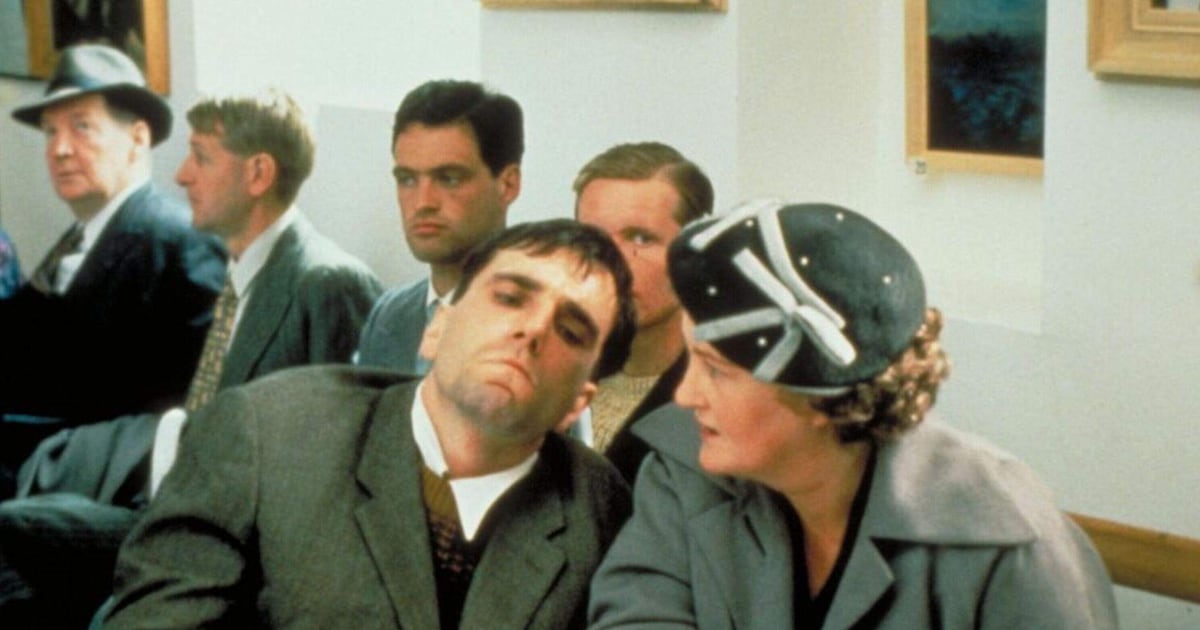
The greatly loved actor Brenda Fricker, who has died at the age of 81, could be said to have opened the door to a new Ireland when she won the best-supporting-actress Oscar for Jim Sheridan’s My Left Foot in 1990.
Honoured for playing mother to writer Christy Brown, she took the first award of the evening and paid tribute to those fellow Dubliners. “I’d like to thank Christy Brown, just for being alive,” she said from the podium. “I’d like to thank Mrs Brown, his mother. Anybody who gives birth 22 times deserves one of these, I think.”
Ireland was, at the time, a relative stranger to the Oscars, but her win paved the way for fellow nominees such as Saoirse Ronan, Ruth Negga and, this year’s winner, Jessie Buckley.
Fricker may not have been entirely happy about appreciations leading with that Academy Award win. Speaking to this newspaper in 2025 about her searing memoir She Died Young: A Life in Fragments, she explained that her aim was to not mention the “O-word”, but it “slipped into the final version”. “I was livid,” she told Patrick Freyne.
Fair enough. It was quite a career and quite a life. Other film roles included Veronica Guerin, Omagh and Sheridan’s The Field. She spent many years playing the nurse Megan Roach on the BBC medical drama Casualty. In recent years she received justified praise for revealing a history of sexual abuse in that memoir. Fricker, in person and on screen, radiated an earthy integrity that cannot be faked.
She was born in Dublin to busy parents. Bina, her mother, who was from Gneeveguilla in Co Kerry, taught languages at Stratford College in Rathgar. Her father, Desmond Frederick Fricker, wrote for The Irish Times and broadcast on RTÉ. In that memoir, she spoke frankly of great suffering. Her mother seems to have been volcanically aggressive.
“It was real violence, and I needed protection,” she told The Irish Times in 2025. “Where was my father? I worshipped him. There was evidence. There was blood all over me. Blood seeping through the socks. He saw that. It’s hard to explain. Somebody should have inquired, ‘What’s going on here?’ In those days you didn’t interfere with your neighbours.”
There was further grief in childhood. At the age of 14, Fricker suffered serious head injuries in a car accident and was confined to the Meath Hospital for two years. “I missed a lot of school. My head was in a vice, which made studying difficult,” she said in 2003. “So when I finally came home and began to feel tired, people put it down to the accident.”
It transpired that she had tuberculosis.
“Then began an interesting social battle, and I heard my parents arguing for the first time,” she said. “My mother wanted to nurse me at home but my father said no, and I ended up pretty quickly in Blanchardstown.”
[ Brenda Fricker, Irish Oscar-winning actor, has died aged 81Opens in new window ]
After leaving school, she took work as a trainee reporter at The Irish Times before falling into acting almost by accident. Word got to her that Micheál MacLiammóir, the charismatic impresario at the Gate Theatre, wanted someone for a small role. She was in. She never looked back.
She was a cast member of Tolka Row, Ireland’s first soap TV opera, and, in 1977, appeared in an episode of Coronation Street. In 1986, she made her first appearance in Casualty. The stalwart Megan Roach became a fan favourite, but Fricker eventually stepped away from the role in 1990. She believed the character “started off with a wonderful sense of humour, [but] lost it all and all she ever seemed to do was push a trolley around and offer tea and sympathy”.
She nonetheless returned for guest appearances, including a final turn in 2010.
Another vital early screen performance was as the lonely Bridie in Pat O’Connor’s version of William Trevor’s celebrated The Ballroom of Romance for BBC and RTÉ.
My Left Foot transformed her life and the Irish film industry. Based on Brown’s book of the same title, the film told how the author, despite his cerebral palsy, rose to become a hugely inspirational writer.
Daniel Day-Lewis, who won an Oscar in the lead, famously stayed in character when not before the camera. This proved a challenge for Fricker. “I’d have to feed him his food,” she said later. “I fell for this for a while. I did it for a week and then I thought, What the f*** am I doing this for? So then I cottoned on. Feed yourself. I am going off to play pool.”
Jim Sheridan, a great friend, remembers her as an irrepressible character.
“She was asked to wash her dog, and she was heading down to the beach in Bray, and then she decided ‘No f***ing way. I’m going back, and I’m having a shower, and the dog’s having the shower with me,” he told The Irish Times.
Sheridan believes she saw some downsides to that breakthrough.
“I think when she played the mother in My Left Foot, she got pissed off because it consolidated her as a mother,” he said. “It was also the age she was. She was in her mid-40s. And that’s exactly the age you become a mother in film. That’s hard for an actor.”
The first Irish woman to win an acting Oscar, Fricker was, nonetheless, established as a character performer of extraordinary robustness. She was tough as the estranged wife to Richard Harris’s character in Sheridan’s The Field, and Properly funny in I Married an Axe Murderer. She shared a cast list (if not scenes) with Donald Trump in Home Alone 2: Lost in New York.
“She gave out to me, saying, ‘You told me not to do that part, and it’s the only one I made any real money on,’” Sheridan said.
Fricker was married to Barry Davis from 1979 until 1988. During that period, she was pregnant six times but miscarried on each occasion. She retained great affection for him after the divorce.
In recent years, following the release of that memoir, she engaged publicly with a sad history of mistreatment. As well as relating her mother’s violence, she wrote about a disturbing abuse by an elocution teacher when she was just eight and a rape at the age of 17.
But she was a survivor. Her last film, Tadhg O’Sullivan’s The Swallow from 2024, in which she played a lonely women renegotiating her past, was a triumph.
“To have someone bring so much generosity, integrity, insight and humour to our work together was remarkable,” O’Sullivan told The Irish Times. “An even greater privilege, though, was the relationship that followed – the same qualities she brought to her work made her a wonderful, beautiful friend.”