
The Health Service Executive is to open a recruitment process for a new clinical lead for gender healthcare as its current lead, Karl Neff, who was appointed just two years ago, will leave later this year.
The pending departure comes at a time of an intense focus on what model of care Ireland’s new gender services will adopt.
It has emerged that Minister of State at the Department of Health Mary Butler has praised Iceland’s gender-affirming healthcare model in private correspondence with the HSE chief executive.
Many transgender support groups and politicians say the HSE should allow an informed-consent or gender-affirming model to permit patients to choose the form of their treatment.
Other groups, including Irish doctors at the National Gender Service, have advocated for Ireland to follow recommendations form the UK’s Cass report, which advised that all young people undergo comprehensive mental health assessments and that access to puberty blockers and hormones be restricted.
Hillary Cass’s 2024 report found “remarkably weak” evidence supporting the prescription of puberty blockers to children at the UK’s Tavistock Clinic, to which 233 Irish children were referred from 2012 to 2022.
Neff, a consultant endocrinologist, was appointed to the new HSE gender healthcare lead role in 2024.
A HSE spokesman confirmed his impending departure but said it would come after he completes a draft model of care by the end of 2026.
“Dr Neff had planned to leave upon completion of the draft model of care and [he] will be doing this,” the spokesman said.
“The goal is to develop a person-centred model of care and when completed this will support the development of an integrated gender healthcare service that meets the needs of people in Ireland.”
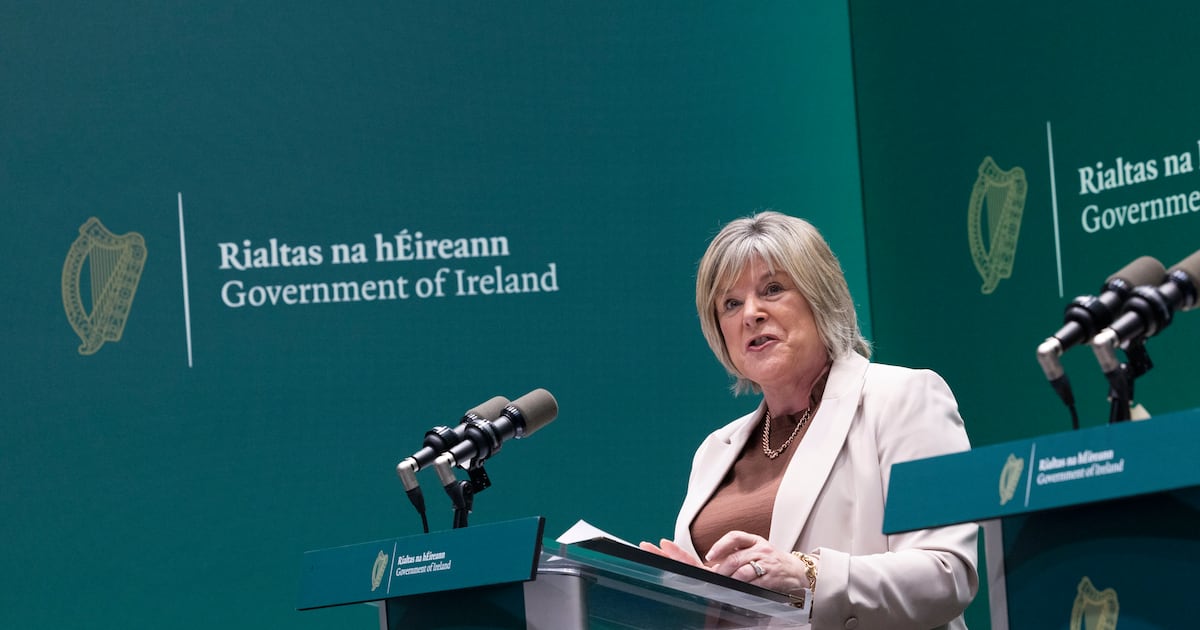
In correspondence dating back to January, released under Freedom of Information (FOI) law, Mary Butler, Government Chief Whip and Minister of State for Mental Health wrote to then HSE chief executive Bernard Gloster in January on gender health issues.
Butler said she had met Neff to discuss his work on a new model of care.
The Minister said she was grateful that Colm Henry, the HSE’s chief clinical officer, had accompanied her on a trip to Iceland to review its gender healthcare service.
Iceland operates an informed-consent model of care. Psychological assessments may be included, but only with an individual’s consent.
Butler praised the Icelandic model in her letter to Gloster.
“It was clear from what we learned that in the majority of cases, most people benefited from counselling, psychological supports and in particular the support of social work,” she wrote.
“It was also clear from their model of care that all interventions were provided after appropriate assessment and at age-appropriate life stages.”
[ Transgender care waiting list to close due to resource pressuresOpens in new window ]
Butler also asked for financial support for a HSE gender clinic run by Dr Tomás Ahern, a consultant endocrinologist, in Drogheda.
Ahern also provides a private service through Gender Plus, a service that offers “gender-affirming specialists”.
The private clinic is run in Ireland and the UK by Aidan Kelly, an Irish psychologist who formerly worked in the Tavistock Clinic.
Butler said she had recently met Ahern and said he needed specialist support. She attached a business case for the HSE to finance a registered advanced nurse practitioner to work with him.
“I would ask the HSE consider this business case to ensure continuity of care for existing patients and to expand the capacity of Dr [Ahern]’s clinic to those waiting long periods for care,” she said.
A spokesman for the Department of Health said Minister for Health Jennifer Carroll MacNeill and Butler were actively working on the programme for government commitment to deliver a new model of care for gender healthcare by the end of the year.