
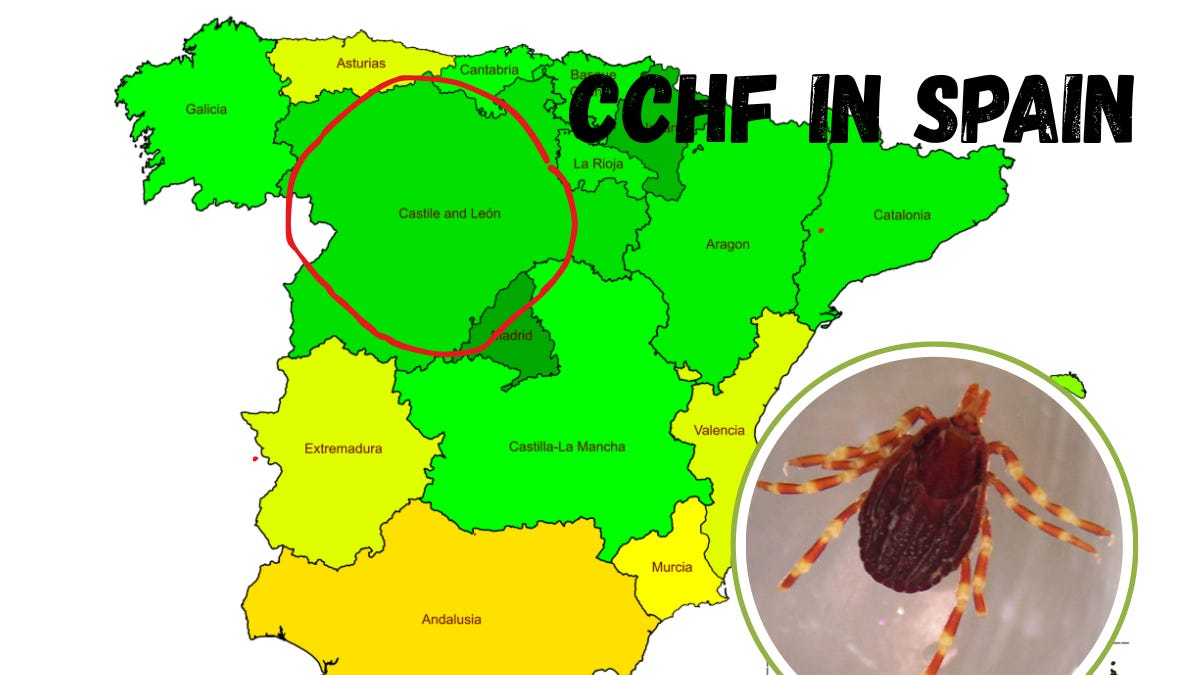
In a follow-up report on locally acquired Crimean-Congo Hemorrhagic Fever (CCHF) in Spain, the Junta de Castilla y León, through the General Directorate of Public Health, has confirmed a second case of Crimean-Congo Hemorrhagic Fever (CCHF) in the province of Salamanca.
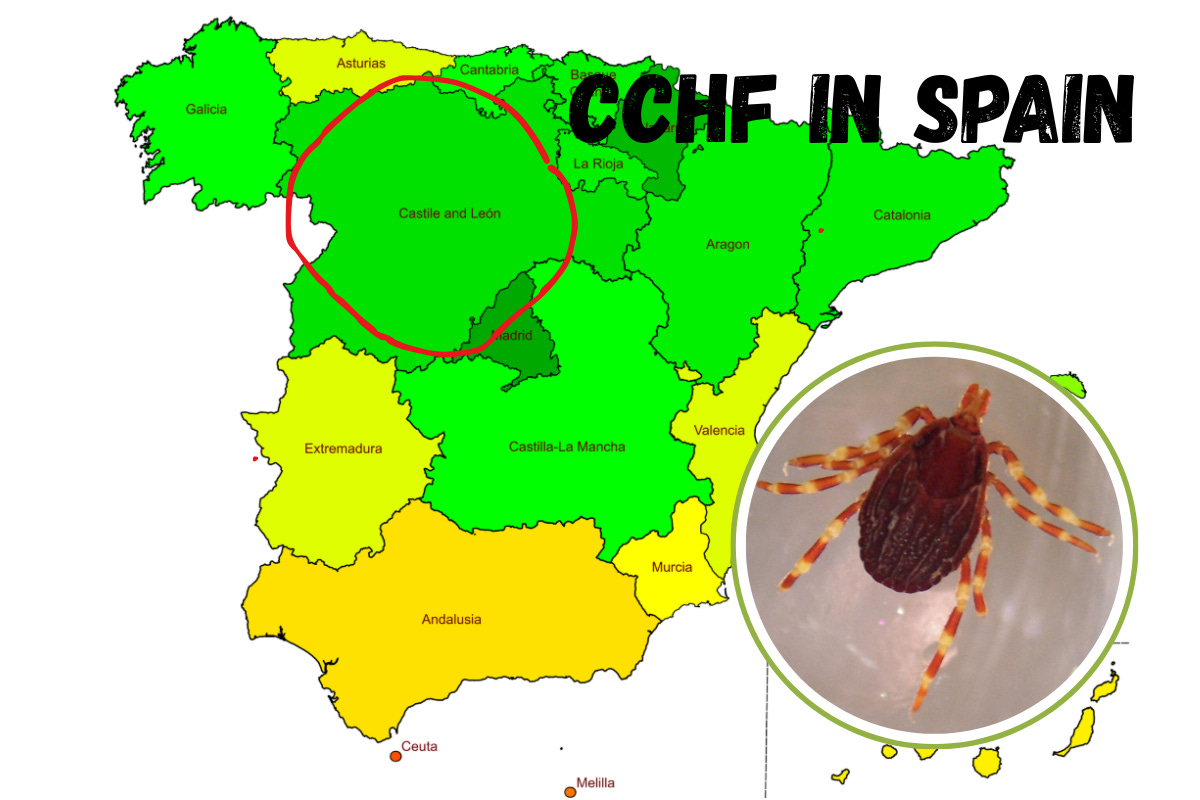
The confirmed case is an 84-year-old man who was treated at the Salamanca University Hospital Complex (CAUSA) for a tick bite. He subsequently underwent standard testing for this type of case and tested positive for Crimean-Congo hemorrhagic fever (CCHF). Following these results, he was transferred from his home to the Gómez Ulla Hospital in Madrid.
Crimean-Congo hemorrhagic fever 101
Unfortunately, patient died from his illness at the hospital.
This is the second CCHF case reported and the first fatality.
Health officials identified the contacts of the affected person to advise them on the necessary follow-up. The protocol involves periodically monitoring their body temperature and reporting any changes in their health status to their designated epidemiologist.
Crimean-Congo hemorrhagic fever is caused by a virus whose main transmission mechanism is the bite of the ‘Hyalomma’ tick, although it can also be transmitted from person to person by contact with blood or fluids of the sick person, which can occur especially in healthcare personnel when they are not properly protected.
Regarding the prevention of tick bites, health authorities emphasize the importance of wearing appropriate clothing and footwear when going into the countryside, staying on designated paths, and using insect repellent for both people and pets. They also stress that any ticks that may have attached themselves should be removed as soon as possible and properly, preferably by healthcare professionals.