
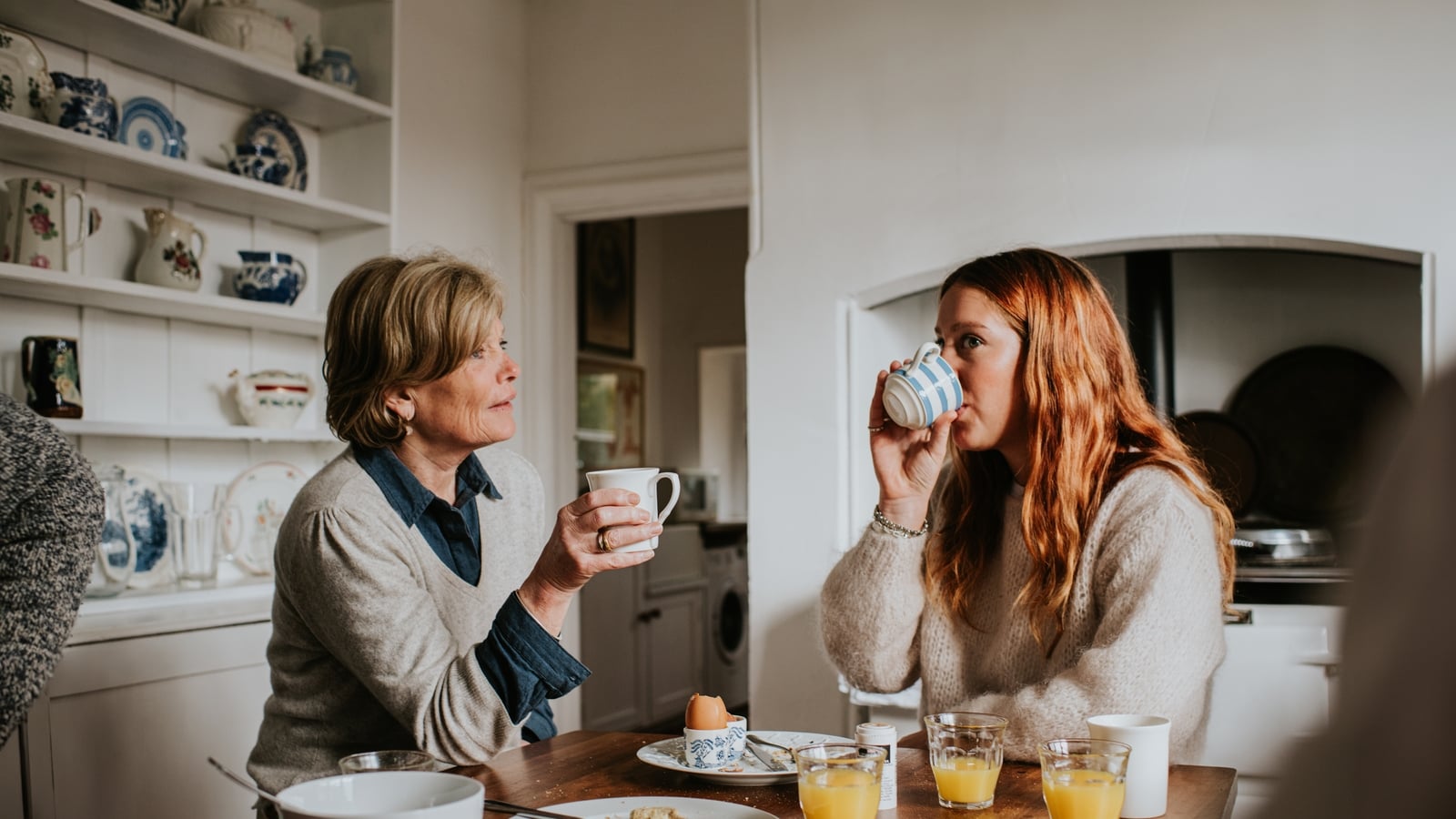
Analysis: The humble cup of tea is more than just a hot beverage and represents the cultural, social and economic status of the country
The simple cup of tea holds a special place in Irish culture. The beverage seeps into all aspects of our lives and culture, chats are had with a cup of tea in hand, it features heavily in our hospitality, and goes beyond culture where the Barrys versus Lyons debate continues, not to mention it being central to one of the most iconic catchphrases in Irish TV. With the many roles it plays in Irish culture, it’s no surprise that Ireland has one of the highest tea consumption per capita in the world.
To understand Ireland’s long relationship with tea, you have to go all the way back to the 1600s with the formation of the East India Company, which became one of the most powerful companies in the world. Its fortunes had an influence on Ireland, where new food and beverages were being shipped from Asia and South America to Europe
“Many items like tea, coffee and chocolate were new foods arriving in Europe in the seventeenth century,” explained Dr Máirtín Mac Con Iomaire, senior lecturer in the School of Culinary Arts and Food Technology at TU Dublin. “Bringing tea to Ireland is tied with bringing tea to England, and the key factor for that was the East India Company. Queen Elizabeth I granted a charter for it in 1600, and it became so big, it was like Microsoft, Google or Apple today; it became bigger than a state and more powerful than one.”
We need your consent to load this rte-player contentWe use rte-player to manage extra content that can set cookies on your device and collect data about your activity. Please review their details and accept them to load the content.Manage Preferences
From RTÉ Radio 1’s Oliver Callan, how to brew the perfect cup of tea with Daniel O’Donnell
“Coffee was more popular in other parts of Europe, but part of the reason tea became so popular in England and henceforth in Ireland was to do with the power of the East India Company and the difficulty getting coffee from the Levant due to wars with France.”
Such was its power that it took 200 years for other players to break the monopoly. It was 1835 when Bewley’s bypassed the East India Company and brought 2,099 chests of tea all the way from Canton, China.
Adoption of tea
When tea arrived in Ireland and the UK, drinking it was a sign of status. It was the middle of the 17th century when tea made its way to fashionable Dubliners. By the late 18th century, the rituals of tea drinking in English high society had been adopted by the upper and middle classes in Ireland. Likewise, tea drinking came with its own etiquette and unique items for the occasion, further cementing itself as an activity for prestigious members of society.
We need your consent to load this rte-player contentWe use rte-player to manage extra content that can set cookies on your device and collect data about your activity. Please review their details and accept them to load the content.Manage Preferences
From RTÉ Archives, the herbal tea company ‘An Teach Bán’ which operated from a converted cottage in Co Clare in 1987
“You have to remember that tea started as a really expensive commodity,” says Mac Con Iomaire. “It was for the ultra-rich and wealthy. Then there was all the paraphernalia that went along with tea, including kettles and tea caddies with special locks so that those serving wouldn’t steal the tea. You had Irish silver makers making special teaspoons and such. There was a whole industry that came out of tea, but it was associated with wealth.”
By the 19th century, tea drinking had become a custom in farming households, where it acquired a more social purpose and was widely adopted among the poor in Dublin. This coincided with the Industrial Revolution, explains Mac Con Iomaire, where steam engines facilitated faster trade, and items could be processed quicker in mills and factories, making certain items cheaper.
At one point, Ireland had the highest tea consumption in the world during the 1940s, with government research listing it as the “principal item of food” for the Irish poor, cementing its place in homes across the country. The love and appreciation for it were just as much down to necessity as to availability and taste. Likewise, tea became a ritual for Irish people, associated with tradition, with conversation, and hospitality.
We need your consent to load this rte-player contentWe use rte-player to manage extra content that can set cookies on your device and collect data about your activity. Please review their details and accept them to load the content.Manage Preferences
From RTÉ Radio 1, why we love the humble cup of tea
A role in hospitality
Another reason for Irish people’s love for it is it being a key part of hospitality. Irish hospitality is a tradition that dates back to Brehon Law; tea was commonly made in households, and offering a cup to a visitor is an obvious choice.
“It all ties into something deeper and older which is the Irish tradition of hospitality, which is if a stranger comes to your door, we’re not happy until we have fed them,” Mac Con Iomaire says. “That tradition goes back to the days of Brehon law. Tea fulfils that requirement because the idea is you always have the kettle on or the tea in the pot. That comes into the real Irish thing where you say ‘sure, you’ll have a cup’, ’the kettle’s on anyway’, or ‘sure, I’m having a cup myself’.”
“This goes back hundreds of years, and previously when it wasn’t tea, it was whiskey or wine. There’s all sorts of reports of foreign travellers coming to Ireland where they felt that sort of excessive hospitality.”
We need your consent to load this rte-player contentWe use rte-player to manage extra content that can set cookies on your device and collect data about your activity. Please review their details and accept them to load the content.Manage Preferences
From RTÉ Radio 1, how do you make a perfect cup of tea?
Tea is particularly effective, as it’s a hot beverage; studies suggest that holding one makes you think strangers were welcoming and trustworthy, whereas cold drinks have the opposite effect. Likewise, the element of reciprocity plays a part, where you expect your kindness to be returned in kind. All in which turns tea into more than just a beverage.
“There’s a psychology to it… where if you give someone a hot beverage and you’re having a chat with them, then you’re more likely to like that person,” explains Mac Con Iomaire. “There’s a lot of psychology with hospitality that people don’t necessarily realise, and it’s no surprise that diplomats use food as a soft tool of power. It’s a performance.”
Follow RTÉ Brainstorm on WhatsApp and Instagram for more stories and updates
The views expressed here are those of the author and do not represent or reflect the views of RTÉ