
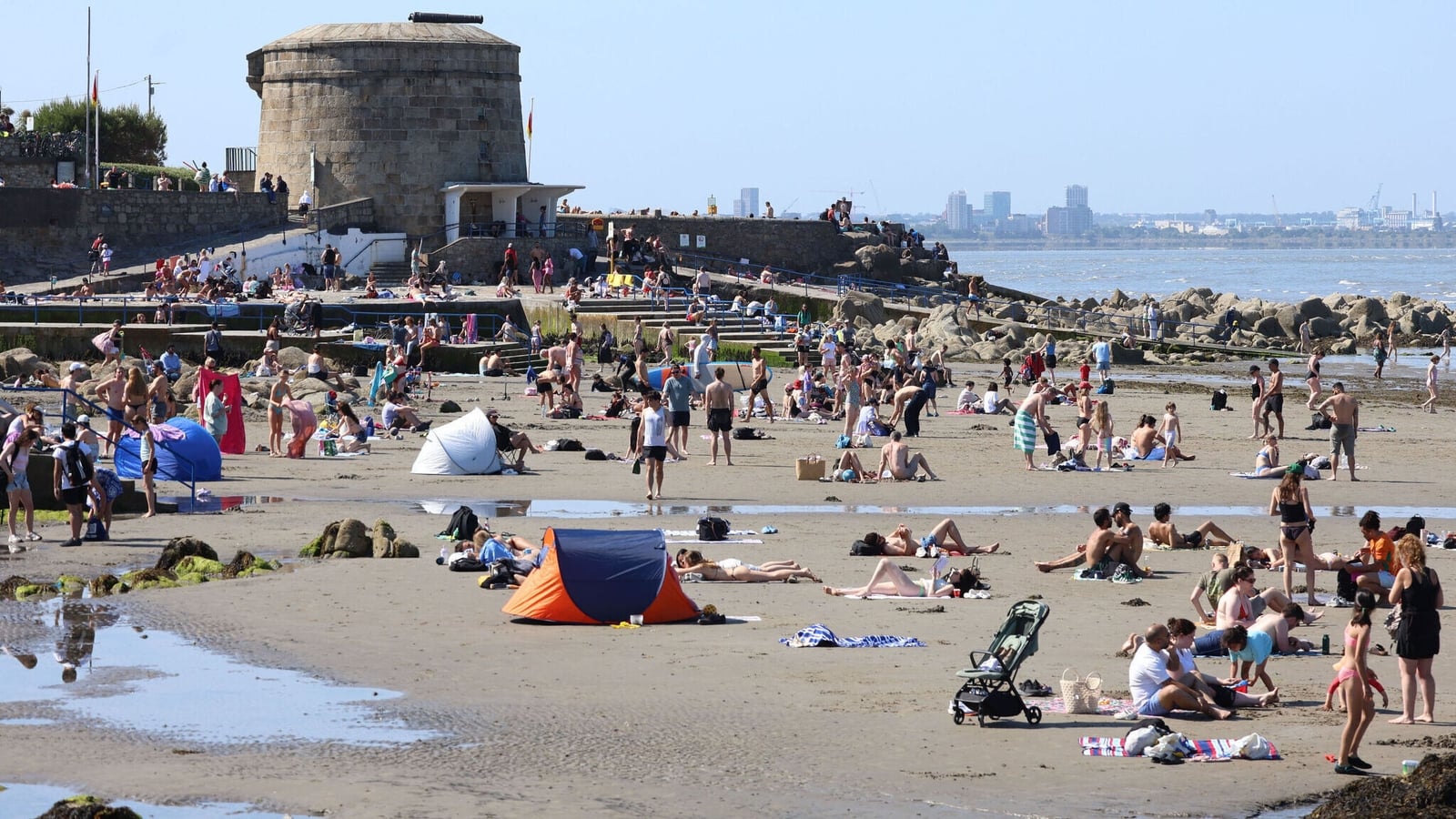
The weather station in Moorepark, Co Cork, has recorded a provisional temperature of 24.9C today, meaning this spell of warm weather has not equalled the longest heatwave on record in Ireland.
Met Éireann previously said there was a possibility that the longest heatwave on record in Ireland, of 14 days in August 1976, could be matched today.
The longest heatwave recorded was 14 days from 14-27 August 1976 and is jointly held at two stations – one in Ballybrittas, Co Laois, and at Birr, Co Offaly.
A heatwave is technically at least five consecutive days of 25C and above.
Meanwhile, a weather advisory for high temperatures is in place until Monday.
Met Éireann has said that while temperatures will fall back somewhat from recent high levels, impacts will still be felt from the prolonged spell of very warm or hot and dry weather.
They urged people to be careful around water with an increased use of waterways, lakes and beaches.
They also said that people may experience some heat stress and dehydration, especially the vulnerable and elderly. They advised people to be aware of animal welfare issues, as well as drought concerns, wildfires and forest fires.
Today it will be warm and dry for most with the sunniest conditions in the midlands, south and east, and highest temperatures of 23C to 26C. Cloudier in the north and northwest with highest temperatures there of 17C to 22C in a light to moderate northerly breeze.
Tonight it will be dry and largely clear with isolated mist patches developing. Fresher than recent nights with lowest temperatures of 9C to 13C degrees in a light northerly or variable breeze.
Tomorrow is forecast to be dry and clear in most places. It will be cloudier in Ulster and north Connacht with a few patches of drizzle. Lowest temperatures of 10C to 14C degrees in a light northerly breeze.
Monday will become cloudier overall, with sunny spells over the southern half of the country.
We need your consent to load this rte-player contentWe use rte-player to manage extra content that can set cookies on your device and collect data about your activity. Please review their details and accept them to load the content.Manage Preferences
Most places will remain dry but patches of drizzle will affect parts of Connacht, Ulster and north Leinster.
Warm in Leinster and Munster with highest temperatures of 20C to 25C degrees. Cooler in Ulster and Connacht with highest temperatures of 17C to 20C degrees in moderate northerly winds.
Hundreds of hectares of mountain land burned
Wicklow Fire Service says wild fires in the Glencree/Featherbed mountain area on the Wicklow-Dublin border have burnt 300-400 hectares of mountain land.
Fire fighters were on scene again today and have extinguished all of the main fires, but are continuing to monitor the situation as some areas continue to smoulder.
Several helicopters were deployed to drop water on the affected areas.
Much of the area was drained and dried out when peat was extracted some years ago and this has left it vulnerable to fire, according to the Wicklow Fire Service.
While the immediate causes of the fires have not been established, fire fighters says it was due to human activity, possibly accidental.
Temperatures in the area are falling which may help control the fires, but rising winds are also causing concern.
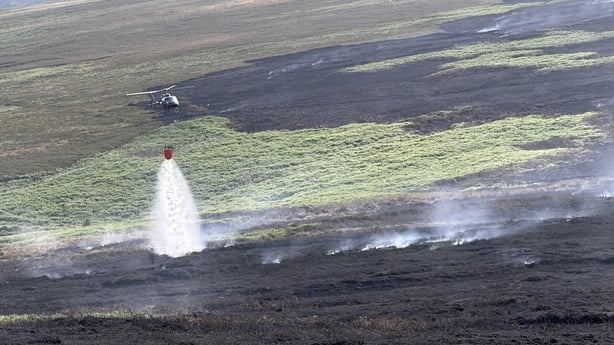
Fire crews continue to monitor the affected areas on Glencree/Featherbed mountain
Spain braces for temperatures in excess of 40C
Meanwhile, Spain is set to enter its third heatwave of the summer on Tuesday, with temperatures forecast to climb above 40C across large parts of the country, the national weather office said.
The heatwave will be fuelled by a persistent area of high pressure that will trap hot, dry air from North Africa over Spain for several days, pushing temperatures to exceptionally high levels, AEMET said in a statement.
The heat is expected to intensify through Thursday, which forecasters say is likely to be the peak of the event, with some isolated areas potentially exceeding 45C.
“The level of danger will be significant during the central hours of the day, especially for outdoor activities and vulnerable people,” the weather agency said.
Spain has already endured two other heatwaves this summer – one in late June that broke temperature records across Europe, and another in early July.
A ferocious blaze in the southeastern province of Almeria earlier this month killed 13 people, making it Spain’s deadliest wildfire in recent years.
Additional reporting: Éilís Sheehy, Colman O’Sullivan