
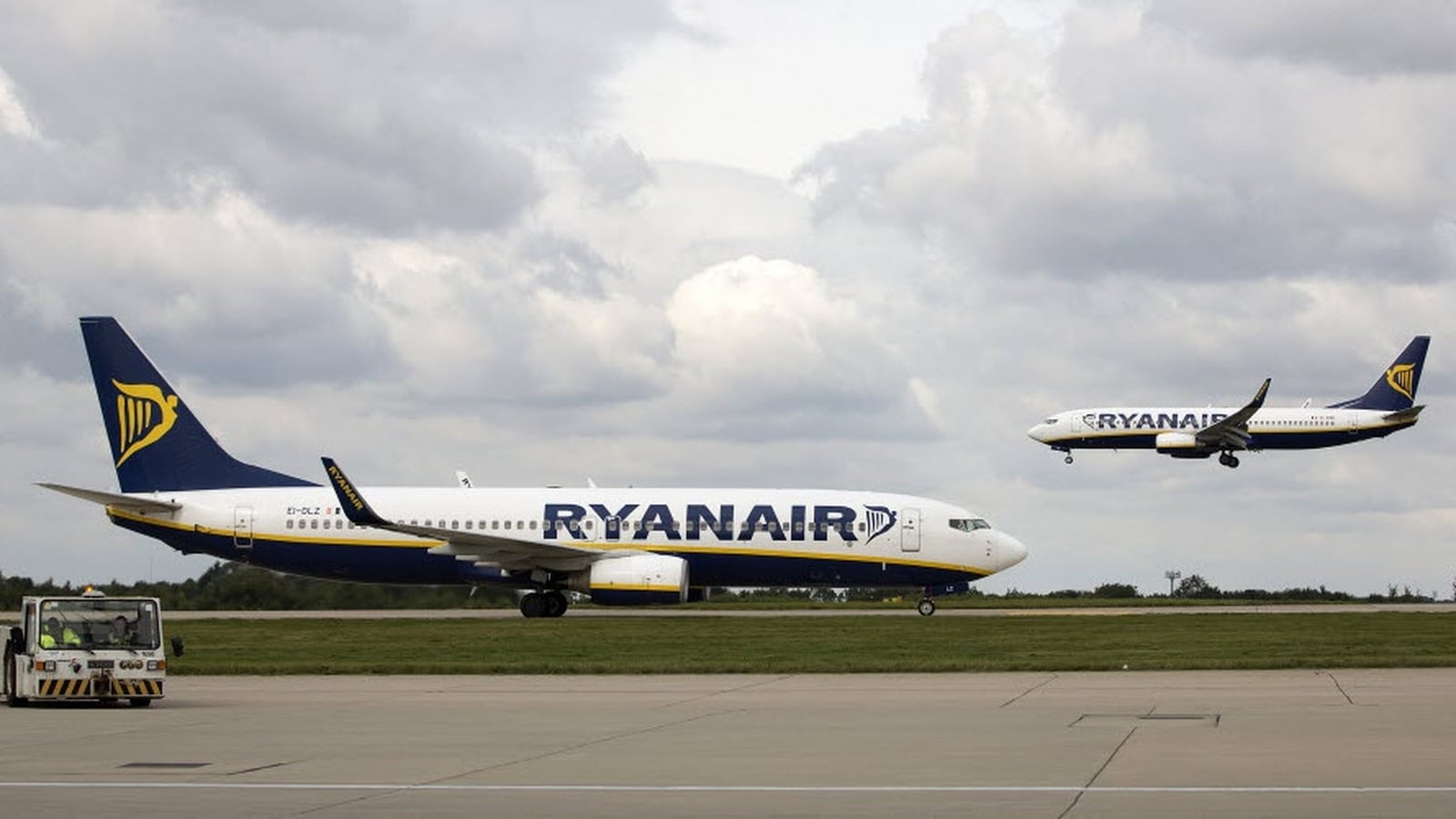
Ryanair shares fell today after it said its profit slumped by a third on higher fuel costs and weaker fares in the April-June quarter, while summer fares look set to fall amid consumer nervousness around the Iran war and broader economy.
The weak results for Ryanair, Europe’s largest airline by passenger numbers, are the latest sign of how the five-month-old Iran war is turning up the pressure on companies as peace talks drag and oil prices remain elevated.
US forces today hit Iran for a ninth consecutive day as part of an escalating cycle of attacks between the pair after an interim ceasefire agreement signed a month ago unravelled, pushing oil prices back up.
Ryanair shares had fallen over 7% this morning, but pared its losses to over 4% this afternoon. Rivals Wizz, Lufthansa, Aer Lingus and British Airways’ owner IAG and Air France KLM were also all lower.
“The price of our 20% unhedged fuel doubled in the quarter and fares fell 6%, primarily we think due to the impact of the Middle East conflict” and the timing of Easter, group chief executive Michael O’Leary said.
“Despite a recent, slight, uptick in volumes, and less price stimulation, Q2 pricing is trending modestly down year-on-year and the final H1 fare outcome is heavily dependent on the strength of close-in bookings,” Mr O’Leary said, referring to the last-minute reservations that drive profit at budget airlines.
Ryanair reported after-tax profit of €538m for its fiscal first quarter to June 30, down 34% from the previous year and short of a forecast of €579m in a company poll of analysts.
Revenues for the three month period rose by 1% from €4.34 billion to €4.38 billion.
Its passenger numbers for the quarter rose by 6% from 57.9 million to 61.3 million and its load factor – how many seats it fills on each flight – was steady at 94%.
The airline said it was too early to forecast profit for the full year, which would depend heavily on last-minute bookings over the remainder of the summer.
It said it was better positioned than most rivals because 80% of its fuel requirements to the end of March are hedged at $67 per barrel, compared to recent peaks around $150.
Chief Financial Officer Neil Sorahan said the airline stepped in to hedge 15% of its fuel needs for the year to the end of March 2028 at $85 per barrel following an interim ceasefire between Iran and the United States that has since unravelled.
We need your consent to load this rte-player contentWe use rte-player to manage extra content that can set cookies on your device and collect data about your activity. Please review their details and accept them to load the content.Manage Preferences
Weakness in fares is likely to be short-lived, however, as European aviation is facing a wave of consolidation and airlines going bust that will take out capacity, Neil Sorahan said.
“I wouldn’t be surprised to see a number of casualties this winter – there’s a few people very much on the edge,” Sorahan said.
He said he expected “significant capacity” to be cut in Europe this winter, “which could be positive for pricing,” and a lot more may be taken out in summer 2027.
The possible sale of British rival EasyJet, which is the subject of a bidding war, could also lead to a reduction in capacity and could trigger a “domino effect” of consolidation in Europe, he added.
Shares in the company were lower in Dublin trade today.